

AFRICOAT SERVES NOTICE OF ARBITRATION PROCEEDINGS AGAINST LADOL
AFRICOAT SERVES NOTICE OF ARBITRATION PROCEEDINGS AGAINST LADOL
Back in January, it was reported there was dispute between Africoat, a pipe-coating and logistics company, operating in the LADOL Free Zone in Lagos and LADOL.
The dispute focused on the termination of Africoat’s operating licence and eviction from the free zone by LADOL. But Africoat insisted that the eviction notice was contrary to the service agreement between it and LADOL because it only gave the company nine days to remove its equipment against the 180 days specified by the agreement.
Investigation has revealed that Africoat has served Notice of Arbitration on LADOL in a suit number FHC/L/CS636/19, at a Federal High Court in Lagos.
According to the court document, Africoat is seeking an Order of Interlocutory Injunction restraining LADOL from taking action against Africoat equipment, facilities or personnel pending the determination of the Arbitral Reference.
It was gathered that Africoat operated from LADOL Free Zone for several years before LADOL terminated its operating license.
In November 2018, it was announced that Africoat had been served an eviction notice from the LADOL Free Zone over outstanding debt.
LADOL also accused Africoat of breaching free-zone regulation – LFZ Regulations, including failure to start operations.
Africoat had alleged that LADOL was directly responsible for rejecting the import of pipes for an Africoat coating contract, forcing Africoat’s client to cancel the contract.
Africoat has continued to protest LADOL’s unreasonable “take it or leave it” gestapo tactics with regards to unwarranted charges levied without services provided.
FATAL SHOOTING AT LADOL FREE ZONE THREATENS NIGERIAN ECONOMY
Africoat argued that it was never made aware of such charges, neither did it agree to the charges, and was not offered the chance to discuss or negotiate the charges once imposed.
Africoat said it made several written attempts to resolve the outstanding issues but received no response from LADOL.
One of such charges being challenged by Africoat is the ground rent that LADOL allegedly levied over 6,000% mark-up over LADOL’s land lease rates paid to Nigerian Ports Authority (NPA).
Despite intervention by Minister of State for Industry, Trade and Investment, Africoat continued to experience a lack of cooperation from LADOL in providing services afforded Free Zone Enterprises.
The Eviction Notice has not been rescinded and the Service Agreement remains terminated.
LADOL was however forced to issue Africoat’s Operating License by the Minister but has failed to offer the services to support the licences.
Africoat has now served Notice of Arbitration to remedy the injustices perpetrated by LADOL on Africoat. This is the latest setback for LADOL Free Zone.
It was reported in the media that on April 8, an operative of the Nigerian Security and Civil Defence Corps (NSCDC) contracted by LADOL to guard the free zone shot and killed his colleague and an SHI-MCI Korean employee.
It was also reported that the Nigerian Police has concluded its investigations on the death of the Korean and the gunman will be charged for murder.
LADOL was accused of failing to take action against previous complaints by SHI-MCI of armed guards presenting a safety threat to employees at SHI-MCI FZE yard.
This incident has been taken up by the Korean Embassy in Nigeria and has been reported in the international media.
The management of the free zone is accused of developing a reputation for hostility towards international business, having been allowed to operate as a monopolistic single source service provider within a government jurisdiction with severe consequences to the investment climate in Nigeria.
International business will not invest in the Free Zone under such current business model.
Recent events in the free zone are setbacks to the Nigerian Government’s mandate to attract foreign investment.
It is time for the federal government agencies to take control of this environment that has become out-of-control. The solution to these crises in the free zone is for the authorities to create competition for the free zone management/operator and let a free and fair market dictate the commercial environment.
This is the healthy agenda put forward by the administration of President Muhammadu Buhari but is being violated by the management of this free zone.
Akpwan-Etukudon, an investment advisor, writes from Warri

Moses Akpan-Etukudon


‘ARBITRATION WILL BOOST NIGERIA’S DRIVE FOR FOREIGN INVESTORS’
‘ARBITRATION WILL BOOST NIGERIA’S DRIVE FOR FOREIGN INVESTORS’
International Chamber of Commerce Nigeria (ICCN), Monday, called for institutionalisation of arbitration mechanism to boost the nation’s drive for foreign investors.
The Chamber noted that foreign investors often insist on an efficient international arbitration as a dispute settlement mechanism is adopted in any investment dispute without recourse to the judicial process and its attendant delays.
To this end, the Chairman, Planning Committee of the 4th International of Commerce (ICC) Africa Regional Arbitration Conference, Mr. Mike Igbokwe, this at a news conference in Lagos, said adoption of arbitration mechanism will help Nigeria, currently seen as an attractive investment destination.
He said the global body, to which Nigeria became a member in 1979, and later re-organised in 1999, for the enhancement of trade and investment, seeks to encourage the use of arbitration in the resolution of disputes arising from trade and businesses.
According to him, while the cost of resolving disputes by way of arbitration may no longer be said to be cheap, the relative speed with which issues are resolved by arbitral tribunals makes it particularly attractive to the business community, which considers time to be money.
Igbokwe stressed that the conference scheduled for June 18-19, 2019, in Lagos by the ICC International Court of Arbitration in Paris, and the International Chamber of Commerce in Nigeria, is a demonstration of the growth of arbitration in Africa.
The theme for the conference, “Africa: Open for Business?” is expected to start with training on, “Drafting Enforceable Awards” on June 17, in Lagos.
He said the desire to determine whether Africa is ready for investments by both foreign and local investors, and to explore possible ways of making arbitration work in Africa, are the focal points of this year’s discussion.
“A cursory look at the topical issues that will be discussed at this conference leaves one in no doubt that the conference promises to be intellectually stimulating and productive in sharpening knowledge and skill in arbitration which is fast becoming a veritable alternative to litigation in resolving local and international commercial disputes.”
Also, ICCN Secretary, Mrs. Olubunmi Osuntuyi, said the conference is very strategic for the Nigerian arbitration community to the extent that it keeps creating a growing awareness of the importance of arbitration in the dispute resolution processes.
According to her, the conference is opene to seasoned arbitrators, academia, legal practitioners and users of arbitration, parties and persons interested in arbitration who had the opportunity to critically analyse a lot of the issues facing arbitration in Africa.
Bertram Nwannekanma

NIGERIA: YOUNG LAWYERS TASKED OVER INTERNATIONAL MEDIATION
NIGERIA: YOUNG LAWYERS TASKED OVER INTERNATIONAL MEDIATION
The Managing Solicitor, Trizon Law Chambers, Mrs. Foluke Akinmoladun, has advised young lawyers to get trained to become both domestic and international mediators.
According to Akinmoladun, there is the need for more international mediators that are either of African origin or are Africa based to mediate in disputes involving Africa issues.
She said most international mediators were foreigners who were not rooted in African culture but handle disputes originating from Africa.
Akinmoladun, who is also a trained arbitrator and mediator said this while delivering a paper at a seminar titled: “The Science and Art of Mediation, looking at the specifics.”
The seminar was co-organised by the International Chamber of Commerce and the Young Arbitrators Forum at the Lagos Court of Arbitration, Lekki.
Akinmoladun, who dealt specifically on the topic: “A brief introduction to mediation – commercial and international practice” said there is more development in the mediation space following the recent ‘Singapore Mediation Convention’ which will enable mediation agreements to be enforeceable as a court judgment once registered by the signatory states.
“The convention if adopted will promote the use of mediation as a dispute resolution mechanism for cross border transactions. Mediators will even earn internationally but spend locally,” Akinmoladun said.
She however advised mediators to be professional while carrying out their duties because “as a mediator you are not immune to professional negligence suit particularly if it is a private mediation practice”.
She urged young professionals to join Alternative Dispute Resolution (ADR) Institutions, attend trainings and be listed amongst these institutions panel of neutrals to enable them get recognised and earn more income as mediators.
Another speaker, Mrs Yemi Adeyinka, Chief Counsel, Eagle Crest, Legal Consult, while delivering her paper titled: “The science and art of banking mediation”, said mediation required patience by the mediators to understand the root of every dispute.
Adeyinka who noted that banking mediation is scientific, however, urged mediators to get trained in skills of resolving disputes emanating from loan recovery.
Mr Kenneth Onyema, a lawyer with Uptown Solicitors, advised young mediators to use social media space effectively to promote mediation.
Onyema while delivering a paper titled: “The Mechanics of Construction Mediation”, said mediation should be geared towards preventing disputes from escalating to project threatening levels.
Joseph Onyekwere
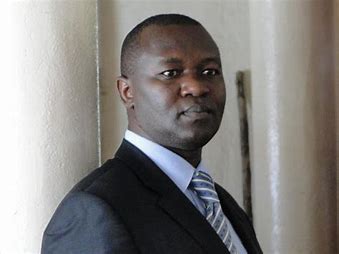
LAWYERS OJIENDA, GATHII TO VIE IN JSC POLLS
LAWYERS OJIENDA, GATHII TO VIE IN JSC POLLS
Lawyer Tom Ojienda will on Thursday vie in the election of the Law Society of Kenya male representative to the Judicial Service Commission.
Ojienda and lawyer Irungu Gathi will be on the ballot after the High Court dismissed a case challenging their clearance to contest on grounds of jurisdiction.
Justice James Makau ruled that the petition questioning the eligibility of Ojienda and Gathi for the poll was premature for having not complied with the provisions of the Law Society Act.
“I find that the dispute herein ought to have been referred to arbitration as per the LSK Act and LSK Arbitration Regulations of 1997,” he said.
“I am satisfied that the dispute concerning members of LSK and the council, which according to the stated laws, must first exhaust all alternative dispute resolutions mechanism before it can be brought to court. The seriousness of the issues raised does not give this court jurisdiction”.
All the parties in the petition are members of LSK, the institution that regulates all advocates in Kenya except the Attorney General and Independent Elections and Boundaries Commission, whom the judge ruled to have no role in the nomination of LSK to the Judicial Service Commission.
“Nominations are purely an internal affair and the two (the AG and the IEBC) have no role to play. Their functions are not required to take part in the nomination or the alternative dispute resolution process,” Makau said.
Ojienda allegedly failed to provide a KRA clearance certificate whereas Gathii failed to provide duly signed declaration from Helb, the EACC, the DCI and KRA. The latter also sent his nomination papers past the deadline.
According to the LSK Arbitration Regulations, the parties, LSK members or its council have an obligation to exhaust all alternative dispute resolution mechanisms before moving to court.
“The petitioners should have sought the regulations. The court is barred from determining any matter in this case by virtue of the existence of alternative dispute resolution mechanisms,” he said.
Makau ordered each party to bear its own costs in the application.
He argued that LSK went against the wishes of its members by clearing ineligible candidates. In his suit papers, lawyer Mark Ndumia said, two out of the five candidates did not meet the threshold.
However the findings of the independent committee, he said, were ignored by the LSK council, which went ahead and cleared all the five candidates.
The council failed to comply with Chapter Six of the Constitution and lowered the bar below the bare minimum acceptable levels in any respectable association which would invite anarchy, he argued.
And if the court does not intervene, he said, there was a high likelihood that a dangerous precedent would be set for future elections of the LSK, where the observance of the law would no longer be a prerequisite.
Ndumia said that in 2017, more than seven members seeking elective positions to the council were disqualified for failing to meet the threshold as envisaged in the electoral code of conduct by not providing clearance certificates from KRA and Helb.
STORM BREWS AS LAWYERS QUERY ARBITRATION ENTITY
STORM BREWS AS LAWYERS QUERY ARBITRATION ENTITY
The lawyers are querying the International Centre for Mediation and Arbitration Kampala (ICAMEK), saying its formation is shrouded in mystery.
A storm is brewing as lawyers with membership to Uganda Law Society(ULS) are aggrieved that the fraternity was included in a private arbitration entity without consent and resolution of members.
The lawyers are querying the International Centre for Mediation and Arbitration Kampala (ICAMEK), saying its formation is shrouded in mystery. ICAMEK was launched on April 25.
The aggrieved lawyers, including a Nelson Walusimbi, who has been very vocal, have since petitioned ULS, purporting ICAMEK is a fraudulent creation.
According to the profile on the ICAMEK website, the entity is described as an independent NGO, dedicated to advancing Alternative Dispute Resolution in Uganda and across East Africa.
The profile says ICAMEK is a private sector led institution focused on delivering the benefits of world-class Alternative Dispute Resolution to businesses, professionals, governments and communities alike.
It says the initiative was championed by ULS and Uganda Bankers’ Association(UBA).
The profile notes that that a need was identified to compliment the current Judicial system with a fair, expeditious, efficient, and flexible Alternative Dispute Resolution mechanism to settle both domestic and international commercial disputes.
But Walusimbi claims ULS has been seized by a group using its name and resources for private interest. He stresses that ULS did not endorse appointment of former ULS President Francis Gimara.
“We support legitimate ULS efforts and discount illegal setups like ICAMEK and all those appointed without authority. Those we elect to ULS must take their members seriously and act for the common good,” says Walusimbi.
EIGHT STICKY QUESTIONS
-
- The petitioners are so far demanding answers to eight question
- Who authorised the use of ULS as a subscriber and how!Where is the instrument?
- Who appointed Gimara Director?
- Isn’t appointment of Gimara as first director as ULS President emeritus conflict of interest?!is it even ethical?
- Have its accounts in Stanbic been scrutinised by assembly or even auditor general?
- Can statutory body actually create private company?(that’s if it’s members consented?
- Why are ICAMEK positions not advertised yet they say ULS participates?Is ULS for a few?
- Who appointed private law firm to register this company?was there ever agm of bankers body and ULS?when and where?
- Have individuals hijacked statutory ULS for personal gain?
ULS SPEAKS OUT
In a chat with New Vision, ULS general secretary Francis Harimomugasho, confirmed he received the petition on Monday.
However, he absolved ULS of any wrongdoing, saying management acted in accordance with the law.
“We took a decision on behalf of members of ULS. When elected, we are expected to take decisions. Counsel Walusimbi shoud not fear, we have nothing to hide. Section 8 & 9 of ULS statute dictate how ULS is run,” said Harimomugasho.
The general secretary stressed that ICAMEK is a step in right direction for Uganda to be on equal footing with Kenya and Rwanda which have similar arbitration entities.
Andante Okanya

ICL DROPS CHARGE AGAINST ETHIOPIAN GOV’T AT THE HAGUE
ICL DROPS CHARGE AGAINST ETHIOPIAN GOV’T AT THE HAGUE
The Israeli fertilizer giant, Israel Chemicals (ICL), which filed a law suit against the Ethiopian government at the Permanent Court of Arbitration at The Hague in 2017 in connection with a controversial tax claim, recently dropped the charge.
ICL was involved in potash mine development project in Ethiopia after it acquired Allana Potash of Canada. The giant fertilizer producer, ICL, abandoned the potash mine development project in the Afar Regional State in the Dallol Depression and pulled out of Ethiopia due to a controversial tax claim in October 2016.
Samuel Hurkato, the Minister of Mines and Petroleum, told The Reporter that ICL has dropped the court litigation and sat down with the Ministry for negotiations. “We are negotiating with executives of ICL to amicably solve the disagreement. What we now need is an economic diplomacy,” Samuel said.
Bamlak Alemayehu, Acting Head of Legal Directorate, told The Reporter that Allana Potash which was working on the potash mineral development project in the Afar Regional State sold its mining license to ICL without the knowledge and consent of the Ministry of Mines and Petroleum. “Allana has tax arrears and ICL failed to clear the tax arrears. Then ICL pulled out of the country and took the case to an international arbitration court. Now both the company and the Ethiopian government agreed to drop the court litigation and resolve the matter through negotiations,” Bamlak said.
According to Samuel, there was a problem with the Ministry’s licensing administration work. “We were supposed to monitor the transactions at international stock exchanges,” he said.
Samuel noted that ICL had conducted an advanced exploration work and invested more than USD 200 million on the potash development project. “They did a world class mining work. We hope that executives of ICL would soon come to Addis Ababa for another round of talks,” he added.
ICL leveled its legal charge against the Ethiopian government at the Permanent Court of Arbitration at The Hague accusing the government of impairing its investment project and demanded USD 198 million in compensation payment.
ICL had filed an investment treaty claim against the Ethiopian government in relation to State “violations” of the Agreement on Encouragement and Reciprocal Protection of Investments between Ethiopia and the Netherlands. ICL Europe, subsidiary company based in the Netherlands, filed the law suit. According to ICL the violations relate to, inter alia, the state’s imposition of an illegal tax assessment against, and its failure to provide infrastructure support to Allana Potash Afar PLC, an indirect subsidiary of ICL Europe.
ICL Europe filed the claim under the Arbitration Rules of the United Nations Commission on International Trade Law and requested that the Permanent Court of Arbitration at The Hague administer the arbitration proceedings. The company said it has booked a full tax provision in respect of the tax claim.
After buying Allana Potash in May 2015, ICL was working on a potash mine development project in the Afar Regional State in the Dallol Depression through its subsidiary company Allana Potash Afar. ICL was trying to transfer the large scale mining license of Allan when then Ethiopian Revenue and Customs Authority (ERCA) claimed 50 million USD in tax payment from Allana Potash Afar, a subsidiary of ICL.
In April 2017, the Ethiopian government took over the potash mine concession where ICL was working on.
Allana Potash, a Canadian company listed in the Toronto Stock Exchange, was the rightful owner of the Dallol potash concession. In 2013, the then Ministry of Mines granted Allana a large scale mining license that enables it to develop the vast potash deposit estimated at 3.2 billion tons. Due to the commodity market crash occurred in 2013, Allana was unable to raise the required investment capital-700 million dollars-to develop the mine.
Consequently, Allana was sold out to ICL for 150 million dollars and de-listed from the stock exchange. The deal includes the acquisition of Allana Potash Afar, a subsidiary of Allana Potash, and the rightful owner of the potash concession in Ethiopia. ICL through the subsidiary company was planning to develop the potash mine and build three fertilizer blending plants at a cost of more than one billion dollars.
ICL applied to the then Ministry of Mines to transfer the mining license and the ministry was processing the request when ERCA claimed 50 million dollars tax payment from Allana Potash Afar. When ICL bought Allana Potash it assumed 10 million dollars VAT and Withholding tax arrears. ERCA also requested some 40 million dollars capital gain tax for the property acquisition. Allana Afar Potash refused to pay the tax claiming that it was made based on an “illegal tax assessment” and terminated the potash mine development project. According to ICL, the net value of the investment in the project as of June 30, 2016 was approximately USD 170 million.
ICL is the 6th largest potash fertilizer producer in the world and the 2nd in West Europe. ICL is a publicly traded company listed in the New York Stock Exchange (NYSE) with a capital of 12 billion dollars. Headquartered in Tel Aviv, Israel the company earns an annual turnover of over six billion dollars. The company was established by the State of Israel in 1968 and was privatized in the 1990s.
Cecilia Jamasmie

CHARTERED INSTITUTE OF ARBITRATORS GETS IBADAN CHAPTER
CHARTERED INSTITUTE OF ARBITRATORS GETS IBADAN CHAPTER
Scores of eminent jurists converged on Ibadan, the Oyo State capital, for the inauguration of the Ibadan chapter of the Chartered Institute of Arbitrators.
It was memorable day as Prince Lateef Olasunkanmi Fagbemi (SAN) assumed office as the chapter’s pioneer chairman.
The event coincided with Fagbemi’s 22nd wedding anniversary. He is married to Fatima, an engineer.
Fagbemi urged the Chief Judges of Oyo, Osun, Ekiti and Ondo states and other heads of courts to follow the Lagos State Judiciary’s example in making Alternative Dispute Resolution (ADR) mandatory.
He said “I cannot end this address without saying a few words on the value of ADR mechanisms of which arbitration is just one.
“If effectively utilised , ADR can help to reduce of the backlog of the considerable number of cases, which we all know bog down the administration of justice in our climes.
“The Lagos State Judiciary has raised the bar with the new High Court of Lagos Civil Procedure Rules (2019), which in its Pre-Action Protocol , Practice Direction Number 2 , makes it mandatory to attempt resolution of the disputes by ADR means before a cause of action is instituted in court.
“I will like to pleas with Your Lordships, the Chief Judges of Oyo, Osun, Ekiti, Ogun and Ondo states and other heads of court to follow suit.
“This would encourage more people to acquire requisite training , one of the core services offered by the Institute of Arbitrators,” he said.
Fagbemi also urged his colleagues to embrace ADR as part of practice tools in the temple of justice “ where we ply our trade”.
Chair, Nigeria Branch of the Chartered Institute of Arbitrators, Mrs. Adedoyin Rhodes-Vivour, said the institute is eminently renowned worldwde.
According to her, arbitration has a lot of benefits both to the country and members of the institute.
“It gives investors the confidence to invest in the country, and imparts positively on economic development,” she added.
While appealing to lawyers not to destroy the process, Rhodes-Vivour outlined reasons for setting up the chapter.
She said a lot of work was done to get the Board of Trustees’ approval for the Ibadan chapter.
“It was not gotten on a platter of gold … Its not s money making venture but a service to humanity,” she said.
The first Vice Chairman, Nigeria Branch of the Chartered Institute of Arbitrators, Mr. Olatunde Busari (SAN) in his presentation entitled: Arbitration: What the Chartered Institute of Arbitrators can do for you, detailed the history of the institute and explained what members can benefit from it.
He stated that the aim of the institute which was founded in the United Kingdom in 1915 was to raise the status of arbitration to the dignity of a distinct and recognised position as one of the learned professions.
While listing the services provided by the Nigeria branch, the SAN said in addition to its activities as a professional body and training and certification of ADR practitioners, the branch is available to appoint suitably qualified persons to act as arbitrators as and when required.
The Managing Partner, Afe Babalola & Co, Mr Adebayo Adenipekun (SAN), who is a member of the Ibadan Chapter, and one of the Nigeria’s representatives at the International Court of Arbitration (ICA), noted that apart from helping in the dispensation of justice, arbitration has helped many countries to attract huge foreign investments.
He said “Every country wants foreign investments. And that is the truth – every country desires to attract foreign investors into the country.
“But one of the challenges which often discourage foreign investors from investing in a country is the issue of dispute resolution.
“Foreign investors are often reluctant to invest in developing countries or what are often referred to as third world countries because the legal systems in those countries are usually slow.
“In a recent survey carried out, it was discovered that whereas in some developed countries, it will take only about 18 months to dispose of a matter in court, in developing countries or third world countries like Nigeria, cases can be in court for up to seven, eight, nine or even 15 years.
“So, that became sort of a problem why foreign investors will not want to invest in developing countries. The solution to that is arbitration.”
Thirteen members were inducted and sworn in by Mrs. Adedoyin Rhodes-Vivour , with Prince Fagbemi as the Chapter’s Chairman.
The Ibadan chapter follows Abuja and Port-Harcourt chapters of the United Kingdom-based institute.
Guests at the event included professionals from accounting, oil and gas, banking, insurance, engineering, shipping, among others.
Among the dignitaries were first female Senior Advocate in Nigeria, Chief Folake Solanke, Chief Akinwande Delano (SAN), Chief Niyi Akintola (SAN), Mr. Hakeem Afolabi (SAN), Engr. Bolaji Tubi and Oyo State Chief Judge, Justice Munta Abimbola, represented by Justice Aderemi.
Others are Justice Esan, Justice O.I.Aiki, Justice A.A. Olatunji, former Oyo state Deputy Governor Chief Iyiola Oladokun, Mrs. Funmi Roberts, Lateef Olagoke Yusuff, Omoniyi Odeyemi, Mrs. Delayo Oriekun and Tolu Olatunji, among others.
Oseheye Okwuofu and Oyindalola Lasaki

THE CAS RULING ON CASTER SEMENYA CASE
THE CAS RULING ON CASTER SEMENYA CASE
The Court of Arbitration for Sport has rejected Caster Semenya’s challenge against IAAF rules forcing her to lower her testosterone levels to compete with women, even as judges labelled the regulations “discriminatory”.
Lausanne, 1 May 2019 – The Court of Arbitration for Sport (CAS) has ruled on the requests for arbitration filed by the South African athlete Caster Semenya and Athletics South Africa (ASA) (“the Claimants”) against the International Association of Athletics Federations (IAAF) (collectively, the parties). The arbitration procedures concerned the “IAAF Eligibility Regulations for Female Classification (Athletes with Differences of Sex Development)” (DSD Regulations) that were due to come into effect on 1 November 2018 and which are currently suspended, pending the outcome of the CAS procedures. The CAS has dismissed both requests for arbitration.
Caster Semenya and ASA requested that the DSD Regulations be declared invalid and void with immediate effect. They consider them as being discriminatory, unnecessary, unreliable and disproportionate. The IAAF contended that the DSD Regulations do not infringe any athlete’s rights, including the right to equal treatment, but instead are a justified and proportionate means of ensuring consistent treatment, and preserving fair and meaningful competition within the female classification. There is no dispute that there should be a separate classification for female athletes – a binary divide between male and female.
In March/April 2018, the IAAF cancelled its “Hyperandrogenism Regulations”, which had been primarily challenged by the Indian athlete Dutee Chand, and replaced them with the DSD Regulations establishing new requirements governing the eligibility of women with DSD for the female classification in race events from 400m to 1 mile (the “Restricted Events”) at international athletics competitions. The DSD covered by the Regulations are limited to athletes with “46 XY DSD” – i.e. conditions where the affected individual has XY chromosomes. Accordingly, individuals with XX chromosomes are not subject to any restrictions or eligibility conditions under the DSD Regulations.
Athletes with 46 XY DSD have testosterone levels well into the male range (7.7 to 29.4 nmol/L; normal female range being below 2 nmol/L). The DSD Regulations require athletes with 46 XY DSD with a natural testosterone level over 5 nmol/L, and who experience a “material androgenizing effect” from that enhanced testosterone level, to reduce their natural testosterone level to below 5 nmol/L, and to maintain that reduced level for a continuous period of at least six months in order to be eligible to compete in a Restricted Event. Such reduction can be achieved, according to the IAAF evidence, by the use of normal oral contraceptives.
In June 2018, Caster Semenya and ASA filed their respective requests for arbitration at the CAS against the DSD Regulations adopted by the IAAF. The proceedings were conducted by the Hon. Dr. Annabelle Bennett (Australia), President, the Hon. Hugh L. Fraser (Canada) and Dr. Hans Nater (Switzerland) who heard the parties, their witnesses and experts (specialising in gynaecology, andrology and the causes, diagnosis, effects and treatment of DSD; genetics, endocrinology and pharmacology; exercise physiology and sports performance; medical and research ethics; sports regulation and governance; and statistics) in Lausanne, Switzerland, from 18 to 22 February 2019. After the hearing, the parties filed additional submissions and materials and agreed to postpone the issuance of the CAS award until the end of April 2019.
By majority, the CAS Panel has dismissed the requests for arbitration considering that the Claimants were unable to establish that the DSD Regulations were “invalid”. The Panel found that the DSD Regulations are discriminatory but the majority of the Panel found that, on the basis of the evidence submitted by the parties, such discrimination is a necessary, reasonable and proportionate means of achieving the IAAF’s aim of preserving the integrity of female athletics in the Restricted Events.
However, in a 165-page award, the CAS Panel expressed some serious concerns as to the future practical application of these DSD Regulations. While the evidence available so far has not established that those concerns negate the conclusion of prima facie proportionality, this may change in the future unless constant attention is paid to the fairness of how the Regulations are implemented.
In this regard, reference has been made to the following main issues:
1) The difficulties of implementation of the DSD Regulations in the context of a maximum permitted level of testosterone. The Panel noted the strict liability aspect of the DSD Regulations and expressed its concern as to an athlete’s potential inability to remain in compliance with the DSD Regulations in periods of full compliance with treatment protocols, and, more specifically, the resulting consequences of unintentional non-compliance.
2) The difficulty to rely on concrete evidence of actual (in contrast to theoretical) significant athletic advantage by a sufficient number of 46 XY DSD athletes in the 1500m and 1 mile events. The CAS Panel suggested that the IAAF consider deferring the application of the DSD Regulations to these events until more evidence is available.
3) The side effects of hormonal treatment, experienced by individual athletes could, with further evidence, demonstrate the practical impossibility of compliance which could, in turn, lead to a different conclusion as to the proportionality of the DSD Regulations.
The CAS Panel was restrained in its task, due to the strict framework of the arbitration, to solely determine whether the DSD Regulations were invalid or not. It nevertheless considered it appropriate to highlight its concerns with aspects of the DSD Regulations which arose from the submissions and evidence adduced by the parties during the CAS proceedings. The CAS Panel strongly encouraged the IAAF to address these concerns when implementing the DSD Regulations, bearing in mind that the DSD Regulations are a “living document”, as asserted by the IAAF itself.
Indeed, it may be that, on implementation and with experience, certain factors may be shown to affect the overall proportionality of the DSD Regulations, either by indicating that amendments are required in order to ensure that the Regulations are capable of being applied proportionately, or by providing further support for or against the inclusion of particular events within the category of Restricted Events.
The full award with reasons remains confidential for the moment but an executive summary will be published by the CAS shortly. The CAS award may be appealed at the Swiss Federal Tribunal within 30 days.

GEORGE ‘WISE’ OWINO APPEALS AGAINST 10-YEAR BAN IMPOSED BY FIFA FOR MATCH-FIXING
GEORGE ‘WISE’ OWINO APPEALS AGAINST 10-YEAR BAN IMPOSED BY FIFA FOR MATCH-FIXING
Former Kenyan international George ‘Wise’ Owino has appealed against World Football Governing body FIFA’s decision to ban him from all football-related activities for ten years over match-fixing.
Owino, 38, was also slapped with a Sh 1.5 million fine on Wednesday after he was found guilty of having been involved in match manipulation in violation of art. 69 par. 1 of the FIFA Disciplinary Code (Unlawfully influencing match results).
However, through his Portugal-based lawyer Felix Majani, the former Mathare United captain has lodged an official appeal against the ruling by the Zurich-based body.
“We have filed a notice of appeal at the FIFA appeal committee. We shall also be filing an application to stay the execution of the FIFA decision pending hearing and determination of the appeal,” Majani told The Standard Sports on phone.
“Not only are the charges levelled on George defective, but the sanctions are harsh and unreasonable. I shall be taking the matter all the way to the Court of Arbitration for Sport (CAS) if need be. We want to clear him from all charges and in the alternative reduce the sanctions.”
Majani further added: “No match was fixed and FIFA themselves acknowledged in their report that they merely suspected and were not comfortably satisfied that Mr Owino was guilty. In any case, the offence carries a ten-year ban but the nature of the charges vis-à-vis the facts and evidence warrant a maximum two-year ban.”
Singaporean player agent Wilson Raj Perumal with whom Owino allegedly conspired to manipulate and influence the result of international matches involving Kenya during his playing days, was also banned for life.
Other individuals who were banned for life include Karlon Murray, Keyeno Thomas (Trinidad and Tobago), Hellings Mwakasungula (Malawi), Ibrahim Kargbo (Sierra Leone), Kudzanai Shaba (Zimbabwe), Séïdath Tchomogo (Benin), Leonel Duarte (Cuba) and Mohammad Salim Israfeel Kohistani (Afghanistan).
“The formal disciplinary proceedings into the aforementioned individuals stemmed from an extensive investigation into various international matches that Mr Wilson Raj Perumal attempted to manipulate for betting purposes. This large-scale investigation was conducted by FIFA over several years through its Integrity Department and in cooperation with the relevant stakeholders and authorities,” read FIFA’s statement on Wednesday.
Rodgers Eshitemi

GOVT MOVES TO SPEED UP APPEAL AS 2G-LINKED FIRM SEEKS DAMAGES
GOVT MOVES TO SPEED UP APPEAL AS 2G-LINKED FIRM SEEKS DAMAGES
The Prime Minister’s Office (PMO) wants the appeal process in the 2G spectrum case to be accelerated, as telecom companies begin to seek international arbitration that could potentially result in awards for compensation worth billions of dollars, at least three officials aware of the PMO’s intervention said. Over the past three months, the PMO held a series of meetings with the attorney general (AG), the cabinet secretary and CBI to express its concern over the slow pace at which the appeal process is moving, the officials said on condition of anonymity.
It asked that the process be speeded up and a strategy devised to avoid compensation payments sought under Bilateral Investment Treaties (BIT).
The PMO and the office of the AG declined to comment on the matter. CBI did not respond to emails requesting comment.
Following PMO’s directive, attorney general KK Venugopal held a meeting on March 1 with the cabinet secretary, the solicitor general and officials from the Department of Telecommunications, CBI and Enforcement Directorate, where he said the government needed “to act with great sense of urgency”, and ensure “a dedicated team of lawyers adept in criminal proceedings are engaged” so that the appeal by CBI and ED reaches a conclusion as swiftly as possible, according to the documents detailing the sequence of events of the meeting accessed by HT.
“The attorney general has said that we should pursue the criminal appeal strongly and take it fast forward so that government doesn’t have a situation where arbitration tribunal decision arrives before the criminal appeal [at Delhi high court] and it will have to pay huge compensation,” a CBI officer, one of the officials cited in the first instance, said.
The PMO stepped in after Khaitan Holdings (Mauritius) Ltd, a company named by CBI and ED in the 2G case, invoked arbitration proceedings at the International Arbitral Tribunal (IAT) in The Hague against the government. A decision on the appeal is likely by December 2020, when the next date for hearing in the matter is scheduled at the IAT, officials from the DoT, CBI and ED, who were cited above, said. Officials say that other telecom companies may follow suit. Officials at DoT estimate that the government may have to pay over $2 billion, including interest, as compensation to Khaitan Holdings, which had a stake in Loop Telecom, for the cancellation of its 2G licence if its challenge is upheld.
IP Khaitan, chairman of Khaitan Holdings, and Kiran Khaitan (his wife and director of the company), who were named as suspects in the 2G case, have been acquitted by an Indian court as there had been “no criminality” in the way it had acquired 2G spectrum and license, the firm has argued.
Nalin Khaitan, vice-chairman of Khaitan Holdings, said, “We have asked for compensation on the basis of investment made by KHML in India, including the interest and losses, and we hope to get it.”
Khaitan Holdings Mauritius Ltd is a Mauritius-based company that invested in Loop Telecom, which had applied for 2G licences. Since Khaitan Holdings is a foreign investor, it has invoked a BIT with Mauritius and went into arbitration. A BIT is a reciprocal engagement, promotion and protection of investments in each other’s territories by companies based in either country.
A special CBI court in December 2017 acquittal all 21 accused by the CBI in the 2G case including former telecom minister and Dravida Munnetra Kazhagam (DMK) leader A Raja, DMK’s Kanimozhi, corporate leaders, government officials and telecom companies, saying investigative agencies had “miserably failed” to prove charges of corruption in the 2008 allotment of second generation spectrum and licences.
The Supreme Court had in 2012 cancelled spectrum and licences granted to eight companies, finding that the whole process was “illegal”. Loop Telecom, Videocon, Etisalat DB and Unitech were among the companies that had their licences revoked.
The scandal dogged the then Congress-led United Progressive Alliance government for much of its second term in office and was one of the contributors to its massive defeat in the 2014 general election. In 2010, a Comptroller and Auditor General of India (CAG) report found a notional loss of ₹1.76 lakh crore of revenue to the exchequer because precious spectrum had been given away.
The CBI and ED challenged the acquittals in the Delhi high court in March last year.
The DoT has flagged that there have been eight hearings in the high court since then but “nothing substantive” has taken place.
“At the current pace, unless emergent efforts are undertaken, it is likely that award from the Tribunal may be announced before the Delhi high court takes a view on the appeal in the 2G case,” DoT recently wrote to the solicitor general, Tushar Mehta, according to the documents accessed by HT and cited above.
“Any adverse decision against Republic of India in the arbitration matter may lead to filing of further cases by other claimants too,” the DoT added.
After Khaitan Holdings began arbitration proceedings, the government may face four more similar proceedings at the IAT invoked by the companies whose licences were cancelled, according to government officials aware of the matter.
The PMO, the cabinet secretary, the attorney general and the solicitor general all agree that “this needs to be pursued with the utmost urgency”, said two officials in the CBI and the DoT. The DoT and the CBI are already in touch with the solicitor general to expedite the appeal in the HC, the CBI official cited above, said.
The government has argued that since IP Khaitan, the company’s chairman, is an Indian citizen, he could not take advantage of the BIT between India and Mauritius, which is meant for adjudication of disputes between a genuine Mauritius investor and Republic of India and not an Indian citizen and the Republic of India. To this, Nalin Khaitan said, “KHML is fully compliant with the BIT agreement. IP Khaitan has been an NRI (non-resident Indian) since 1992 and as long as an investor has fulfilled the legal requirements of Mauritius, then he/she is entitled for protection under the treaty.”
Vyapak Desai, an international arbitration expert and head of the dispute resolution and investigation practice at legal firm Nishith Desai Associates, said: “As part of bilateral investment treaty (BIT), which India has signed with 75 countries, it is government’s obligation to protect the investment of foreign investors. So, if the government fails in its obligation, then the investor from a particular country we have a treaty with can invoke the arbitration because of government’s action or inaction. In the 2G case, since the licenses were cancelled on account of arbitrary and illegal allotment of licenses by the government itself , it has become the basis of the claim by the foreign entity holding such license before international arbitration tribunal.”
Neeraj Chauhan