

$9BN JUDGMENT DEBT: NIGERIA TO KNOW FATE ON JUNE 14
$9BN JUDGMENT DEBT: NIGERIA TO KNOW FATE ON JUNE 14
Nigeria’s quest to stop the enforcement of a monumental $9 billion arbitration award will now be heard by the English Commercial Court on June 14.
The case could not be heard on May 20 as previously scheduled because of an administrative hitch.
TheCable learnt that the court is likely to make a pronouncement on the merit of Nigeria’s defence at the next sitting.
Process and Industrial Developments Limited (P&ID), a British engineering and project management company, had dragged Nigeria to arbitration in London in August 2012 alleging breach of contract by the federal government.
In July 2015, the dispute was resolved in favour of P&ID but Nigeria later unsuccessfully asked the English Commercial Court to set aside the award completely.
In January 2017, the tribunal ordered Nigeria to pay P&ID $6.6 billion in damages and $2.3 billion in interest.
Along with accrued interest, the fine has risen to about $9 billion.
Nigeria had sought an extension to defend its case to stop the enforcement of the award, which will put the nation’s foreign assets — including external reserves — at risk.
After failing to file its defence, Nigeria was fined by the court which ordered the federal government to start paying part of P&ID’s legal costs.
TheCable understands that even after the court had granted a second extension, Nigeria almost missed the deadline — only filing its defence one working day to the May 20 hearing date.
Officials of the ministry of justice arrived London ahead of the hearing to discover that it would not hold as scheduled.
WHAT IS AT ISSUE?
P&ID, founded by Irishmen Michael Quinn and Brendan Cahill — with over 30 years of experience in engineering projects in Nigeria — had entered into a 20-year gas and supply processing agreement (GSPA) with the federal government in 2010 to build a state-of-the-art gas processing facility.
The plant, in which Nigeria was to have a 10 percent stake, was to refine associated natural gas into non-associated natural gas to power the national electric grid as conceived in 2006 when President Olusegun Obasanjo was in power.
The agreement stipulated Nigeria would receive 85% of the non-associated gas at no cost for electrical generation and industrialisation. P&ID would receive the remaining 15% of byproduct – methane, propane, butane – to sell on the commercial markets, of which Nigeria would receive proceeds from their 10 percent stake in the company’s ownership.
Based on the agreement, government was to supply 150 million standard cubic feet (scf) of the gas per day to P&ID — rising to 400 million scf in the life of the project. The gas was otherwise being flared by the oil-producing companies.
The GSPA also required the government to build a gas supply pipeline to the P&ID facility.
WHAT WENT WRONG?
P&ID said after spending several years preparing for the project, the project collapsed because the Nigerian government did not build a pipeline or secure a supply of gas as stipulated in the agreement.
With the ensuing crisis unresolved even after proposing an amendment to the agreement, P&ID commenced arbitration against Nigeria in August 2012 in London, UK.
In May 2015, while the arbitration was still ongoing, P&ID agreed to settle the dispute upon payment of $850 million by the government, according to documents seen by TheCable.
However, President Goodluck Jonathan, who was about to leave office having been defeated in the presidential election, provoked by P&ID’s offer, countered, but indicated they would hand over the negotiations to the incoming administration of President Muhammadu Buhari.
The arbitration award was made two months after Buhari assumed office in 2015.


2019 AFRICA CUP OF NATIONS: CAS TO HEAR COMOROS CASE
2019 AFRICA CUP OF NATIONS: CAS TO HEAR COMOROS CASE
The Court of Arbitration for Sport (Cas) will hear a case from the Comoros Football Federation (FFC) over Cameroon’s participation at the 2019 Africa Cup of Nations on 29 May.
The Comoros believe that Cameroon should be excluded from the 2019 finals after having the hosting rights for the tournament withdrawn from them.
Morocco topped Group B ahead of Cameroon, as they both qualified for the Nations Cup finals, while Malawi in third place and Comoros in last spot missed out on places.
The FFC claims that Caf has failed to implement its own regulations concerning the action to be taken.
Caf rules (Article 92.3) state that if a nation withdraws from hosting or has the rights taken away one year before the finals, ‘a fine of five hundred thousand (500,000) U.S. dollars and a suspension of the next edition of AFCON of its national team, without considering the concerned edition.’
The latter words would suggest that Cameroon’s participation in the 2019 finals should not be affected.
However, it remains to be seen how the FFC’s claim will impact, if at all, Cameroon’s hosting of the 2021 Nations Cup, which it is now set to stage.
If Comoros are successful and Cameroon are thrown out of the 2019 finals, then Malawi could be the beneficiaries as the third-placed team in the group.

OI SELLS CABO VERDE TELECOM STAKE FOR USD 26.3 MILLION
OI SELLS CABO VERDE TELECOM STAKE FOR USD 26.3 MILLION
Brazilian operator Oi has announced that its indirect subsidiary PT Ventures sold and transferred its 40 percent shareholding in Cabo Verde Telecom (CVT) to the National Social Security Institute (Instituto Nacional de Previdencia Social) and the public company ASA – National Airport and Aerial Security Company for USD 26.3 million.
PT Ventures also entered into an agreement with the government of Cape Verde to end the arbitration proceedings commenced by PT Ventures against the latter in March 2015. PT started the suit before the International Center for Settlement of Investment Disputes and the International Chamber of Commerce after the state ended their shareholders agreement. The deal gives the state and its associates full control of CVT and the ability to proceed with a planned stock market listing of the operator.
The sale proceeds will contribute to Oi’s debt reduction efforts. The divestment is in line with its plan to focus on the Brazilian market and sell its African assets following its debt restructuring.
SOUTH AFRICA: PUSH - MATIES VS SA RUGBY BOSS HEAD FOR ARBITRATION BATTLE OVER R37M
SOUTH AFRICA: PUSH - MATIES VS SA RUGBY BOSS HEAD FOR ARBITRATION BATTLE OVER R37M
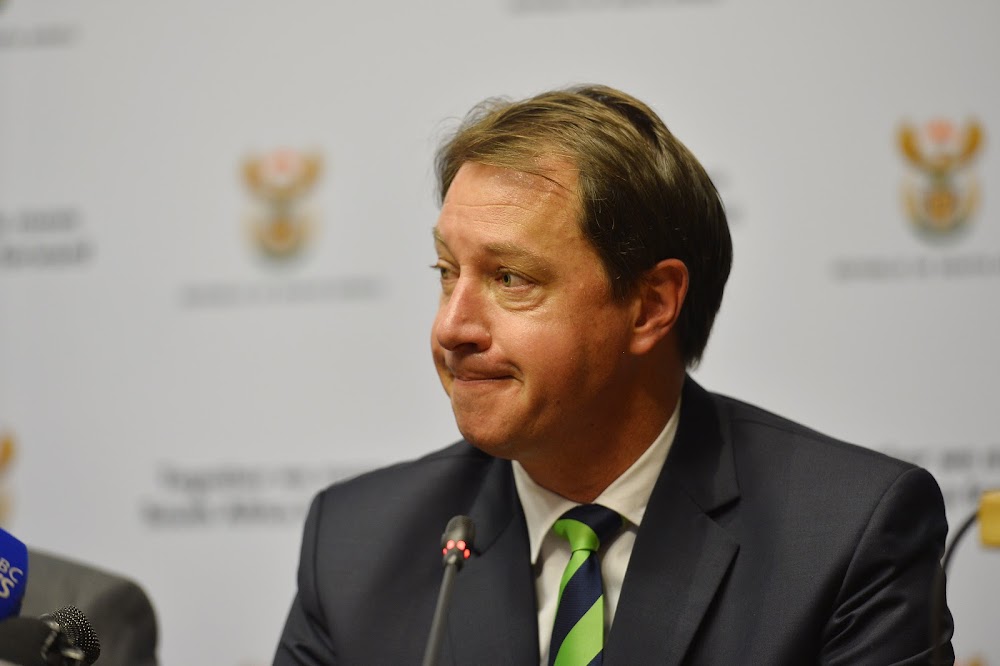
The multimillion-rand battle between Stellenbosch University and SA Rugby CEO Jurie Roux is headed for arbitration, News24 can confirm.
The university claims Roux misappropriated R37 million during his tenure in the institution’s finance department and was looking to recoup it through a civil claim it lodged at the Western Cape High Court.
The matter was initially set down to be heard in the High Court in May, but was postponed without a resumption date.
Instead, an arbitration hearing is now expected to be heard in November.
The university’s chief operating officer Stan du Plessis said the main advantage in opting for arbitration was “the speedier final resolution of the dispute between the parties”.
Going this route would also cost less.
He denied that part of the university’s motivation for referring the matter for arbitration was to keep it out of the public eye.
Matters involving public money should not be aired behind closed doors, said Du Plessis.
ARBITRATION AGREEMENT
It ordinarily would prefer that legal matters in which it was involved be heard in open court.
“It is for reasons relating to transparency that the university proposed that the existence of the arbitration and the final arbitration award will not be confidential, in contrast with most cases referred to arbitration. This proposal is included in the arbitration agreement.”
The university is claiming damages from Roux, who served as a senior director in its finance department before he was appointed as Saru’s CEO in 2013. He had worked for the university between 1994 to 2012 and had served on the management of the university’s rugby club for 10 years.
Audit firm KPMG, in a report attached to a notice by the university lodged at the high court in October 2017, found Roux “misrepresented the university’s funds (including by, without evidence of authorisation, reallocating reserves of the university for expenditure); entered into unauthorised agreements on behalf of the university; did not act in the best interests of the university; and potentially benefitted personally from university funds”.
According to the report, Roux could have benefitted from university funds through the payment of irregular bonuses, News24 previously reported.
Roux is also accused of having used a software mechanism that did not leave an audit trail and is alleged to have concealed the movement of funds between accounts to which he had access, ostensibly resulting in the university council’s reserves being decreased by R35.3m from 2002 to 2010.
KPMG also made adverse findings against a friend and colleague of Roux’s, Chris de Beer, who also worked in the university’s finance department and the rugby club.
He was found to have channeled funds from Roux to irregularly funded bursaries and unused or old student fee accounts. De Beer has been dismissed by the university.
Roux in a replying affidavit filed before this month’s High Court postponement said he found his former employer’s civil claim against him “strange” for a number of reasons.
RESUMPTION OF THE TRIAL
Roux claims the money had been used for legitimate university expenses. He said the only money he took was his salary and benefits.
According to his affidavit, the university did not suffer any damages as a result of his conduct. He said he had strengthened the university’s financial situation and its financial management system.
Roux also questioned the university’s claim that he had breached his employment contract, saying it was unable to produce the laws, statues, regulations, policies and principles that applied during his employment.
Roux’s attorney, Frikkie Erasmus, told News24 on Wednesday that the time factor was one of the many reasons it was agreed that arbitration would be the better option.
Du Plessis said the time factor also informed its decision to opt for arbitration.
“A material consideration for the university, in agreeing to arbitration, was that it had become clear in the preparation for trial that [it] would not be finalised in the time the court allocated to the matter, being Monday to Thursday for two court weeks,” he said.
“A resumption of the trial would realistically only take place sometime later in 2020, which would cause further delay of the final determination of the matter.”
The parties have agreed to three weeks of arbitration, starting on November 25.
The identity of the arbiter was confidential under the arbitration agreement, said Du Plessis.
“The university proposed, and the agreement now stipulates, that the existence of the arbitration and the final arbitration award will not be confidential.”
It would not oppose a request for the media to be present during proceedings.
Erasmus, however, said this possibility had not been part of discussions.
He was currently focused on the administrative elements of the upcoming proceedings and was “not yet going to take instructions on this”.

Tammy Petersen

WHY TANZANIA WANTS ACACIA TO PACK AND GO
WHY TANZANIA WANTS ACACIA TO PACK AND GO
Dar es Salaam — The government has declared Acacia Mining ‘unwanted’ and has written to the company’s mines in the country to alert them of the decision not to formerly recognise any agreements with their holding company.
It has emerged that on May 19, 2019, the government wrote to Bulyanhulu, North Mara and Pangea Minerals about the decision to lock out Acacia out of the business.
The letter by the Acting Chairman of the government negotiating team is a significant turning point of the future of the mining company, with indication it could be finally on its way out.
Acacia revealed the letter in its cautionary statement on Wednesday, in which it was also alerting of the move by Barrick Corporation to buy it off.
The beleaguered company which was locked out of government negotiations with Barrick, said it would reach out to Tanzania to seek clarification of the meaning of the letter.
“The letter states that the GoT (Tanzania) is resolved that it will not execute final agreements for the resolution of the Company’s disputes if the Company is one of the counterparties to the agreements, and that it will only sign such agreements “if satisfied that substantial changes have been made to the management style of the Operating Companies and of their shareholders,” said Acacia in the disclosure.
It would seem Acacia’s relations with the government has totally collapsed, not only at the stage of the negotiations, but also in its continued operations in the country under any means.
Acacia has frustrated the signing of the cooperation frame work agreement between Barrick and the government after it was locked out. It insists its board will have to endorse any final deal and has separately opened a tax dispute case against Tanzania at the international arbitration court.
The break up in relations informs Wednesday’s move by Barrick to initiate a forced takeover of Acacia to try to unlock the stalemate with Tanzania.
A statement, also on Wednesday, by the government spokesman Dr Hassan Abbasi confirmed the Acacia’s untenable status in the country, challenging Barrick to sort the matter out or risk not securing any deal.
Dr Abbasi confirmed negotiations with Barrick are drawing to an amicable close, saying only Acacia stood on the way.
“The Government has demanded that under no circumstances can Acacia be a part to the agreements, or have any role in the operation or management of the Barrick mining subsidiaries in Tanzania,” he said in a statement to newsrooms.
Dr Abbasi said Acacia was “operating as a rogue company that was disdainful of the Tanzanian authorities and the laws of the land” when it managed the mines.
“Acacia management never respected the undertakings in the Mining Development Agreements (MDAs) which provided the legal framework for the subsidiaries’ operations.”
According to the government, it resisted regulatory requirements, was involved in massive tax evasion and harshly dealt with communities around its mines.
“As a new era is downing in the Tanzanian gold mining relations, the Government does not want the presence of Acacia in any form in the country,” the statement read.
It made it clear to Barrick that if its gold mining subsidiaries are to continue operating in Tanzania, it must be under a new operating company in which the Government has a stake and there is no presence or participation of Acacia.
MOZAMBIQUE: PRIVINVEST COUNTER-SUES MOZAMBICAN STATE
MOZAMBIQUE: PRIVINVEST COUNTER-SUES MOZAMBICAN STATE
Maputo — The Mozambican Attorney-General’s Office (PGR) announced on Wednesday that it has received two notifications from European arbitration tribunals, concerning attempts by the Abu Dhabi based group Privinvest to sue the Mozambican state for hundreds of millions of dollars.
This is the latest stage in the saga of the three fraudulent companies, Proindicus, Ematum (Mozambique Tuna Company) and MAM (Mozambique Asset Management), which, in 2013 and 2014, obtained over two billion US dollars from the banks Credit Suisse and VTB of Russia.
The banks were happy to lend the money, despite the lack of any track record of the three companies, because the Mozambican government of the time, then led by President Armando Guebuza, issued illicit loan guarantees, in violation of the Mozambican constitution and budget laws.
Those guarantees mean that, in the event that the companies collapsed, the government would become liable for repaying the money.
Privinvest played a key role in ensuring that the loans were granted, and then became the sole contractor for the three companies. The main mediator for Privinvest, the Lebanese Jean Boustani, is currently in detention in New York.
Boustani is said to have been deeply involved in around 200 million dollars of bribes and kickbacks channelled via Privinvest. Also indicted by the US authorities, but not yet in custody, is the Privinvest Chief Finance Office, Najib Allam.
The PGR says the notifications it has received are from the Paris International Arbitration Court and the Swiss International Arbitration Institution. Privinvest is demanding compensation of 200 million dollars for losses it supposedly suffered due to breach of contract by the three fraudulent companies.
The PGR told the independent television station STV that it is now taking measures to respond to the notifications.
The Privinvest action against the Mozambican state dates from mid-March, and is clearly retaliation for the attempt by the PGR to sue Privinvest in London. The PGR is suing five companies in the Privinvest group – namely Privinvest Shipbuilding S.A.L. Abu Dhabi (Branch), Abu Dhabi Mar LLC, Privinvest Shipbuilding Investments LLC, Logistics International SAL (Offshore), and Logistics International Investments.
The PGR is also suing Credit Suisse International and Credit Suisse AG, and the three Credit Suisse former managers named in the US indictment, namely Andrew Pearse, Surjan Singh and Detelvina Subeva. These three were all arrested in London in January, on the basis of US warrants. They were released on bail, and are currently fighting extradition to New York.
A civil suit against these companies and individuals was deposited with the High Court of Justice/Queen’s Bench Division, in London. The PGR is demanding that each of those named in the suit compensate Mozambique for its losses in the corrupt scheme.
The Privinvest suits in Paris and Geneva face enormous obstacles because of in the massive detail about the fraud contained in the US indictment, and in the audit of Proindicus, Ematum and MAM undertaken by the company Kroll in 2017.
Summarising the fraud, the US indictment says that between 2013 and 2016 “the co-conspirators conspired to defraud investors and potential investors in the Proindicus, Ematum and MAM financings through numerous material misrepresentations and omissions”, which included “bribe and kickback payments to Mozambican government officials and bankers”. The deceit also covered issues such as the amount and maturity dates of the debt incurred by Mozambique and “Mozambique’s ability and intention to pay back the investors”.
The indictment notes that the borrowed money was paid directly to Privinvest, as the sole contractor for the maritime projects the three companies were supposed to implement. But in reality, Boustani and the others indicted “created the maritime projects as fronts to raise money to enrich themselves and intentionally diverted portions of the loan proceeds to pay at least 200 million dollars in bribes and kickbacks to themselves, Mozambican government officials and others”.
The indictment reaches the same conclusion as the Kroll audit – namely that the fishing and patrol boats and other assets provided by Privinvest were grossly overpriced. Kroll put the overpricing at around 700 million dollars.
“The co-conspirators applied only a portion of the loan proceeds towards the maritime projects”, the indictment says. “In furtherance of the scheme, Privinvest charged inflated prices for the equipment and services it provided, which were then used, at least in part, to pay bribes and kickbacks”.
The American prosecutors base much of their case on e-mails and other communications between the defendants, which show a persistent pattern of bribery. They also show that the coastal protection scheme, far from being vital to Mozambican sovereignty, was not a Mozambican idea at all. As from 2011, Boustany and “Privinvest co-conspirator 1” (believed to be Najib Allam) were working to persuade Mozambican officials to enter into a contract with Privinvest for coastal protection. Part of these discussions concerned the bribes that should be paid to guarantee the contract.
The US indictment argues that Ematum was not a Mozambican idea at all, but was cooked up in May 2013 by Boustani, Pearse and Subeva. The fraudsters devised a project that had nothing to do with Mozambique’s legitimate fishing needs: instead, the project was “a pretext to justify the maximum possible loan amount”.
Part of the money was not for Ematum at all, but was intended to carry on paying for the first of the fraudulent schemes, Proindicus. Boustani sent an e-mail on 21 July 2013, saying “we will go for 800 million dollars so we keep a cushion for Proindicus interest payment next year”.
To give the impression of competitive tendering, the fraudsters, the indictment says, “created fake competing bids for contracts”. Fully aware that there was no proper tender, Boustani e-mailed Pearse at the end of July, suggesting “Let’s say they contacted South African shipyards and Spanish and Portuguese. Without naming them”.
Surjan Singh then “included fake bid information” in a memorandum sent to Credit Suisse, “falsely asserting that the Privinvest proposal was deemed the most competitive one in comparison to bids from three other international companies”.
All of this might make it very difficult for Privinvest to fight a case in a European court.
ACACIA'S NORTH MARA MINE FINED OVER ALLEGED ENVIRONMENTAL BREACHES
ACACIA'S NORTH MARA MINE FINED OVER ALLEGED ENVIRONMENTAL BREACHES
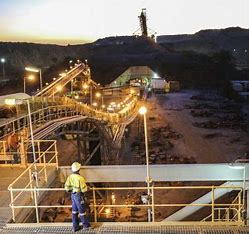
The FTSE 250 gold miner said North Mara Gold Mine, the operator of the mine, has received verbal notice from the Government of Tanzania that it is to be issued with an environmental protection order in relation to the alleged historical breaches.
“The mine understands that the GoT is considering issuing an EPO on account of alleged deficiencies at its tailings storage facility, however the mine has not yet received an EPO, or any supporting reports, findings or technical data in relation to the statements attributed to the Minister of State in the vice president’s office for union affairs and environment,” the company said.
It added that the mine’s technical team has been working “constructively and collaboratively” with the GoT to try to address its concerns about the alleged breaches of various environmental regulations and alleged discharges of a hazardous substance from the mine.
In the meantime, operations at North Mara remain unaffected, it said.
RBC Capital Markets said a closure of North Mara on environmental grounds – as previously threatened – is highly unlikely.
“Instead, we expect headline risk to remain relatively elevated for the group as Barrick continues to move towards an agreement on the proposed terms to resolve the outstanding disputes concerning the GoT and Acacia. It is likely both Barrick and the GoT want to avoid an international arbitration process that is set to begin in early Q3. We think in-country ‘pressure’ tactics on Acacia could increase in the lead-up to this.
“We see risk/reward as balanced here given the lack of visibility on what happens next post theproposed ‘deal’ from Barrick in February that remains to be finalized with the GoT. Before final details are known and Acacia’s independent directors receive and review it is hard to take a view. We see a range of potential outcomes and hence valuations for shares, see our recent note assessing this here.”
Acacia is majority-owned by Barrick Gold.
Michele Maatouk
ARBITRATION PROCEEDINGS: HC ALLOWS CENTRE TO FILE DOCUMENTS RELATING TO 2G CASE
ARBITRATION PROCEEDINGS: HC ALLOWS CENTRE TO FILE DOCUMENTS RELATING TO 2G CASE
New Delhi, The Delhi High Court Tuesday allowed the Centre to place before it certain documents in a case which arose from the probe into the 2G scam and pertains to arbitral proceedings commenced by Khaitan Holdings (Mauritius) Ltd against the Union of India. Justice Prathiba M Singh refused to summon the entire, “bulky” trial court record of the case in which Essar Group and Loop Telecom promoters along with others were acquitted.
The court however allowed the central government to file relevant record of the trial court which would be useful for this matter in which the Centre challenged the arbitral proceedings.
The arbitral proceedings have been initiated by Khaitan Holdings (Mauritius) Ltd against the Union of India, seeking compensation for the cancellation of its Unified Access Services Licences in 2012.
The high court had earlier refused to grant an ad-interim stay on the arbitral proceedings.
The arbitral proceedings were invoked by Khaitan Holdings pursuant to the Bilateral Investment Treaty (BIT) between India and the Republic of Mauritius for the promotion and protection of investments.
The arbitral dispute between the Centre and Khaitan arose from the 2012 Supreme Court order cancelling 21 Unified Access Services Licences (UASL) granted to Loop Telecom. The licences were cancelled in view of the CAG Report that had unearthed the alleged Rs 1.76 trillion 2G scam.
When the fresh auction was ordered by the court, Loop Telecom had chosen not to participate in the subsequent bidding process and sought refund of the license fee paid by it to the Centre.
The BIT mechanism was triggered in April 2012 for compensation and in September 2013, notice of arbitration under Article 8.2 of the BIT Agreement was issued by Khaitan Holdings on the ground that it held 26.95 per cent in Loop Telecom and being a company based in Mauritius, it is entitled to claim compensation.
In December 2017, all 17 accused, including former Telecom minister A Raja, were acquitted in the 2G scam by the Special CBI court.
Promoters of Loop Telecom Ltd I P Khaitan and Kiran Khaitan, Essar Group Director (Strategy and Planning) Vikash Saraf and three telecom firms – Loop Telecom, Loop Mobile India, and Essar Tele Holding were also acquitted in the other case arising out of the 2G scam probe.
The CBI has filed an appeal against the acquittals.
Subsequent to the judgement, Khaitan Holdings had sought appointment of the Presiding Arbitrator by the Permanent Court of Arbitration as per the UNCITRAL Rules. The Presiding Arbitrator was thus appointed was appointed in May 2018.
In December 2018, the Arbitral Tribunal confirmed the first date of hearing in the arbitration as January 28, 2019.
Thereafter, the Centre approached the Delhi High Court in January this year seeking an anti-arbitration injunction.
It has challenged the arbitration proceedings on the ground that the decision to cancel the licences was rendered by the Supreme Court in public interest and that there was no expropriation in absence of due process.
The Centre has claimed that Khaitan Holdings is not a “genuine investor” as it is controlled by Indian citizens I P Khaitan and Kiran Khaitan and hence cannot invoke the BIT for initiating arbitral proceedings.
It has argued that the entire foreign investment, being through the automatic route, was subject to Indian laws under the UASL.
Since Loop Telecom had already availed of its remedies against the cancellation of its licences under Indian law, the rights under the BIT stood waived, the Centre has said.
It also argued that Khaitan Holdings’ status as an ‘investor’ under the BIT Agreement is to be interpreted by the Arbitral Tribunal and not by the Delhi High Court.
telecom.economictimes.indiatimes.com

NNPC SAVES $1.6BN FROM ARBITRATION WITH ATLANTIC ENERGY
NNPC SAVES $1.6BN FROM ARBITRATION WITH ATLANTIC ENERGY
The Nigerian National Petroleum Corporation (NNPC) has disclosed that it recorded savings of $1.6 billion from the arbitration between its upstream flagship subsidiary, the Nigerian Petroleum Development Company (NPDC) and the Atlantic Energy Drilling Concept Nigeria Limited.
NNPC’s Group Managing Director, Dr. Maikanti Baru, made this disclosure yesterday after he was conferred with the Honorary Fellowship Award by the Chartered Institute of Forensic and Investigative Professionals of Nigeria (CIFIPN) at the NNPC Towers in Abuja.
Baru, while fielding questions from journalists, shortly after the event, revealed that the corporation succeeded in making a lot of savings from some companies that had litigations with it through arbitrations.
Baru stated that the NNPC, through its determination to fight corruption also saved 91.5 per cent of its case with IPCO, which initially demanded $400 million from the NNPC but was paid $37.5 million, adding that it takes a courageous team like what is obtained in NNPC not to allow the processes to be compromised with the humongous amount involved.
According to him, “these are activities, which the fraud investigation and of course the forensic investigation by the NNPC, has helped the corporation to get value for money.
“So, this institute’s intention is quite laudable and the conferment of fellowship on me will make me more determined to support their activities and being a patron, will help me to share with them some of the knowledge and training that I have received as a certified fraud examiner,” he said.
The NNPC helmsman further informed that the collaboration with the institute would create an enabling environment for so many people to be trained in-country and that would go a long way to stem fraud, corruption and cybercrime in the society.
CAHILL: WE ARE READY TO RESOLVE DISPUTE WITH FG
CAHILL: WE ARE READY TO RESOLVE DISPUTE WITH FG
The founder, Process and Industrial Development, Mr. Brendan Cahill, in this email interview with THISDAY, speaks about the company’s failed contract with the federal government to process wet gas to power its generating plants, the hefty arbitration award against Nigeria and the company’s desire to find an amicable end to the dispute even as it awaits the outcome of an enforcement proceeding holding in London on May 21. Excerpts:
Could you give us a brief background to the court case your firm, Process and Industrial Development (P&ID), instituted against the federal government in 2012?
P&ID’s Gas Supply and Processing Agreement (GSPA) failed when the government did not uphold its commitments. In August 2012, after several attempts, over two and half years by P&ID to salvage the agreement, including offers to renegotiate the deal, the company initiated arbitration proceedings. The tribunal was organised in London under the rules of the Nigerian Arbitration and Conciliation Act as part of the original contractual agreement between parties. In January 2017, the tribunal ruled that Nigeria was liable for $6.6 billion in damages, which by now has increased to over $9 billion with interest. P&ID is now seeking approval from US and UK courts to enforce the award.
You claim that your company worked in Nigeria for several years, and even handled many projects successfully in the past. How much effort did you make to resolve this matter by other means, and at what point did you decide that you had no other option but to go to court?
Michael Quinn, my late business partner, and I had over 30 years’ experience of executing successful engineering projects in Nigeria before we launched the P&ID. From the moment we signed the deal in 2010, P&ID worked tirelessly to implement the agreement. After 2.5 years and several attempts to salvage the agreement, we had no option but to initiate arbitration. The original project was a win-win deal that would have brought power and economic growth to Nigeria by supplying free natural gas for electricity generation, while at the same time building a highly successful commercial venture, with a share of profits going to the Nigerian government. My biggest regret is the missed opportunity for Nigeria, which is now compounded by the government’s lack of willingness to find a reasonable solution.
Why did you approach a London court for arbitration in a matter that took place in Nigeria?
The decision to seek arbitration was not an easy decision. P&ID was eager to deliver this promising project in the hope of bringing electricity to millions and helping Nigeria reach its full potential. Unfortunately, the government did not uphold its side of the contract, so the project failed. Having been unable to find a willing partner in government to resolve the matter, we had no option but to seek remediation through arbitration in London for the repudiation of our contract, as that was what the contract said. It was in fact Nigeria who went to the London Court, when the arbitrators found against them.
Your firm did succeed in getting a judgment for about $6 billion dollars against the Nigerian government, in the London arbitration. That award has since been attracting interest at the rate of $1.2million daily. That is a lot of money, and it was obviously based on the claims you made. Why did you make such a huge claim?
It is unfortunate for the Nigerian people that the government caused such a promising project to fail and result in an arbitration award against it of billions of dollars that it now shows no interest in honouring or even trying to resolve amicably on a reasonable basis. The P&ID project would have supplied 2,000 megawatts of electricity in a country where tens of millions do not have access to electricity. The award judgment was handed down by the independent arbitration panel because it represented the loss of profits for P&ID over the 20 years of the project.
The Office of the Attorney-General of Nigeria (AGF) issued a statement in late February this year, apparently contesting the huge sum of money the court awarded your firm as damages, largely on the grounds that the project did not actually kick off the ground. It means that there was no actual physical work done on the project to warrant such a huge claim in damages. How do you react to that?
Let’s be clear: these arguments are tired and old – as are the games of delay and desperation by the Nigerian government. P&ID put in years of planning, field work, design and on-the-ground preparation. We spent 2.5 years offering solutions, while the government consistently failed to deliver its side of the contract. This is a tragic ending to a venture that would have delivered low-cost electrical energy to hundreds of thousands of households throughout Nigeria, and would have brought vital revenue to the Nigerian treasury.
There has been a persistent claim that P&ID is a “fake” company that made a “fraudulent arrangement” with some persons in Nigeria. How do you react to this claim?
We are well aware of the government’s efforts to characterise P&ID, and its founders, as frauds. This is absolutely false. The arbitrators in London spent five years carefully reviewing the written agreement and all the facts surrounding the deal, and in the end they unanimously concluded that Nigeria was to blame for the deal’s collapse and had to pay damages to P&ID. Not once during those five years did Nigeria present the tribunal with any evidence that there had been some kind of fraud—because there wasn’t one. It is truly unfortunate that Nigeria seems unable to take responsibility for its own failure to meet its contractual obligations, and instead keeps blaming others. The campaign will inevitably end up costing Nigeria even more. The agreement and the tribunal process provided the government with ample opportunity to provide input and affect decisions. The facts could not be clearer in support of P&ID.
Are you worried that if your enforcement application succeeds, there is the possibility of this case now assuming an international dimension, with the possible seizure of Nigeria’s assets overseas?
P&ID looks forward to the UK and US courts granting enforcement rights that will allow P&ID to collect what is rightfully ours. If history is any guide – just look at how creditors seized Argentina’s naval frigate while docked in Ghana. Efforts by Nigeria to evade this judgement will inevitably fall flat. The ball is in Nigeria’s court, if the government is prepared to find a good-faith solution.
Is there any ray of hope that this matter could still be resolved outside the court, even at this stage, and would your firm be willing to consider this option? If yes, what would it take for this to happen?
P&ID remains open to a settlement on a reasonable basis, but we need a willing partner in government to help resolve this matter. The onus is on the Nigerian government to act in good faith, if they wish to find a solution.