DISPUTED DIAMONDS: PRESIDENCY SLAPPED WITH HEFTY R29.9BN CLAIM OVER LESOTHO DIAMONDS
DISPUTED DIAMONDS: PRESIDENCY SLAPPED WITH HEFTY R29.9BN CLAIM OVER LESOTHO DIAMONDS
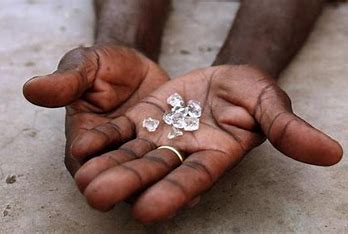
A diamond mining company has filed a R29.9bn claim against President Cyril Ramaphosa and his government as a near three-decade-long dispute over expropriated diamond mining rights in Lesotho reaches South African courts again.
Josias van Zyl, managing director of Swissbourgh Diamond Mining, is arguing that South Africa is liable to pay him damages for, among other reasons, its “unconstitutional” and “unlawful” support in disbanding the Southern African Development Community (SADC) Tribunal at a SADC summit in 2014.
Van Zyl is the second plaintiff, with the first being the Burmilla Trust. The trust is the successor to the disputed mining rights held by various companies in the Swissbourgh group, including Matsoku, Motete, Orange, Patiseng and Rampai Diamonds.
‘Unconstitutional, unlawful and irrational’
In December 2018, the Constitutional Court ruled that former president Jacob Zuma’s participation in the decision-making process and “his own decision to suspend the operations of the SADC Tribunal was unconstitutional, unlawful and irrational”.
The country’s apex court also directed that Zuma’s signature of the protocol mandating the disbandment was similarly unconstitutional, unlawful and irrational and directed him to withdraw his signature.
Van Zyl, whose legal battles over the mining rights in north-eastern Lesotho have been raging since 1991, has seized on this ruling as a new club to be brandished in his quest for compensation over his lost mining rights that has spanned nearly three decades and multiple courts, tribunals and arbitration bodies in Lesotho, South Africa, Singapore and Mauritius.
South Africa, he argues in court documents filed in the Gauteng High Court in Pretoria on Tuesday, was complicit in denying him an avenue for recourse as he had already filed papers with the tribunal which sought to compel Lesotho to compensate him for the removal of the mining rights in 1989.
At the heart of the dispute over the mining rights is the Lesotho Highlands Water Project (LHWP), a joint venture between the governments of South Africa and Lesotho.
Swissbourgh mines obtained the mining leases in 1988 from the then military council, which had been in power in land-locked Lesotho since 1986.
The Lesotho government soon back-tracked and eventually handed the leases to the state-owned Lesotho Highlands Development Agency, despite Swissbourgh and Van Zyl leading a court process in Lesotho that interdicted any interference with mining operations.
Some of the mining rights fell on land that was eventually flooded when the Katse Dam was complete in 1995 – placing “considerable quantities of diamonds” beyond the miner’s reach, Swissbourgh argued in previous court papers.
Now, Van Zyl has set out in his latest court challenge how the Lesotho government destroyed evidence of the value of the mines through flooding the land.
WILLING ACCOMPLICES
Van Zyl further stated that South Africa, when it acted “with other SADC members” in disbanding the tribunal, violated the founding constitutional principle of the rule of law. He also claimed his fundamental right he holds to access the courts was violated as well as his right not to be arbitrarily deprived of property, and South Africa failed in its constitutional obligation to promote and fulfil the Bill of Rights.
“South Africa had an interest in frustrating and preventing relief of this nature,” Van Zyl argues of the Zuma administration’s support of the SADC Tribunal issue.
Van Zyl also points out that South Africa may have wanted to prevent his claim from being heard by SADC because under the agreement that constitutes the Lesotho Highlands Water Project, South Africa could have been liable to reimburse the Lesotho government for any losses it sustained in terms of claims such as Van Zyl’s.
He points out that the Trans-Caledon Tunnel Authority – a South African state-owned company – had budgeted for such an eventuality.
In support of his R29.9bn claim, which is as a result of direct and indirect damages, Van Zyl says in his court papers:
“The unconstitutional conduct of South Africa in concert with the other SADC countries deprived the Plaintiffs [Van Zyl and Burmilla] of their opportunity of vindicating their claims against Lesotho in the only forum with jurisdiction to hear those claims and thus amounted to a denial of justice to the Plaintiffs in respect of those claims.”
He adds: “Lesotho acted in concert with South Africa, alternatively with the knowledge and support of South Africa in perpetrating the underlying violation of the rights of the plaintiffs.”
Van Zyl and his mining companies are represented by no less than three senior counsel – Mathew Chaskalson, Jaap Cilliers and Max du Plessis, as well as two advocates being Iain Currie and Michael Mbikiwa.
News24 approached the Presidency for comment on the matter and will update this article as soon as a response is forthcoming.
Presidency spokesperson Khusela Diko said: “The Presidency is opposing the application. Particulars have not been filed yet so we wouldn’t wish to add anything further at this point.”

Kyle Cowan and Azarrah Karrim

AU URGES DISPUTE SETTLEMENT ENDEAVORS AS AFCFTA EDGES CLOSER TO EFFECT
AU URGES DISPUTE SETTLEMENT ENDEAVORS AS AFCFTA EDGES CLOSER TO EFFECT
ADDIS ABABA – The African Union (AU) has stressed the need to boost African countries’ capacity on the settlement of trade and investment disputes as the African Continental Free Trade Area (AfCFTA) edges closer to entry into force.
“It is of paramount importance to provide capacity in both Investor-State Dispute Settlement (ISDS) and state-to-state dispute to member states as they embark on the road to greater intra-Africa trade as well as increased trade activities with third countries outside the continent,” the AU said in a statement.
The 55-member pan-African bloc, which is organizing training on the settlement of disputes to harness the continental free trade pact effectively, stressed that “interactive training will help countries further explore means of encouraging African Arbitral Institutions towards the development of a homegrown solution.”
The AU has set a timeframe to activate the AfCFTA on May 30 after Sierra Leone and the Saharawi Republic deposited their instruments of ratification to the AU Commission.
Regarded as the world’s largest free trade zone by the number of countries, the AfCFTA covers more than 1.2 billion people, with a combined gross domestic product (GDP) of 2.5 trillion U.S. dollars.
Once operational, the African free trade accord is also projected to boost the level of intra-Africa trade by more than 52 percent by the year 2020, according to the UN Economic Commission for Africa (ECA).
Noting the need to further strengthen African countries’ capacity on settlement of disputes toward successfully realizing the free trade pact, the AU stressed that one of the main objectives “is to establish a mechanism for the settlement of disputes concerning the rights and obligations of state parties.”
The AfCFTA “stipulates a state-to-state dispute mechanism to resolve differences that may arise once the free trade accord goes operational.”
The AU said arbitration of disputes under the AfCFTA is “similar to that of the World Trade Organization (WTO).”
It, however, stressed that “the experience of African states at the WTO Dispute Settlement Body is minimal as African countries have not had any case as respondents or complainants at this body.”
According to figures from the AU, there have been only five cases where African countries have participated as third parties under the WTO Dispute Settlement Body, two of which as part of the African, Caribbean and Pacific (ACP) group.
The AfCFTA, which was signed by 44 African countries when it was launched in Kigali, capital of Rwanda, in March 2018, aspires to create a tariff-free continent that can grow local businesses, boost intra-African trade, spur industrialization and create more jobs.
KENYA: WAMALWA'S SH90 MILLION DEAL IN POSH KITISURU HOUSE TURNS UGLY
KENYA: WAMALWA'S SH90 MILLION DEAL IN POSH KITISURU HOUSE TURNS UGLY
A former nominated senator wants a court to compel Devolution Cabinet Secretary Eugene Wamalwa to deposit Sh50 million in court in a Sh90 million house purchase deal that has taken a new turn.
Ms Catherine Nabwala Mukite, who co-owned the property in Nairobi’s Kitisuru estate with her estranged husband — former Kimilili MP Suleiman Murunga — says the minister has not finalised the deal almost four years down the line.
In October 2015, Mr Wamalwa signed a nine-page document promising to pay Sh90 million for the house by Christmas of that year.
SETTLE BALANCE
He occupies the house but has paid 70 per cent of the amount and is reluctant to settle the balance, Ms Mukite says.
What began as a straightforward sale agreement between Mr Wamalwa, then the CS for Water and Irrigation, and the house owners Murunga (then the Kimilili MP) and his wife (then a senator) is now the subject of an emotive case.
When the agreement was signed, Mr Wamalwa was just three months old in President Uhuru Kenyatta’s Cabinet.
The minister committed to pay the full amount in 60 days, according to the application Ms Mukite made to court.
She urges the court to order Mr Wamalwa to meet certain conditions before taking part in an arbitration the CS had requested.
“May this honourable court be pleased to direct that the defendant furnishes the requisite security pending arbitration as an interim measure of protection,” Ms Mukite says.
NO LONGER TOGETHER
The case has become complicated by the fact that Mr Murunga and his wife, who sold the property to Mr Wamalwa, are no longer together.
That has prompted the former senator to accuse the minister of secretly striking deals with her estranged husband.
Court files indicate that Mr Murunga and Ms Mukite were to divide the money paid by Mr Wamalwa equally between them, but Ms Mukite claims her estranged husband received more.
Ms Mukite’s lawyer indicated in the February 17 application that she wants Mr Wamalwa to deposit security before negotiations as she doubts he would pay up the amount to be agreed on.
“Ms Mukite is apprehensive that Mr Wamalwa may not honour the terms of the arbitral award,” her lawyer said.
According to the sale agreement that is part of the court proceedings, Mr Wamalwa was to pay Sh18 million as deposit. The documents also show that he paid that amount and that Ms Mukite took half as Mr Murunga pocketed the remaining Sh9 million.
The minister also paid Sh27.1 million to Trade Bank, which was to free a title deed for the property that had been retained as security for a loan.
FLIP-FLOPPING
After the two initial payments, Ms Mukite says, CS began flip-flopping on the remaining amount.
On top of the Sh9 million deposit she received, the former senator says Mr Wamalwa has paid her Sh6 million “and I expect more”.
“In contravention of the terms and conditions of the sale agreement, Mr Wamalwa failed to pay Ms Mukite and Mr Murunga the balance for the purchase price and she has only received Sh15,090,000,” Ms Mukite’s lawyer said.
“This is way below the balance my client was expecting.”
A breakdown of Mr Wamalwa’s payments that is part of the proceedings shows that he has been remitting amounts from as low as Sh90,000 to as high as Sh4 million separately to the two sellers.
It indicates that the minister had paid Sh64.8 million by August 2018 — Some Sh23.6 million to Mr Murunga and Sh15 million to Ms Mukite.
The outstanding balance is Sh27.1 million.
Elvis Ondieki

PRINT TUESDAY S. AFRICAN RUNNER SEMENYA'S TESTOSTERONE JUDGMENT SET FOR APPEAL
PRINT TUESDAY S. AFRICAN RUNNER SEMENYA'S TESTOSTERONE JUDGMENT SET FOR APPEAL
JOHANNESBURG – Athletics South Africa (ASA) is set to appeal the Court of Arbitration for Sports (CAS) judgement which forces female athletes with high testosterone to take hormonal suppressants before participating in international competitions.
Sports department made the announcement on Monday, saying the appeal was “about principle and human rights of the athlete.”
Speaking to Xinhua, Ministry of Sports spokesperson Vuyo Mhaga said the appeal was as a result of consultations between ASA and a high level panel.
He said when the court ruled on Caster Semenya, it failed to consider the “scientific evidence we brought forward.”
“The appeal would be on the basis of three accounts, first the two judges that administered the Caster’s judgement were the same judges that sat on the Dutee Chand’s case. Secondly, it’s not clear how the International Association of Athletics Federations (IAAF) will apply the May judgement,” he said.
Indian athlete Chand took the IAAF to the CAS in 2015 concerning the similar issue.
The appeal comes after the CAS ruled that IAAF must go ahead and implement its new regulations that compel athletes with “differences of sex development” to lower or reduce their natural high levels of testosterone.
Affected South Africa’s Olympic gold medalist Semenya took the IAAF to court describing the regulations as “invalid, discriminatory and unnecessary.”
Some Kenyan female athletes have also been affected by the regulations.
The IAAF said that female athletes with natural high levels of testosterone have an unfair advantage over other female runners.
The regulations which came into effect this month, are only applied to 400m, hurdle races, 800m which Semenya dominates.
Mhaga said the regulations must be suspended until Semenya’s appeal is finalized.

TANZANIA SEEKS EAC INTERVENTION IN MARA DAMS
TANZANIA SEEKS EAC INTERVENTION IN MARA DAMS
Tanzania is now seeking the intervention of East African Community ministerial committees on the issue of damming the Mara River, which has put it on a collision course with Kenya.
The Mara River rises in Kenya’s Mau Summit, flows through the world famous Masai Mara and into the Serengeti in Tanzania before draining into Lake Victoria.
Last week, Kenya said that it would go ahead with plans agreed on with Tanzania to build two dams on the river, one in Kenya and another in Tanzania, to control the flow of the water.
Tanzania’s Deputy Minister for Tourism Constantine Kanyasu however this past week told The EastAfrican that, as both countries have resolved to construct hydroelectric dams that experts say have detrimental effects in future, his ministry is planning to forward the matter to the ministerial committees.
“This matter is more a diplomatic issue and my office has no mandate to resolve it once and for all. We have to seek international arbitration from within East Africa,” Mr Kanyasu said.
Tanzania says that the dams will reduce the water flow into the Serengeti the heartbeat of Tanzanian tourism.
Environmental experts have predicted that the ecosystems of both parks could be damaged, potentially leading to the extinction of animal species if their natural habitat is destroyed.
The Mara River is the lifeline of the annual great wildebeest migration.
Besides its contribution to conservation of the Serengeti ecosystem, the river also supports livelihoods for over 1.1 million people in Tanzania and Kenya.
EMMANUEL ONYANGO
VALE FILES US$2 BILLION LAWSUIT AGAINST FORMER PARTNER OVER SIMANDOU PROJECT
VALE FILES US$2 BILLION LAWSUIT AGAINST FORMER PARTNER OVER SIMANDOU PROJECT
RIO DE JANEIRO, BRAZIL – Brazilian miner Vale said on Wednesday it had filed a lawsuit in the United States to force BSG Resources to pay about US$1.25 billion plus interest and expenses, as mandated by an arbitrator in a dispute over a joint venture in Guinea.
Earlier this month, Vale said an arbitration court in London had ordered BSGR to pay US$1.246 billion. The suit, filed in the U.S. District Court for the Southern District of New York, seeks payment of more than $2 billion when interest and expenses are taken into account.
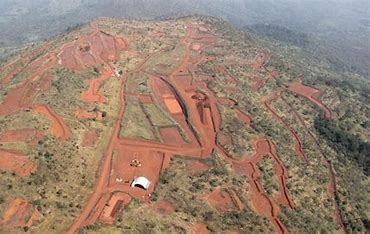
The arbitration case stemmed from a dispute between Vale and BSGR, located in the Channel Islands and controlled by French-Israeli billionaire Beny Steinmetz, over Simandou, which contains billions of tonnes of high-grade iron ore, making it one of the world’s most significant untapped iron ore deposits.
Simandou can sustain a mine life over 40 years and has the potential to make Guinea one of the world’s top iron ore exporters.
Vale has accused BSGR of fraudulently inducing it to buy a 51 percent stake in a joint venture to develop the mine, a concession later revoked by the Guinean government on the grounds that the rights had been obtained through fraudulent means.
A government report at the time said Vale was not a participant in corruption.
THE SIMANDOU SAGA
Steinmetz was subject of several court cases in several jurisdictions regarding claims that his company bribed government officials to get the rights to Blocks 1 and 2 of the mine.
Before the billionaire developed an interest in the Simandou mine, it was wholly owned by British-Australian Rio Tinto.
Rio Tinto held the license for the entire Simandou deposit since the early 1990s but was stripped of the northern blocks of it in 2008.
BSGR acquired this concession later that year after spending US$160 million exploring the property.
But in 2010, it sold 51 percent of its holdings to Vale for US$2.5 billion. The Rio based company stopped paying after the first US$500 million after missing several development milestones.
The new Guinean government under Alpha Conde launched a review of all mining contracts awarded under previous regimes and started an investigation into the Vale-BSGR joint venture.
Shortly after, authorities withdrew their mining permit and accused BSGR of obtaining its rights through corruption.
BSGR has denied any wrongdoing and filed an arbitration request in an attempt to win compensation from the Western African nation.
In 2014, Rio filed a lawsuit against Vale and BSG Resources over an alleged conspiracy between the two competitors to steal its rights over the project. Rio Tinto alleged BSGR paid a US$200 million bribe to Guinea’s former minister using funds from Vale’s initial payment.

AFRICAN PETROLEUM STANDS ON SLIPPERY GROUND
AFRICAN PETROLEUM STANDS ON SLIPPERY GROUND
UK-based exploration and production company African Petroleum continues to lay claim to offshore Block 1A in The Gambia even after the government of this tiny West African country reportedly signed an agreement with oil major BP for the likely lucrative asset.
The odds appear to be stacked against African Petroleum that now appears to be embroiled in a vicious fight with at least three governments in West Africa to protect its interests in some offshore oil blocks thought to be highly lucrative.
Although the reported signing of the agreement between The Gambia and BP is the latest in African Petroleum’s weakening grip on the fight to retain the A1 block, the dispute started way back in the late 2017 when affiliate companies, African Petroleum Gambia Limited and APCL Gambia B.V, filed requests for arbitration documents with the International Centre for the Settlement of Investment Disputes (ICSID) to shield its interests in both A1 and A4 that it acquired in 2006 with 100% working interest.
There has been a delay in registering the dispute and appointing of arbitrators for it, a constraint African Petroleum appears to be facing with a similar wrangle in neighboring Senegal.
African Petroleum’s initial exploration period for the two offshore blocks in The Gambia had previously been extended thrice and the government accused the company of failing to fulfill its drilling obligations but instead sought for further extensions which the authorities rejected in 2016.
The company is alarmed at what it says are “media reports” indicating The Gambian government has signed an agreement with BP for offshore Block A1.
“The company continues to reserve its right in relation to A1 license and will continue with its efforts to protect its interest in the A1 license through the ongoing International Center for Settlement of Investment Disputes (ICSID) arbitration process,” said Jens Pace, CEO African Petroleum.
However, the company said the process is likely to drag on up to the second quarter of 2020 when the award of the arbitration is expected “unless a mutually beneficial resolution is agreed before this time.”
“The Company remains open to engaging in constructive dialogue with the Gambian authorities, with a view to establishing a satisfactory solution that is in the interests of all parties,” said Pace.
Accusations of delay by African Petroleum to fast-track its work commitments as outlined in its Production Sharing Contracts (PSCs) have also seen the company wrangle with the Senegalese government through national oil company Petrosen on the status of Senegal Offshore Sud Profond (SOSP) and Rufisque Offshore Profond (ROP) permits.
African Petroleum holds 90% interest in each of the PSCs with the first renewal term of the SOSP permit having expired on December 2017. The company sought to have the PSC’s period extended and the Senegalese authorities agree to a proposal to exchange the well commitment for a 3D seismic acquisition program and have the amended remaining commitment transferred to the second phase of the extended period.
Back in 2017 Petrosen said: “The African Petroleum was supposed to do work in compliance with its obligations and that was not done so we canceled the contract.”
In October 2018 African Petroleum confirmed Petrosen had advertised a tender for the sale of two offshore blocks in Senegal, including the SOSP block despite notice to remove the latter from the tender process.
“We are surprised that Petrosen are seeking expressions of interest on our SOSP block at this time given it is the subject of ICSID arbitration, a process which the Senegalese government has acknowledged and interested industry players will be well aware of,” said Pace.
“The SOSP PSC has not been terminated and until such time as the dispute is resolved, either amicably or through the arbitration channels, African Petroleum remains on the licence, and we shall continue to defend our position rigorously through the ongoing arbitration process,” he added.
Just like in The Gambian arbitration, resolution of the Senegalese dispute with African Petroleum is mired in a convoluted procedure of appointing arbitrators before the ICSID process commences and could possibly be several months before the outcome is known.
The fight by African Petroleum to retain its contractual assets in Senegal and The Gambia comes at a time when the company has petitioned Sierra Leone for the extension of the Well Commitment and Second Extensions Periods to allow additional time for its subsidiaries, European Hydrocarbon Limited and African Petroleum Sierra Leone Limited to complete additional geological and geophysical work on permits SL-03-17 and SL-4A17 and commit to the drilling of exploration wells. The SL-03-17 permit expired on April 23 and while SL-4A17 expires on September 17 this year.
However, African Petroleum says it “is awaiting a response from the Sierra Leone government to the proposal”.
Elsewhere in Cote d’Ivoire, the company has pulled out of CI-509 block where it had a 90% interest. The block’s PSC license expired in March 2016 and efforts to seek extension flopped after African Petroleum failed to get a partner for the permit as initially agreed with the government.
The fears expressed by African Petroleum that the arbitration process for the Senegal and The Gambia case could take several months to finalize may have been the same reason why the two governments opted to seek out new investors for the contested PSCs as demand for deep and ultra-deep water investment surge in West Africa.
Shem Oirere
OUT-OF-COURT SETTLEMENTS CUT KAKAMEGA BACKLOG
OUT-OF-COURT SETTLEMENTS CUT KAKAMEGA BACKLOG
The case backlog in Kakamega courts has declined from 4,000 to 530 in less than a year.
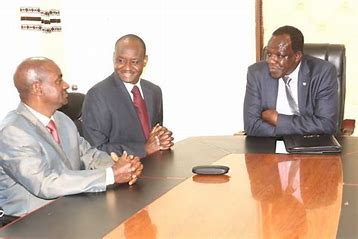
Presiding High Court judge William Musyoka attributed to the drop to alternative dispute resolution.
He spoke when he and senior judiciary officials from Kakamega paid a courtesy call on Governor Wycliffe Oparanya.
“We recommend alternative dispute resolution for land disputes and succession cases to avoid adverse effects on family relationships and huge backlogs in the corridors of justice,” he said.
The judiciary rolled out the mediation programme in October last year after a successful pilot programme in Nairobi.
The main ADR methods available in Kenya are negotiation, conciliation and arbitration.
Musyoka also said the judiciary had acquired land in Kongoni, Likuyani subcounty, to establish a court serving the north of the county.
Residents of Navakholo subcounty will continue to be served by a mobile court until a facility is constructed, he said.
Musyoka underscored the need for regular interactions between the Judiciary and Executive, saying their objectives were the same.
Musyoka was accompanied by Environment and Land Court judge Nelly Matheka, High Court judge Marete Njagi, chief magistrate Bildad Ochieng and the deputy registrar Josephine Maragia.
Oparanya said at least eight courts are needed in the county due to its geographic and population size.
“We used to jointly organise very useful court users’ clinics to sensitise the people on judicial services and their legal rights,” the governor said. “This helped to ensure they make informed decisions before rushing to court,”
His administration is also holding land clinics to educate the residents on land rights so they won’t be swindled by brokers who take advantage of their ignorance.
Oparanya said the county would fast-tracking land surveys, availability of office accommodation and road infrastructure development to facilitate timely resolution of litigation.
He was accompanied by his deputy Philip Kutima, county secretary and head of civil service Jacinta Aluoch, Lands executive Alfred Matianyi, county attorney Moses Sande and Strategy and Governance adviser Musa Chibole.
Edited by: R. Wamochie

INVESTMENT: ICCN RESTATES COMMITMENT TO GROWTH OF ARBITRATION
INVESTMENT: ICCN RESTATES COMMITMENT TO GROWTH OF ARBITRATION
The International Chamber of Commerce Nigeria (ICCN), has reiterated its commitment to the growth of arbitration to attract investments to Nigeria and Africa.
Mr Mike Igbokwe, Senior Advocate of Nigeria (SAN), made this known on Monday in Lagos during a media briefing on the forthcoming 4th ICC Africa Regional Arbitration Conference.
He noted that Africa is currently seen as an attractive investment destination to many foreign investors.
“The foreign investors often insist on an efficient international arbitration as the dispute settlement mechanism to be adopted in the settlement of any dispute that may arise from their investments.
“Arbitration is gaining increasing acceptance in many parts of Africa. It is now relatively common to see arbitration clauses in contracts involving corporate bodies in Africa.
“While the cost of resolving disputes by way of arbitration may no longer be said to be cheap, the relative speed with which issues are resolved by arbitral tribunals makes it particularly attractive to the business community which considers time to be money,’’ he said.
Igbokwe said that to show ICCN commitment to the growth of arbitration in Africa, ICCN in partnership with the ICC International Court of Arbitration, Paris, will co-host the 4th ICC Africa Regional Conference from June 18 to 19 in Lagos.
According to Igbokwe who is the Chairman, Planning Committee for the conference, the conference has the theme: “Africa: Open for Business’’?
Igbokwe said that the desire to determine whether Africa is ready for investments by both foreign and local investors and to explore possible ways of making arbitration work in Africa, was the focal point.
He said that the Secretary-General of ICC, Mr John Denton and President of ICC International Court of Arbitration, Mr Alexis Mourre, with other renowned experts in the field of international arbitration, were to speak at the conference.
Igbokwe said that the conference coincides with the centenary anniversary of ICC which would be celebrated on June 18.
According to him, discussions will centre on; ‘Presenting Damages in Construction Arbitration’; ‘Dispute Resolution under the African Continental Free Trade Agreement (AfCFTA): and `A New Look at the Calvo Doctrine’.
Others are: ‘Blockchain, Smart Contracts & Arbitration’; ‘Arbitration of Banking & Financial Disputes’; ‘Diversity and Disqualification: Recent Trends in Domestic and International Arbitration’ and ‘Oxford Style Debates.”
He said that the conference was strategic for the Nigerian arbitration community and to continue creating awareness on the importance of arbitration in the dispute resolution processes.
Mrs Olubunmi Osuntuyi, Secretary-General, ICCN, said that the various reforms of the Federal Government to simplify the business environment were pointers that Nigeria was open for business.
She said that the CAMA Bill, Governance law and Presidential Enabling Business Environment Council (PEBEC) initiative would encourage investment inflow to the country.
The News Agency of Nigeria (NAN) reports that ICC is the largest business organisation with its global network comprising over 6.5 million companies in more than 130 countries.
The United Nations, the World Trade Organisation, the G20 and many other intergovernmental bodies, both international and regional, kept in touch with the views of international business through ICC.
ICC was founded in 1919; ICC Nigeria became a member of the world body in 1979 and was re-organised in 1999. (NAN)
Oluwafunke Ishola

ICC ARBITRATORS TARGET OPPORTUNITIES IN CONSTRUCTION DISPUTES
ICC ARBITRATORS TARGET OPPORTUNITIES IN CONSTRUCTION DISPUTES
With increasing budgetary allocation for infrastructure by the Federal Government, arbitrators under the aegis of International Chamber of Commerce say they are poised to help resolve possible disputes that may arise from construction contracts.
As a result, they have listed “Presenting Damages in Construction Arbitration,” as one of the topics to be discussed at the 4th ICC African Regional Arbitration Conference, holding in Lagos between June 18 and 19.
The chairman of the conference planning committee, Mr Mike Igbokwe (SAN), who briefed journalists earlier in the week alongside ICC Secretary General in Nigeria, Mrs Olubunmi Osuntunyi; Mrs Funke Agbor (SAN), and Mrs Josephine Akinwunmi, said arbitrators, policymakers and stakeholders in the construction sector would find the topic beneficial as it would provide them with insight into possible construction disputes and how they are resolved.
“In view of the infrastructure deficit in Nigeria and what the government has promised to do – right now, the government is spending a lot of money in the area of infrastructure – we believe that stakeholders in the construction industry will have a lot to benefit at this year’s conference; they will gain an insight into how construction disputes are resolved when they arise. Not just the policymakers, practitioners in the construction sector will also find the conference rewarding,” Igbokwe said.
But apart from construction dispute, the SAN said the conference with the broad theme, “Africa: Open for Business?” would also be considering other topics, such as “Arbitration of Banking and Financial Disputes”; “Drafting of Enforceable Awards”; “Diversity and Disqualification: Recent Trends in Domestic and International Arbitration”; and “Dispute Resolution under the AfCTA: A New Look at the Calvo Doctrine”; among other topics.
According to him, in the line-up of resource persons are experts from Egypt, Rwanda, Paris, Mali, Tanzania, the United States, the United Kingdom and Nigeria.
Igbokwe said the speakers would be led by the President and Secretary General of ICC, Mr Alexis Mourre and Mr John Denton, respectively.
He described the ICC conference, over the years, as strategic for the Nigerian arbitration community, as it “keeps creating a growing awareness of the importance of arbitration in the dispute resolution process.”
He explained that the theme for this year was informed by “the desire to determine whether Africa is ready for investment by both foreign and local investors and to explore possible ways of making arbitration work in Africa.”
Igbokwe urged intending participants to take advantage of the early-bird registration rate, which would close on May 17.
Oladimeji Ramon
punchng.com