
COURT OF ARBITRATION FOR SPORT DISMISSES COMOROS’ CASE
COURT OF ARBITRATION FOR SPORT DISMISSES COMOROS’ CASE
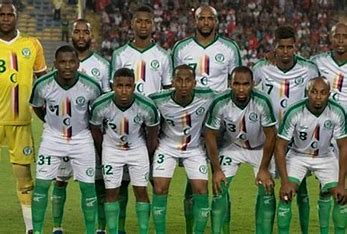
The Court of Arbitration for Sport (Cas) has dismissed the appeals from the Comoros Football Federation (FFC) over Cameroon’s participation at the Africa Cup of Nations.
The FFC argued on May 29 that Cameroon should be excluded from the 2019 Nations Cup finals after having the hosting rights for the tournament withdrawn from them.
The FFC argued that the Confederation of African Football had failed to implement its own regulations concerning the action to be taken.
“On the basis of the evidence and arguments presented by the parties, the Cas Panel concluded that the appeals were inadmissible,” the court said in a statement.
It continued that the FFC “had no concrete sporting interest” in Cameroon being excluded, as that would result in Malawi qualifying for the finals rather than Comoros.
Cas also concluded, “that the FFC had no sufficient legal interest in requesting that Fecafoot (Cameroon Football Federation) be suspended by Caf.”
Cameroon were originally due to appear at the Nations Cup as hosts but then had to qualify when Egypt were made hosts in January.
The Indomitable Lions qualified after finishing second in Group B behind Morocco, who also progressed to the Nations Cup finals. Malawi, who were third in the group, and last-placed Comoros both missed out on going to Egypt.

ISRAEL’S ELECTRIC CORPORATION APPROVES COMPENSATION SETTLEMENT WITH EGYPT
ISRAEL’S ELECTRIC CORPORATION APPROVES COMPENSATION SETTLEMENT WITH EGYPT
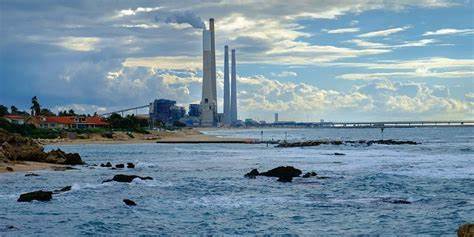
The board of directors of state-owned Israel Electric Corporation (IEC) approved on Wednesday a long-negotiated settlement with Egypt’s two national gas companies, which will see these companies pay IEC $500 million as compensation for failure to uphold previous agreements. IEC had a standing agreement to receive gas from Egypt, but a series of sabotage explosions of the gas pipe during the Arab Spring in 2011 led to it being shut down.
The matter has been in international arbitration since, with the court ruling in 2015 that The Egyptian Natural Gas Holding Company (EGAS) and The Egyptian General Petroleum Corporation (EGPC) should pay IEC $1.76 billion. EGAS and EGPC refused and the companies have been in contact since regarding a possible settlement.
While IEC’s board approved the settlement agreement in January, Calcalist’s report of the talks led to opposition from Israel’s Government Companies Authority, on the basis that perhaps a better settlement could be achieved. On Wednesday, IEC announced in a filing to the Tel Aviv Stock Exchange that following further discussions, including with the authority, its board has decided to approve the settlement.
In its announcement, the company clarified that its signing of the settlement is by no means guaranteed.

Lior Gutman / CTech
LIBYA WINS INT'L LAWSUIT AGAINST FOREIGN INVESTOR
LIBYA WINS INT'L LAWSUIT AGAINST FOREIGN INVESTOR
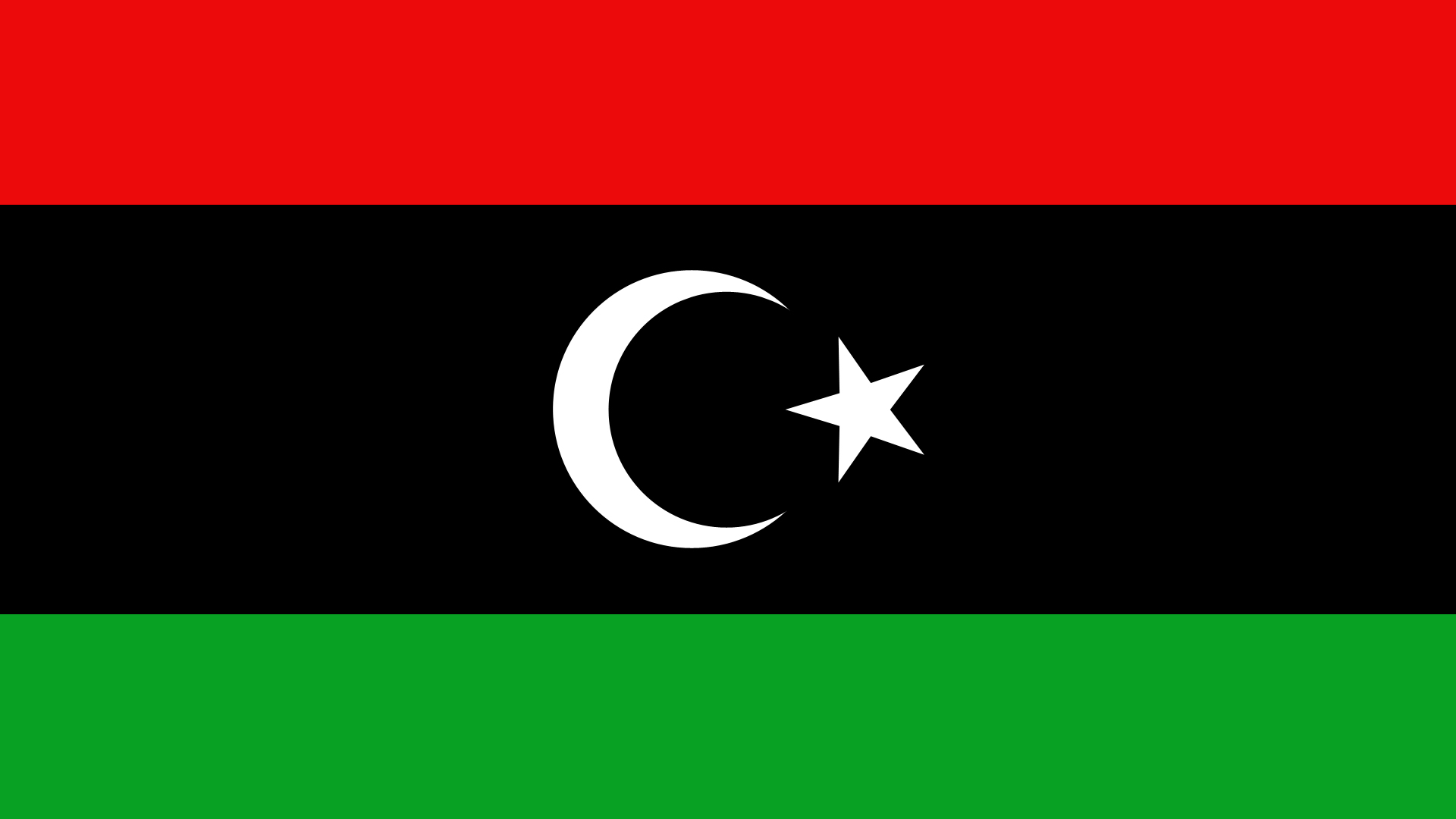
TRIPOLI — Libyan Justice Ministry announced on Sunday that it has won a lawsuit filed by a foreign investor seeking 120 million U.S. dollars in compensation.
“The lawsuit department has won an appeal of the verdict issued by the international arbitration tribunal in Paris in December 2016 in favor of Salim Ben Mokhtar Ghania, German investor of Tunisian origin,” the justice ministry’s lawsuit department said in a statement.
The department won the appeal after presenting the evidence proving “fraud and collusion between the investor and Libyan officials with the aim of misleading the arbitration tribunal for personal interests,” the statement added, without revealing details of Ghania’s investment.
The lawsuit department of Libyan Ministry of Justice represents the government and handles lawsuits filed against the country inside and abroad.
According to the Libyan audit bureau, foreign companies abroad have filed 142 lawsuits against Libya since 2011, demanding compensations of 9 billion euros (10.5 billion dollars).

WAC TO TAKE CAF FINAL CASE TO ARBITRATION COURT FOR SPORT
WAC TO TAKE CAF FINAL CASE TO ARBITRATION COURT FOR SPORT
Rabat – Moroccan club Wydad Athletic Club (WAC) announced on Thursday, June 13, that it will take the case of the arbitrary refereeing mistakes- which occurred during the second leg of the final of Africa’s Champions League, resulting in a win for Tunisian rival Esperance de Tunis (EST)- to the Court of Arbitration for Sport.
WAC’s protest over the absence of a Video Assistant Referee (VAR) and the poor referee performances is supported by the Champions League regulations.
On Friday, May 31, Gambian referee, Gassama Bakary, refused a legitimate goal for Wydad Casablanca, angering Moroccan football fans and observers, who argued that the decision of the referee was unjust.
When Wydad players put pressure on the refereeing staff to use the VAR, the referees said that the video footage was unavailable due to technical issues.
The players subsequently refused to resume the game until the VAR issue has been fixed. WAC players were given no concrete reason why the VAR was not functional in such an important game.
Paragraph 15 of Article 2 of the CAF regulations stipulates that “If it is established that the absence of the designated referees was the fault of the host association, the host team shall be declared the loser by 2 to zero and shall be eliminated from the competition, regardless of the result obtained on the field.”
The Moroccan club, that was playing at the Tunisian team’s home ground at Rades, may be declared winner as stipulated by the CAF regulations. The regulations state that “if the referee is forced to stop the match before the end of the regular time because of pitch invasion or aggression against the visiting team, the host team shall be considered the loser and shall be eliminated from the competition.”
Despite CAF regulations being in favor of the Moroccan team, CAF decided instead to re-play the game causing backlash from both EST and WAC supporters.
CAF president, Ahmad Ahmad, has said that the president of EST threatened him during the game.
Naciri went on to add that the CAF officials attempted to convince him to resume play in exchange for granting them next year’s title.
“All of them, without exception, were asking us to continue the game and next year’s title would be yours,” revealed Naciri in an interview with Medi1TV.
Naciri will now seek justice for his club by requesting to be declared winners without re-playing the 2nd leg of the African Champions League final in South Africa.
HAMZA GUESSOUS

EX-SOUTH SUDAN FA BOSS ALEI TO APPEAL 'UNJUST' 10-YEAR FIFA BAN
EX-SOUTH SUDAN FA BOSS ALEI TO APPEAL 'UNJUST' 10-YEAR FIFA BAN
The disgraced past president wants to clear his name following a lengthy suspension by football’s governing body for misappropriation of funds.
The former president of the South Sudan Football Association (SSFA) Chabur Goc Alei will appeal a lengthy 10-year ban imposed on him by Fifa last week for misappropriation of funds.
Alei, who was also fined 500,000 Swiss francs ($499,000) for his misdemeanour, said in a statement, as reported by the BBC, that he’ll fight to clear his name after deeming the decision of the adjudicatory chamber of the independent Ethics Committee unfair.
“We have decided to assign an international law firm specialized in this field to appeal against Fifa’s decision in the Court of Arbitration of Sport,” Alei said in a statement. “We will demand that this unjust decision be cancelled without questioning and listening to me personally at any session.”
Last week, football’s governing body confirmed that Alei had breached article 28 (Misappropriation of funds) and article 20 (Offering and accepting gifts or other benefits) of the 2018 edition of the Fifa Code of Ethics, which resulted in their decision to suspend him from all national and international football matters for a decade.
“The adjudicatory chamber of the independent Ethics Committee has found Mr. Chabur Goc Alei, the former President of the South Sudan Football Association (SSFA) and a former Fifa standing committee member, guilty of having misappropriated Fifa funds, as well as having offered gifts or benefits, in violation of the Fifa Code of Ethics,” the statement continued.
“The investigation into Mr. Alei was related to the misappropriation of Fifa Financial Assistance Programme (Fap) and Fifa Goal Programme funds received by the SSFA during the 2014 and 2015 period, and to various payments made (from such funds) to football officials and other individuals.”
Meanwhile, a warrant for Alei’s arrest has been issued in his homeland after claims made by the incumbent SSFA president Francis Amin Michael saying the former supremo failed to return a vehicle that belonged to the association.
Seye Omidiora
NSSF WINS SHS40B CASE AGAINST ALCON
NSSF WINS SHS40B CASE AGAINST ALCON
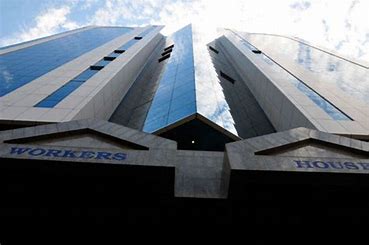
KAMPALA. Questions surrounding the claim by Alcon International Limited regarding the safety and ownership of Workers House have been resolved after court dismissed its case against National Social Security Fund (NSSF). Alcon International Limited had sought for compensation for alleged breach and termination of the construction contract for Workers House in Kampala.
Justice David Wangutusi of the Commercial Division of the High Court ruled that there is no cause of action in place where the pleadings speak of Alcon International Kenya instead of Alcon International.
In February 2013, the Supreme Court overturned a decision by the High Court and the Court of Appeal awarding Shs40 billion to Alcon Uganda for terminating its contract to build Workers House.
The country’s highest appellate court found that Alcon International Limited was not a Kenyan Company but a Ugandan one yet it was the Kenyan company which signed the contract to build workers’ house.
Then Chief Justice Benjamin Odoki sent the case back to High Court for retrial.
Alcon had sued NSSF accusing its managers of arbitrarily terminating its contract to build the 20-storey building located on Pilkington Road in the city centre.
BACKGROUND
In 1996, NSSF and Alcon International signed a contract but after a few years, the Fund terminated the contract, and allegedly confiscated Alcon’s construction tools, forcing the company to sue for damages.
Court documents indicate that the two companies; Alcon International Limited and Alcon International (Kenya) Limited were run by the Hanspal family. Court held that it was fraud on part of Alcon International (Kenya) to deliberately conceal information when they failed to inform NSSF about the passing of construction works in a secretive manner to Alcon International which had been rejected with their directors and managers.
FRAUDULENT TRANSACTION
“In my view, to allow a suit arising out of a fraudulent transaction would be frowned upon by the public policy. One cannot even argue that the fraud was just to enable the respondent obtain the building site and what happened later was lawful,” the judge reasoned.
NSSF managing director, Mr Richard Byarugaba said in the statement that the ruling signifies an end to this protracted litigation and justifies the Fund’s decision to challenge the adverse arbitration award.
EPHRAIM KASOZI

NORILSK, BCL TUSSLE MOVES TO LONDON
NORILSK, BCL TUSSLE MOVES TO LONDON
The battleground of the three-year P3 billion dispute between Russian base metals giant, Norilsk Nickel and BCL Mine, has shifted to London, where legal counsels for both sides are preparing for further bruising engagements.
The Court of Appeal recently granted Norilsk Nickel leave to take the dispute over the 2014 equity sale to the London Court of International Arbitration (LCIA). The Russian giant recently cancelled its 2014 agreement with BCL and in London it will be pursuing damages, not enforcement of the contract.
BusinessWeek is informed that both sides have briefed their legal counsels on the parameters for the upcoming arbitration. Actual arbitration proceedings are not due to start for a few more months, but lawyers on both sides are already gearing up for the impeding tussle.
It is understood that the BCL group liquidator, Nigel Dixon-Warren is due to fly out to London this weekend to consult further with the counsel retained to represent Botswana’s interests in the matter.
In the arbitration, any damages claimed successfully against BCL will ultimately be a government and taxpayer responsibility as the mothballed base metal operation was 100% owned by government.
Yesterday, the liquidator could not be reached for comment. However, BusinessWeek is informed that Dixon-Warren’s lawyers are due to push back against claims from the Russians.
“BCL’s position is that the agreement is not valid,” an insider close to the latest developments said.
“Norilsk will want to push as hard as possible for the biggest possible award.”
The October 2014 deal involved BCL purchasing Norilsk’s assets that included a 50% stake in Mpumalanga mine, Nkomati Nickel, as well as Tati Nickel Mine near Francistown.
Payment was due to be made once several regulatory conditions were concluded, the last of which was the transfer of Nkomati mining rights to BCL, by South African mining authorities.
BCL closed down in October 2016 before the sale was finalised and the parties have since locked horns in Johannesburg and Gaborone courts over payment for the deal.
South African mines minister, Gwede Mantashe has also stepped into the fray, asking both parties to halt their Johannesburg court case, while he investigates the approvals granted in the deal.
BusinessWeek is informed that the London arbitrators could stay matters there while they await the outcome of proceedings in Johannesburg. However, in Johannesburg, Mantashe’s attention has been on the recent elections in South Africa.
“Norilsk would likely want to push for the arbitration to proceed before the outcome of the SA applications.
“It is not yet clear if the arbitration will take off while the SA appeals are pending,” another insider told BusinessWeek.
Questions sent to Norilsk Nickel through their South African contacts were yet to be answered by Press time yesterday, while Minerals ministry officials could not be reached.
MBONGENI MGUNI
mmegi.bw

QUERIES AS ULS APPROVES PRIVATE ARBITRATION CENTRE
QUERIES AS ULS APPROVES PRIVATE ARBITRATION CENTRE
KAMPALA- Members of the Uganda Law Society (ULS) have ratified the controversial arbitration and mediation centre, a limited liability company amid protests from some members.
A section ULS members endorsed the operation of the International Centre for Arbitration and Mediation in Kampala (ICAMEK) at an Extra-Ordinary General Meeting held their offices in Ntinda on Wednesday. The meeting was attended by about 400 members out of more than 2,000 who subscribe to ULS.
The decision was reached hardly three days after a section of lawyers went to court to challenge the legality of the private arbitration and mediation center.
Mr. Nelson Walusimbi and Mr. Andrew Wambi sued the lawyers’ professional body jointly with ICAMEK.
They want court to declare that ULS acted outside its statutory mandate hence acted illegally by subscribing as a member of ICAMEK.
ICAMEK a company limited by guarantee was incorporated by the Uganda Registration of Services Bureau on July 26, 2018 with ULS in conjunction with Uganda Bankers’ Association (UBA) as subscribers.
EPHRAIM KASOZI

AFRICAN MEDIATION & ARBITRATION COURT OPENS IN MOROCCO
AFRICAN MEDIATION & ARBITRATION COURT OPENS IN MOROCCO
The African Court of Mediation and Arbitration, CAMAR by its French acronym, has just opened in Marrakech, Morocco. It will intervene to settle disputes involving Africans at the continental level.
The African Court of Mediation and Arbitration, CAMAR by its French acronym, has just opened in Marrakech, Morocco. It will intervene to settle disputesThe project to set up CAMAR was finalized at a constitutive congress held in Marrakech, on April 5.
The Court, the first of its kind in the continent, will handle disputes involving states, African companies and multinationals operating in the continent. Such disputes were so far settled at the level of the arbitration courts of The Hague, Paris or London, which generally serve as a reference in the settlement of disputes on the continent.
The mission of the new court is to open up new perspectives and a better organized legal framework in line with international arbitration standards to settle disputes involving Africans states, businesses, among others.
This court is also competent for the settlement of multiple disputes related to commercial contracts, intellectual property, oil and gas contracts, engineering, tourism, real estate, etc.
The creation of this arbitration institution will help the AU to address the challenges facing the continent for the implementation of its flagship programs that have the highest impact on Africa’s growth.
It is up to Africans to position this court as the benchmark jurisdiction for continent-wide dispute settlement, bypassing international courts. For this, the college of arbitrators of the institution must convince the countries of the continent to require that disputes be referred to CAMAR for a settlement.
The setting up of the court is timely as it will accompany the process of the opening up of African economies in the framework of the establishment of the African Continental Free Trade Area (AfCFTA) and the Single Market for Air Transport in Africa, two projects that will significantly increase intra-African trade and investment, but also continent-wide litters.
Note that in 2016, the Paris-based International Chamber of Commerce (ICC) saw a 50% increase in the number of arbitrations involving an African party because of a lack of competent institutions on the continent.
Several factors contribute to African parties looking outside the continent. There is a relative wariness due to the political and military situations of some countries, and some of the courts are perceived as being too subject to pressure from member states and do not have a good reputation, which damages investors’ confidence.
The new institution, therefore, intends to convince the African Union that “an arbitration clause” will be instituted so that all contentious cases on the continent are automatically referred to CAMAR. To this end, analysts say the institution must, first, prove itself in terms of competence and neutrality.

UNIBANK CASE REFERRED TO ARBITRATION
UNIBANK CASE REFERRED TO ARBITRATION
An Accra High Court has referred part of the case between the shareholders and the Receiver of uniBank for arbitration.
The appointment of an arbitrator by the judge, Justice Jennifer Abena Dadzie, follows an application by the Receiver of the bank, Nii Amanor Dodoo, to dismiss the counterclaim of some of the shareholders of the bank to those he filed.
However the court said unibank case is not frivolous.
The Receiver, in his application, prayed the court to strike out the amended statement of defence and counterclaim of three of the shareholders.
He said the pleadings by the defendants are an abuse of the court’s processes and attempt to delay the fair resolution of the dispute, which is “very simple as it involves recovery of sums of money which have been allegedly taken out of the accounts of uniBank, which is now in receivership.”
The Receiver of defunct uniBank sued the founder of the bank, Dr Kwabena Duffuor and 16 others to pay GH¢5,712,623,145 which was allegedly misappropriated.
In a suit filed at an Accra High Court, the receiver, Nii Amanor Dodoo, who is a senior partner at KPMG, is seeking an order of the court against Dr. Duffuor and 16 others with links to the defunct bank to repay the huge amount of money.
The plaintiff averred that all 17 defendants, who are all directors, shareholders, and debtors of the once vibrant uniBank, engaged in illegal transactions by giving out unlawful loans and advances, as well as illegal acquisition of assets in the name of related interests or persons related to the shareholders.
The shareholders then filed a statement of defense and a counterclaim denying the allegations levelled against them and sought some remedies from the court.
They were seeking a declaration that the entire procedure culminating in the purported appointment of KPMG as an official administrator is unlawful, illegal, and contrary to the prevailing and acceptable practice and custom of the banking industry, among others.
But the receiver, in his application, prayed the court to dismiss the whole counterclaim of the respondents and part of their statement of defense, which are offending.
Justice Dadzie, in her ruling, struck out part of the counterclaim, saying it did not in any way address the matter before the court.
She, however, stayed all the pleadings of the defendants in their statement of defense for the parties to go for arbitration.
The court subsequently appointed a retired Supreme Court judge, Professor Justice Samuel Kofi Date-Bah, as the arbitrator.