
INSIDE KPMG DISPUTE THAT EARNED EX-BOSS HEFTY SH460M AWARD
INSIDE KPMG DISPUTE THAT EARNED EX-BOSS HEFTY SH460M AWARD
On the morning of Monday, October 3, 2016, Mr Richard Ndung’u was in his office at KPMG East Africa’s former office at ABC Place, Westlands, when he was summoned to the CEO’s office. An allegation had been made against him by an anonymous person that he was having an inappropriate relationship with his personal assistant, the CEO, Josphat Mwaura, told him, according to documents placed before an arbitrator.
ARBITRATOR
“The claimant (Mr Ndung’u) was therefore required to hand over his personal mobile phones and his laptop, which were to be subjected to forensic imaging presumably to determine whether the claimant had been in communication with the subject of the complaint and whether such communication pointed to an inappropriate relationship,” stated the documents.
As head of tax for Kenya and East Africa, Mr Ndung’u was not just an ordinary senior partner. He had been with the global audit firm for 22 years, during which he had served in various positions, including as CEO between 2004 and 2008. Mr Mwaura, who is expected to leave his position by August, took over from Mr Ndung’u.
Mr Ndung’u was recently among the shortlisted candidates for Commissioner-General of Kenya Revenue Authority. As a senior partner, Mr Ndung’u was on a monthly salary of $12,500 (Sh1.3 million).
The encounter with the CEO that day in October 2016 would set in motion a series of events that culminated in his dismissal from the partnership and set the stage for one of the biggest awards to an individual in a labour dispute.
After being removed from the KPMG East Africa partnership, Mr Ndung’u took their dispute before an arbitrator, Mr John Ohaga, accusing his former employer of unfairly targeting him, intimidation, and non-procedural removal from partnership. KPMG had unsuccessfully opposed the claims made by Mr Ndung’u and portrayed him as someone who was often on the wrong side of the firm’s policies.
In the end, the arbitrator on March 6 this year awarded Mr Ndung’u an aggregate sum of Sh460.5 million and a further Sh1.9 million in special damages. The award will earn interest at the rate of five per cent per year until KPMG settles it. The huge amount, if enforced, could have dire financial implications on the organisation.
PRIVACY
The award could even get bigger if the High Court rules in favour of Mr Ndung’u in a separate suit he filed on May 23 against KPMG International, whose offices are in London. In the suit, he accuses the global audit firm of having “encouraged its member firms, KPMG East Africa and KPMG Kenya, to take retaliatory action against him on account of his ‘raising hand’ (lodging a complaint), contrary to the assurances in KPMG’s Global Code of Conduct, and further contrary to the dictates of the Licence Agreement and the Constitution and the Laws of Kenya”. The suit will return the global firm to the spotlight in Africa after it apologised for its work for the controversial Guptas family in South Africa.
But it is not just the award of more than Sh450 million that stands out in the arbitrator’s determination. The case also brought to light the boardroom wars at one of the country’s most premier audit firm. In the final analysis, the arbitrator was scathing on Mr Mwaura’s conduct and how he handled Mr Ndung’u’s case. In his determination, Mr Ohaga held that the CEO had breached the former partner’s privacy by taking away his mobile phones and laptop and accused him of discrimination for failing to notify Mr Ndung’u of a meeting on January 13, 2017 that was to determine his fate. “The CEO, despite clause 1.3 (i) of the EA Partnership Agreement elected to issue notice to partners and for this reason the claimant was entitled to such a notice. It seems to me that the CEO in exercising his discretion was discriminating against the claimant,” the arbitrator stated in his determination. Mr Mwaura was also accused of launching investigations against Mr Ndung’u without giving him a written notice of the nature of the complaint and the investigation, failure to disclose the entire agenda of the first meeting of December 16 during which the claimant’s fate was first put to a vote, relying on information from the claimant’s wife who had by then died, and exploiting the claimants’ vulnerability by reopening old cases.
REJECTED
“In the end, I find that the CEO acted in a retaliatory manner against the claimant,” said the arbitrator.
KPMG East Africa has filed an appeal after their request for the arbitrator to “correct a computational error” was rejected. In the appeal, they argued that the arbitrator erred in law when it ruled against it. The appeal is praying for the award to be set aside and the former partner’s claims be dismissed.
To counter the appeal, Mr Ndung’u, through his lawyer Kithinji Marete, on Friday filed an application for enforcement of the award. The application also opposes KPMG East Africa’s appeal as an abuse of court process.
“The arbitration agreement between the parties provided that the decision of the arbitrator would be final and binding upon the parties. Hence the applicant (Mr Ndung’u) contends that an appeal does lie from the arbitral award,” the application states.
Though Mr Ndung’u had told the arbitrator that his personal mobile phones and laptop were confiscated against his wish, Mr Mwaura had contended that he surrendered them willingly. “(The CEO) says that he did not confiscate the claimant’s phones and laptop, but that the claimant surrendered them for mapping,” the CEO said in response.
The CEO also said it was Mr Ndung’u who after surrendering his phones and laptop opted to stay away from office.
INTIMIDATING
Even though the investigations were to take “a day or two” the same had not been concluded four days later on October 7. He stated that at around the same time, the CEO “adopted an intimidating and menacing attitude” that pushed him to file a complaint with KPMG member firms in Africa through the chairman of the Senior Partners Forum and KPMG South Africa CEO Trevor Hoole. The same was escalated to KPMG International.
Not long after he lodged the complaint, Mr Mwaura called a meeting of senior partners on December 16 at Villa Rosa Kempinski with the agenda being “consideration of a recent complaint by Richard Ndung’u, final determination and action thereof”.
Before the December 16 meeting Mr Ndung’u was informed by the CEO that the allegations against him of inappropriate conduct and financing his personal assistant’s lifestyle had not been proven.
Despite the primary allegations against him having fallen by the wayside, at the meeting, the CEO told the partners that they should consider Mr Ndung’u’s trustworthiness as had been recommended by KPMG International.
“The CEO brought to the meeting’s attention various matters touching on the claimant which the claimant presumed had been resolved between him and the CEO and which had no relation whatsoever to the complaint he had made to KPMG International,” the arbitrator’s documents stated.
RESOLUTION
He was asked to leave the meeting room, but was summoned two hours later and informed that the meeting had adjourned. But he was required to proceed on ‘compassionate leave’ with limited access to the office and office mail. Mr Ndung’u said after he was asked to leave the meeting room, the CEO called a vote for his removal, which failed.
The next meeting took place on January 13 with the sole agenda being the removal of Mr Ndung’u from the partnership. Before the meeting, two unofficial meetings took place at Capital Club, Westlands, on January 7 and 11 during which he was enticed with an advance of Sh25.5 million and a final payout of Sh112 million if he could agree to immediately resign. The offer was rejected and so on January 13 a meeting was held which he was not invited to. He nonetheless showed up at the meeting.
This time, the partners resolved to remove him, but were still pursuing the option of having him to voluntarily resign.
Three days after the meeting, partners Salim Bashir and Charlie Appleton met with Mr Ndung’u at Capital Club “to discuss the terms of his resignation, and the financial settlement agreeable to him to procure his resignation”. This time, they were offering Sh204 million.
With no agreement on the proposed voluntary resignation and therefore no settlement, Mr Mwaura proceeded to implement the January 13 resolution and formally communicated Mr Ndung’u’s expulsion on January 18, by which time the former partner had informed the CEO of his intention to refer the dispute to arbitration.

WALTER MENYA


VEDANTA SEEKS INTERNATIONAL ARBITRATION TO RESOLVE ZAMBIAN COPPER DISPUTE
VEDANTA SEEKS INTERNATIONAL ARBITRATION TO RESOLVE ZAMBIAN COPPER DISPUTE
Vedanta Resources Ltd., owned by Indian billionaire Anil Agarwal, said it’s seeking international arbitration to resolve a dispute with the Zambian government about its copper assets in the country.
Zambia’s government this month began liquidation proceedings against Vedanta’s Konkola Copper Mines, after accusing Vedanta of lying about expansion plans and paying too little tax. The company says it is a “loyal investor” that’s spent more than $3 billion in the country since 2004.
Vedanta notified state-owned ZCCM Investments Holdings, the minority shareholder in KCM, of a dispute under a shareholders agreement, it said in a statement on Friday.
“The shareholders’ agreement provides for disputes to be submitted to international arbitration in Johannesburg,” Vedanta said.
ZCCM-IH, which owns 20.6% of Vedanta’s KCM, on May 20 won a provisional order to liquidate Konkola — three days after President Edgar Lungu warned Vedanta of “divorce” as he claimed the company had lied to the country. The government said it moved to wind up the company to prevent its collapse and to protect jobs. Vedanta has sought to formally challenge the court decision and the matter will be heard on June 4.
GOVERNMENT ASSURANCE
Vedanta Chief Executive Officer Srinivasan Venkatakrishnan and Deshnee Naidoo, a company executive, on May 29 met Zambian state representatives in the capital, Lusaka, to discuss the dispute. The company was given the assurance that the government has not entered into any sale agreements with other parties regarding Konkola, according to the statement.
Companies including China Nonferrous Metals Co. and Eurasian Resources Group have expressed an interest in buying Konkola, three people with direct knowledge of the situation said. ERG said on Thursday it had not approached the government and has no interest in the company.
Zambian Mines Minister Richard Musukwa said Thursday the dispute with Konkola is “an isolated case” that should not be used to damage the southern African nation’s image.
“The case should instead be used as a signal to other mining companies not complying with the law to put their house in order,” he said in a statement.
Vedanta executives have been unable to meet Konkola management, nor have they been able to visit the operation “during this time,” the company said.
Matthew Hill & Taonga Clifford Mitimingi

BETAMAX TO APPEAL TO PRIVY COUNCIL
BETAMAX TO APPEAL TO PRIVY COUNCIL
The State Trading Corporation has not submitted any objections to Betamax’s request to the Supreme Court of Mauritius to solicit the Privy Council on Monday.
This means that Betamax can secure the leave from the Supreme Court’s decision to set aside the award. However the presiding Chief Justice has requested an audience to hear oral arguments from both parties in order to be able to make the final call and decide on the amount to be provided by Betamax for the hearing.
This application from Betamax comes after the Supreme Court of Mauritius set aside an award on Friday May 31st. The Singapore International Arbitration Center award stipulated that the State Trading Corporation compensate Betamax in the amount of 4.5 Billion Mauritian Rupees, USD 126 Million, for the cancelation of a contract.
m.zinfos-moris.com
GOLD RALLY NARROWS ACACIA MINING, BARRICK GOLD OFFER GAP AHEAD OF DEADLINE
GOLD RALLY NARROWS ACACIA MINING, BARRICK GOLD OFFER GAP AHEAD OF DEADLINE
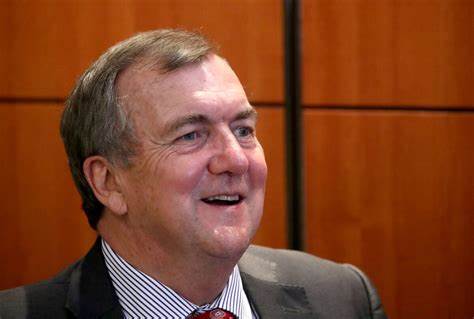
TORONTO/LONDON – Ahead of Tuesday’s deadline for Barrick Gold Corp. to make a firm buyout bid for its Acacia Mining unit, a gold rally has eroded, but not eliminated, a discount, and big Acacia shareholders say they still oppose the offer.
Barrick must either firm up its proposal to acquire the 36.1% of Acacia it does not own by June 18 or walk away for at least six months under British takeover law.
In the event opposition melts away and a friendly offer materialises, 75% of the minority shareholders would have to back it. If the bid is not friendly, 90% of the minority shareholders would have to support it.
A gold rally driven by trade and geopolitical tensions propelled gold prices to a 14-month high last week, at the same time boosting gold equities, such as Barrick and Acacia.
By around midday in London (1000 GMT) on Monday, taking into account exchange rates, banking sources said the Barrick indicative offer stood at a 2.1% discount to Acacia’s share price, compared with a 9% discount at the time of the offer on May 22.
Acacia investors said the continued, albeit narrowed, premium of Acacia’s share price to the bid since the offer implies a better offer should be forthcoming.
Investors have also noted that Barrick valued Acacia at $1.36 billion in 2018.
Aberdeen Standard Investments, a passive investor in both Acacia and Barrick, told Reuters Barrick’s offer significantly undervalued Acacia, joining disgruntled shareholders including Fidelity International and Odey Asset Management.
Barrick’s offer is an effort to resolve a two-year-long tax dispute with the Tanzanian government and lift a concentrate export ban, after Acacia was shut out of the negotiations.
The Tanzanian government has said it will only deal with Barrick.
Absent a successful bid or resolution to the dispute, Acacia expects to proceed with an international arbitration hearing on July 22, with an outcome expected by the end of the year.
Barrick Chief Executive Mark Bristow has said the offer reflects the increased risk from Tanzania.
While Acacia has not disclosed the amount it would seek in arbitration, the company can claim the value lost due to the government’s actions, estimated at $1.3 billion, Barclays analysts wrote in a May 23 note, adding the risks to achieving this are much higher than accepting Barrick’s offer.
“If you’re holding Acacia stock, Barrick is offering you a lifeline,” said Joe Foster, portfolio manager at Van Eck Associates Corporation, Barrick’s third-biggest shareholder. “Why not take the Barrick shares, get the situation resolved, and move on.”
Reporting by Nichola Saminather in Toronto and Barbara Lewis in London; Editing by Susan Thomas

STEINMETZ'S BSGR BANKRUPTCY FENDS OFF VALE'S $2 BILLION AWARD
STEINMETZ'S BSGR BANKRUPTCY FENDS OFF VALE'S $2 BILLION AWARD
Billionaire Beny Steinmetz’s mining company sought bankruptcy protection in the U.S., two months after losing a $2 billion arbitration award to Brazilian mining giant Vale SA.
The court filing by BSG Resources Ltd. on Monday could stymie Vale’s effort to enforce the award, which stems from an ill-fated joint venture with BSGR at the Simandou iron ore mine in Guinea. The government stripped their venture of its rights to Simandou following a probe that found licenses were obtained through corruption.
BSGR lists its only U.S. asset as a pending legal claim against billionaire George Soros, according to the Chapter 15 court filing in Manhattan. Steinmetz’s firm claims Soros financed a conspiracy to oust BSGR from the Simandou deposit, an accusation that Soros maintains is “entirely false.”
The dispute between the two mining companies stems from the 2014 decision by Guinea to revoke the licenses held by the joint venture. Vale then filed a successful claim against Steinmetz’s company in the London Court of International Arbitration to recover an upfront payment to BSGR and money it invested in Guinea. The total amounted to $1.25 billion plus interest and costs.
BSGR went into administration last year in Guernsey in the U.K. to preemptively protect itself against any award to Vale — a move that Vale acknowledged would likely make it difficult to collect. BSGR’s administrators are asking the U.S. court for a restraining order on Vale’s pursuit of the award so that the Guernsey Administration can be completed first.
As for the Soros matter, BSGR sued him in 2017 in a Manhattan federal court, alleging a defamation campaign that cost the company its rights to Simandou and at least $10 billion. A Soros spokesman has previously said BSGR’s claim is “frivolous and entirely false,” and the court case has been stayed.
At a World Bank arbitration panel in 2017, Steinmetz said Soros spent tens of millions of dollars paying lawyers, transparency campaigners and international organizations to feed his “obsession” with Steinmetz, whom Soros fell out with over an investment dispute in Russia in the 1990s.
ARBITRATION APPEAL
BSGR is appealing Vale’s arbitration award on procedural grounds, saying it wasn’t treated fairly. It also has settled its seven-year-old dispute with Guinea, with both sides agreeing to withdraw allegations of corruption leveled against each other and to drop a two-year-old arbitration case over the Simandou deposit.
BSGR’s assets outside the U.S. include the Koidu diamond mine in Sierra Leone and a potential future economic benefit in the Zogota iron ore mine, which is also in Guinea.
The case is BSG Resources Limited, 19-11845-shl, U.S. Bankruptcy Court in the Southern District of New York (Manhattan)
Josh Saul and Thomas Biesheuvel
www.Bloomberg
KENYA WINS SH2.6B BREACH OF CONTRACT CASE FILED IN UK
KENYA WINS SH2.6B BREACH OF CONTRACT CASE FILED IN UK
The Government has scored a victory after a London-based International Arbitration Tribunal dismissed a Sh2.6 billion claim by a British energy firm.
UK’s Cluff Geothermal Company and its local partner had moved to London Court or International Arbitration (LCIA), accusing Kenya’s Geothermal Development Company (GDC) of breach of contract.
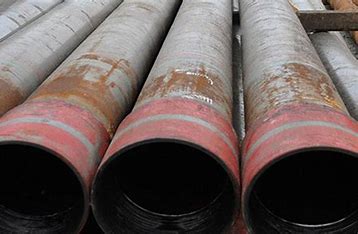
In 2013, GDC entered into a contract for provision of drilling services for 20 geothermal wells at its Menengai geothermal field for US$41,219,208 (about Sh4.2 billion).
However Cluff Geothermal and its local partner, Great Rift Drilling, stopped work on March 2015 and declared a dispute, accusing GDC of outstanding invoices.
By the time the case was referred to the tribunal on August 13, 2017, GDC had paid US$11,857,038.50 (about Sh1.9 billion).
On June 3, the LCIA ruled that GDC will pay the claimants the sum of US$2,259,680 (about Sh226 million) in respect of invoices issued for work done and a further US$593,497.33 (about Sh60 million) as interest.
This makes the total award Sh286 million, saving the tax payer more than Sh2.3 billion.
However, the amount due is likely to go up should Kenya delay in making the payments after the tribunal awarded a daily interest rate of about Sh46,000.
Kenya was represented by AG Paul Kihara, Solicitor General Ken Ogeto and a British lawyer, Michael Sullivan QC.
Geoffrey Mosoku
CAS SET JULY 4 AS HEARING FOR NYANTAKYI’S LIFETIME BAN APPEAL
CAS SET JULY 4 AS HEARING FOR NYANTAKYI’S LIFETIME BAN APPEAL
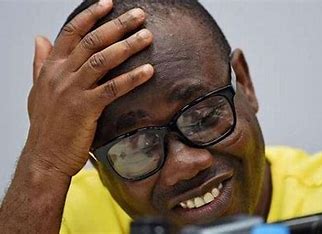
The Court of Arbitration for Sport (CAS) has set July 4, as the hearing of a lifetime ban appeal made by former Ghana Football Association (GFA) President, Kwesi Nyantakyi.
The Former FIFA Council member and CAF 1st Vice President was banned for life by the FIFA Independent Ethics Committee which found him guilty of breaching “art. 19 (Conflicts of interest), art. 21 (Bribery and corruption) and art. 22 (Commission) of the FIFA Code of Ethics, 2012 edition” following the premiere of an exposé into bribery and corruption by Anas Aremeyaw Anas and his Tiger Eye PI team.
Nyantakyi was seen in the video allegedly accepting $65,000 cash, a figure he disputes, preaching to the supposed potential investors how they could secure business deals in Ghana and ‘take over the whole country.’
A recent forensic audit conducted by FIFA found no acts corruption or financial impropriety on Kwesi Nyantakyi during his tenure.
Since Nyantakyi left office, Ghana football has suffered some paralysis as the Normsalisation Committee has struggled to meet the expectations of the football fraternity.
HAMZA GUESSOUS
EGYPT IN $500 MILLION SETTLEMENT WITH ISRAEL ELECTRIC CORP -STATEMENT
EGYPT IN $500 MILLION SETTLEMENT WITH ISRAEL ELECTRIC CORP -STATEMENT
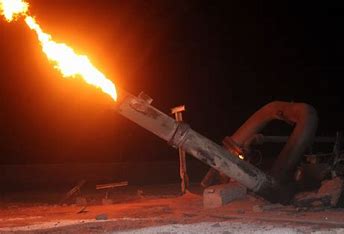
Cairo: Egypt has signed a $500 million settlement with state-owned Israel Electric Corp. over a defunct natural gas deal, the Egyptian General Petroleum Corporation (EGPC) and Egyptian Natural Gas (EGAS) said in a statement on Sunday.
The statement said that under the agreement signed on Sunday, Egypt will pay the amount over a period of 8–1/2 years in exchange for the Israeli company dropping all other claims resulting from a 2015 arbitration decision.
The International Chamber of Commerce in 2015 ordered Egypt to pay Israel Electric about $1.8 billion in compensation after a deal to export gas to Israel via pipeline collapsed in 2012 after attacks by insurgents in Egypt’s Sinai Peninsula.
Egypt appealed the decision and began discussions on a settlement. The EGPC and EGAS statements said the agreement was reached with government support and as part of efforts to ensure a “conducive investment environment.”
Israel’s Delek Drilling and its partner Noble Energy signed a landmark deal early last year to export $15 billion in natural gas from Israeli offshore fields Tamar and Leviathan to a customer in Egypt.
A Delek Drilling executive said on June 2 that the company hopes to begin commercial sales of natural gas to Egypt by the end of this month. Israeli officials called it the most significant deal to emerge since the neighbor’s made peace in 1979.
Reuters

SAMIR REFINERY: AL AMOUDI CLAIMS $1.5 BILLION COMPENSATION FROM MOROCCO
SAMIR REFINERY: AL AMOUDI CLAIMS $1.5 BILLION COMPENSATION FROM MOROCCO
Opposing successive court’s rulings that mismanagement caused SAMIR’s downfall, the refinery’s principal Saudi shareholder continues to blame Moroccan authorities.
Rabat – Saudi billionaire Sheikh Al Amoudi is demanding that Morocco pay him back 14 MAD billion ($1.5) as a compensation for the Moroccan government’s supposed role in the downfall of the SAMIR refinery.
Al Amoudi is the chief executive of Corral Morocco Holding AB, the Moroccan branch of the Sweden’s Corral Petroleum. Corral Morocco Holding AB held 67% of SAMIR’s assets, before the refinery’s financial problems led the Moroccan government 2015 to declare it bankrupt.
Moroccan news outlet Medias 24 reported yesterday that the Saudi businessman is blaming the Moroccan government for neglecting and “violating” a number of contract terms with SAMIR. Key in Al Amoudi’s compliant is Morocco’s alleged role in facilitating the financial debacle that saw SAMIR stop most of its activities in 2015.
Medias 24 notes that Al Amoudi handed the International Center for Settlement of Investment Disputes (ICSID) a memo on April 12 of this year.
In the memo, the Saudi billionaire is said to have provided documents that prove “violations” by the Moroccan government in its contact with Corral Morocco Holding AB. Among the many accusations Al Amoudi levelled at the Moroccan government is the failure to implement regulations and contract terms which would have made SAMIR more competitive. The memo argued that Morocco “allowed” SAMIR to go bankrupt.
Medias 24 did not provide details about all of the Saudi’s claims, or the ICSID’s stance on the legal validity of Al Amoudi’s demands that Morocco compensate him as much as $1.5 billion. In the meantime, Morocco has not yet issued a response to Al Amoudi’s claims.
The Saudi businessman lodged his complaint at the ICSID on March 14 of last year. Back then, as now, the Saudi billionaire vented his frustration on Moroccan authorities for the “organized indifference” that precipitated his company’s debacle.
Al Amoudi claims that Morocco’s failure to commit to an investment agreement with Sweden is the primary reason SAMIR went bankrupt. That agreement included protection against expropriation, as well as equal respect of investments.
However, Al Amoudi’s complaints contrast with the verdict of the Casablanca Commercial Court, which in November 2018 ruled that SAMIR’s board’ mismanagement was the main reason behind the company’s financial failures.
SAMIR is currently in a dire situation. Even after a Casablanca court in 2016 ruled that the company’s assets be liquidated, interest in SAMIR has been scant. Although there have been bidders, no offer has been completed to date.
Tamba François Koundouno

WAC PRESIDENT TO APPEAL TO FIFA, COURT OF ARBITRATION FOR REFEREE MISTAKE
WAC PRESIDENT TO APPEAL TO FIFA, COURT OF ARBITRATION FOR REFEREE MISTAKE
Rabatr – The President of the Moroccan club Wydad Athletic Club (WAC), Said Naciri, said on Saturday that he is taking the case of a poor refereeing decision that occurred during the second leg of the final of Africa’s Champions League to FIFA and the Court of Arbitration for Sport.
“This is unfair and we will take the case to the Court of Arbitration for Sport and FIFA,” Naciri told reporters at the end of the Champions League final.
He added that it is a disgrace for the Confederation of African Football (CAF), noting that it is not allowed to begin a game when the Video Assistant Referee (VAR) system is not working.
Naciri noted that the Egyptian referee Jihad Gricha, who officiated the first leg in Rabat, was suspended following his poor performance.
After receiving a goal at the 42nd minute of play, Wydad leveled the score at the 59th minute by the midfielder Walid el Karti.
The referee, Bakari Gassama, dismissed Wydad’s equalizer on the grounds of an inexistent offside.
WAC player demanded the Gambian referee consult the Video Assistant Referee (VAR), which they found to be dysfunctional.
Amid the embarrassing scene in Tunis, Espérance de Tunis was declared winners of the African Champions League.