
ENGLISH HIGH COURT ORDERS INQUIRY INTO DAMAGES CAUSED BY THE ANGOLAN SOVEREIGN WEALTH FUND AGAINST QUANTUM GLOBAL
ENGLISH HIGH COURT ORDERS INQUIRY INTO DAMAGES CAUSED BY THE ANGOLAN SOVEREIGN WEALTH FUND AGAINST QUANTUM GLOBAL
SERIOUS QUESTIONS RAISED OVER CONDUCT OF RELATED PROCEEDINGS IN ANGOLA AND MAURITIUS
Quantum Global Group has announced that the English High Court ordered an inquiry to be commenced into the damage caused by the Fundo Soberano de Angola (“FSDEA”) following the wrongful imposition of a Worldwide Freezing Order (the “WFO”) obtained by the FSDEA against the Group.
The WFO, which was wrongfully imposed on the Group for four months from April to August 2018, caused significant losses to the Group and its affiliated companies. This has also greatly impacted the Group’s ability to fund its operations and pay its employees.
The start of the damages’ inquiry follows the judgment by the English High Court in August 2018 that the FSDEA had materially misled the Court in eight critical areas when it applied for and obtained the WFO in April. The FSDEA was ordered by the Court to pay the Group’s legal costs for the English Court proceedings.
Following the English Court’s August judgment, the Angolan authorities wrongfully imprisoned the Group’s Chairman and Founder, Mr Jean-Claude Bastos de Morais, on September 24 of this year pending an investigation into a real estate transaction that was previously reported and audited by respected international accounting firms. An assessment made by Mr Bastos’s legal counsel of the evidence and grounds of the preventive detention order shows that they are wrong and unfounded. The detention has been deemed completely unnecessary considering that Mr Bastos came to Angola on his own volition and had been fully cooperating with the authorities to clear his name since May when both of his passports were illegally seized in violation of Angolan Law. To date, no charges have been filed against Mr Bastos.
Mr Bastos continues to be unnecessarily held in a prison for violent offenders, which has been the subject of criticism in recent years by many international human rights organizations, including by Amnesty International, and so far, the appeals launched to release Mr Bastos based on Angolan laws and the Country’s constitution have fallen on deaf ears. The unlawful detention of Mr Bastos, a Swiss and Angolan dual national, raises serious questions with regards to the conduct of the authorities and the treatment of international investors and foreign nationals in Angola. Quantum Global calls on the Angolan Government and its Courts to uphold the rule of law and guarantee a fair hearing and due process.
Furthermore, Quantum Global continues to be dismayed by the actions and conduct of the Mauritian authorities in maintaining orders freezing Quantum Global bank accounts and suspending operating licenses. Despite repeated attempts in the last six months, the affidavit relied upon by the Financial Intelligence Unit (FIU) of Mauritius against Quantum Global is still being withheld from the Group. Reports in the Mauritian press indicate that there have been multiple approaches and visits by the Angolan authorities to Mauritius before the orders were granted and in the recent months thereafter, and serious questions have been raised with regards to the actions of the Mauritius authorities.
Offering an independent legal opinion on the matter in May, Lord Macdonald of River Glaven Kt QC, the former Director of Public Prosecutions of England and Wales, said that the continued deprivation of salaries from employees “is likely to be arbitrary and a significant breach of international human rights law. Moreover, we consider that the lack of disclosure and the associated lack of any meaningful opportunity to make representations against the deprivation of property renders the deprivation disproportionate.”
By intervening in a contractual dispute between Quantum Global and its client, the FSDEA, the Mauritius authorities’ actions represents a continued significant breach of due process. Similar to its call in Angola, the Group calls upon the Mauritius authorities to uphold their independence and guarantee a fair hearing and due process and not take actions that are detrimental to upholding the rights of investors.
Quantum Global has repeatedly stated its desire for a negotiated solution with the FSDEA that otherwise will have to be settled through a number of lengthy arbitration proceedings. The Group reiterated its call for the FSDEA to advance to a good faith solution, in accordance with international commercial law, to maintain the value of the portfolio and secure the jobs created in Angolan industries including ports, forestry, agriculture and real estate.

Oreoluwa Runsewe

ACACIA THREATENS TO SUE TANZANIA OVER DISPUTE
ACACIA THREATENS TO SUE TANZANIA OVER DISPUTE
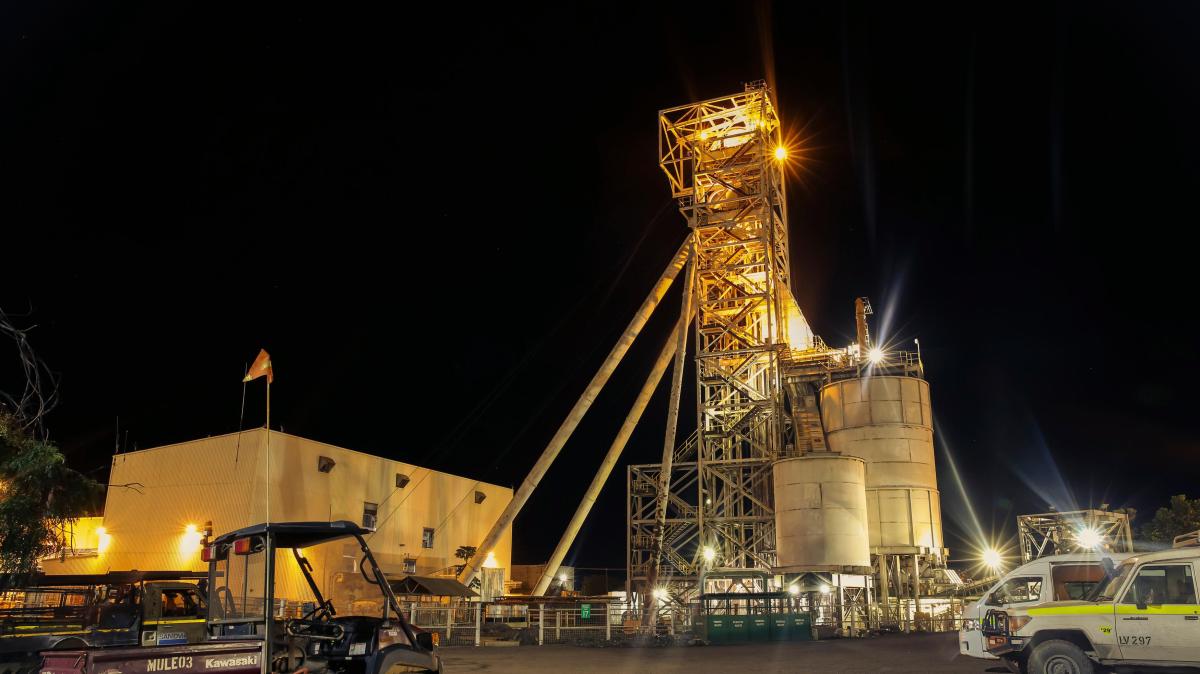
Dar es Salaam – Acacia Mining has threatened to sue the government in international court if it fails to reach a negotiated resolution over ongoing disputes between the two parties.
The company said on Friday that it was concerned about increasing risk to the safety of its staff and a challenging operating environment which may impact the firm’s business outlook.
Peter Geleta, Acacia’s interim chief executive, said there had been a “significant escalations of government actions” against its subsidiaries – Buzwagi and North Mara gold mines and Pangea Minerals- and employees” in recent weeks.
“I am particularly concerned with the criminal charges now being brought against several current or former employees over the past week,” Mr Geleta said in a quarterly performance report today.
“We will also be reaching out to the government to seek the opportunity for direct dialogue regarding the ongoing disputes between the Government, the Company and the broader Acacia Group, and also to inform the Government that failing a negotiated resolution the Company may need to pursue claims under the relevant bilateral investment treaty.”
Acacia is waiting for its largest shareholder, Barrick Gold, to negotiate a settlement with Tanzania which stopped Acacia from exporting gold concentrate 20 months ago. The government has slapped the miner with a bill of $190 billion in back taxes.
Acacia recorded a net profit of $11.9 million in the three months ended September 30, 2018 compared to $16 million recorded in the same period last year.
The nine-month net profit also reduced to $42.7 million in September from $78.6 million registered in the same period of 2017.

IMPROVED POLICIES ‘LL INCREASE INVESTMENT IN HOUSING –ALUFOHAI
IMPROVED POLICIES ‘LL INCREASE INVESTMENT IN HOUSING –ALUFOHAI
Maureen Ihua-Maduenyi
The Chairman, Quantity Surveyors Academy Board, Mr Agele Alufohai, has said the Federal Government can tackle the country’s housing deficit by improving policies that will encourage more investment in the industry.
He also predicted that there would be a boom in the construction of infrastructure for delivering gas and oil to power plants and industries when the issues surrounding the Petroleum Industry Bills were resolved.
Alufohai, who is a former president of the Nigerian Institute of Quantity Surveyors, made these known at the Quantity Surveyors’ Academy Construction Arbitration Skill Acquisition and Certification Training held recently, in Abuja.
He said, “Improving policies concerning mortgage banking and urban planning, we will see more foreign investments in closing Nigeria’s 17 million housing deficit. Construction is a very expensive business, and where there is money, there is always a risk. Any country that wants to attract a lot of money, in terms of investments must take risk mitigation very seriously.
“That is certainly what quantity surveyors are doing by extending and sharing arbitration skills. Construction is fraught with all sorts of risks, from delayed delivery to cost overrun. For a country like Nigeria, with a huge infrastructure gap and limited means of financing, we have no choice but to procure infrastructure increasingly using Public-Private Partnerships.
“If big-ticket construction projects are fraught with risks because they have a considerable possibility for dispute, PPPs multiply the risk. Arbitration is thus a means of considerably de-risking investment in construction generally and in projects procured through PPPs particularly.”
According to Alufohai, given Nigeria’s vast social needs and the huge debt service burden, at 50 per cent of current revenue, the country has little choice but to fund critically needed infrastructure through Private-Public Partnerships.
He stated that the Federal Government needed to seriously boost capacity to attract PPP financing for infrastructure.
He explained that this was a quick way of retooling the country’s productive base and attracting much needed foreign exchange, adding Nigerian professionals equally had a key role in attracting private sector investment into infrastructure development in the country.
Alufohai said, “The Quantity Surveyors Academy, in conjunction with the Nigerian Institute of Quantity Surveyors and the Quantity Surveyors Registration Board of Nigeria, has started this hard work.
“The Quantity Surveyors Academy will be conducting high-quality training in many other areas such as oil and gas and heavy engineering, focusing on new trends in construction in these areas, including economics and technology, as well as private and public sector financing.”
He said he was hopeful that construction professionals in the public sector would also try as much as possible to take advantage of the courses and training to achieve the needed growth through a seamless public-private partnership.
He stated that the Construction Arbitration Skill Acquisition and Certification Training, a three-week intensive training covered a wide range of arbitration and mediation issues in the construction industry.
The last two weeks of the programme involved studies, reviews and assignment aimed at building confidence in participants and ensuring that they could translate theory into practice while participants would be required to engage in personal study and review of the entire study and supporting materials, he added.

LONDON ARBITRATION TRIBUNAL AWARDS $8.9B FINE AGAINST NIGERIA
LONDON ARBITRATION TRIBUNAL AWARDS $8.9B FINE AGAINST NIGERIA
A London Arbitration Tribunal has awarded $8.9 billion fine against Nigeria in favour of a British firm, Process and Industrial Developments Limited (P & ID).
The P & ID had initiated moves to recover a judgment debt of $6.6 billion in damages plus $2.3 billion in uncollected interest, which was calculated at $1.2 million a day, according to a lead judgement by Lord Hoffman.
If Nigeria fails to pay the judgment fine before February 15, P&ID can enforce the award against the country by seizing its assets in the United Kingdom (UK).
The fine emanated from the contractual breach of three previous administrations of Presidents Olusegun Obasanjo, Umaru Yar’Adua and Goodluck Jonathan.
According to court papers, the judgment debt arose from failure to perform its contractual obligations under a gas supply and processing agreement it signed with P & ID.
The judgment sum had snowballed into $9 billion as a result of interest calculated at seven per cent from the date the decision was reached by an arbitration tribunal in the UK.
According to the UK Tribunal ruling, it was noted the agreement was executed on January 11, 2010 by P & ID and the Ministry of Petroleum Resources for and on behalf of the Federal Government to refine associated natural gas (also known as wet gas) into non-associated natural gas to be used by Nigeria in powering its national electric grid.
The ruling also stated the Tribunal found that Nigeria had repudiated the agreement by failing to satisfy its contractual obligations and eventually abandoning the project contemplated there under, causing the British firm to lose substantial profits it would have earned over the 20-year period during which Nigeria was to supply the company with natural gas.
Under the agreement, the P&ID project would have generated 3000 megawatts (Mw) of electricity for Nigeria.
Natural gas that was being flared off would instead have been processed and used to generate electricity for Nigerians.
Court documents also showed March 20, 2013 was the date on which P & ID accepted Nigeria’s repudiation of the agreement.
However, Nigeria did not move to set aside the final award at the seat of arbitration, and under English law, the deadline for doing so has long passed.
The failure to accept and secure a settlement has led to saddling Nigeria with over $9 billion of additional debt.
According to court documents, earlier efforts to settle the contractual breach had been stalled by the Nigerian government.
On 3 May 2015, P&ID offered to settle the dispute with the Nigerian government for $850 million.
On 30 May 2015, the matter was brought before President Buhari and Vice President Yemi Osinbajo.
The government rejected the $850 million settlement, which was less than 10 per cent of the current judgment sum.
It was also learnt at present there is no idea which Nigeria assets would be affected, as this has not been decided but oil revenues might likely be target.
It was learnt if P & ID is successful at the hearing next month, it can enforce the award against Nigeria by seizing its assets in the UK. The tribunal ruling would give the company permission to enforce the award.
The consequences of the judgment will be devastating because Nigeria’s foreign currency reserves are $43.2 billion which means the P&ID judgment alone is over 11 per cent of Nigeria’s entire reserves.
Nigerian government contractual breach related to supplying P & ID with agreed-upon quantities of wet gas at first; 150 million, and finally, 400 million standard cubic feet per day during the 20-year period of supply while the firm was to strip away the heavy hydrocarbons known as Natural Gas Liquids (NGLs) that make wet gas unsuitable for electricity generation, then return to Nigeria the lean gas thus created.
The refining process was to take place at the gas processing facilities to be built by P & ID on a site in Calabar.
Reacting to the issue, the Director Press, Ministry of Petroleum, Mr Idang Alibi who spoke with The Nation , confirmed the financial obligation.
He also confirmed the Ministry of Petroleum and Federal Government were aware and doing something about them.
He, however, did not provide details.
He only said that the Ministry will respond to it at the appropriate time.
Toba Agboola

BUSA, CCMA LAUNCH WEB TOOL TO HELP SMALL BUSINESSES OVERCOME LABOUR RELATIONS CHALLENGES
BUSA, CCMA LAUNCH WEB TOOL TO HELP SMALL BUSINESSES OVERCOME LABOUR RELATIONS CHALLENGES
Business Unity South Africa (Busa) and the Commission for Conciliation, Mediation and Arbitration (CCMA) have collaborated on the development of a free-to-use Web tool to help smaller businesses with labour relations processes and matters.
The tool was launched by President Cyril Ramaphosa and Labour Minister Mildred Oliphant at Busa’s Business Economic Indaba, which was held on Tuesday, in Midrand.
The joint initiative is one of the flagship projects outlined in the Presidential Jobs Summit Framework Agreement. The tool has gone live following intensive testing and content mapping.
The project germinated from a Busa study conducted in 2015/16, which showed that small businesses struggled with labour relations and that this was a key impediment to their formalisation and willingness to employ more people.
Also, of concern – and a key spark to conceptualising the Web tool – was that CCMA statistics revealed that an estimated 80% of the dispute cases brought before the commission originated from small businesses.
The Web tool has up-to-date information including the recent amendments to the Employment Law that factor in the National Minimum Wage Act, as well as contract templates, information sheets and guides on labour law requirements.
“Small business owners can use the user-friendly Web tool to source information about how to recruit, how to manage employees and build sound workplace relationships, and how to end the employment relationship in a fair manner,” said Busa in a press release.
The Web tool project is in line with the National Development Plan’s ambitious forecast that no fewer than 90% of new jobs will be created by small businesses.
However, red tape and significant bureaucratic hurdles have been cited for the high failure rate of small businesses in South Africa, as well as the country’s low levels of grassroots entrepreneurial activity.
Busa and the CCMA believe the Web tool will go a long way in unburdening small businesses from having to navigate through regulatory hoops.
In South Africa, many small businesses do not have in-house labour law expertise or the financial resources to comply with the complex administrative burden of hiring and managing staff.
In addition, the cost of compliance is proportionately higher for small businesses. This often leads to noncompliance, a higher number of labour disputes and, at times, protracted court cases that are often detrimental to employment and the potential growth and success of small businesses.
The Web tool is designed to cut red tape and associated costs of labour relations compliance for small business; contribute to workplace stability for small business owners; improve employer and employee understanding of the Employment Law; and improve legislative compliance and push for formalising small businesses.
Additionally, the Web tool is targeted at small businesses, but is generally accessible to the public free of charge, providing step-by-step guidance on employment law compliance requirements, and is a self-help tool that demystifies labour relations.
The tool minimises the need to find and pay consultants or labour lawyers for basic industrial relations processes.
Over the long term, the Web tool will reside with the CCMA and Busa to ensure ongoing maintenance and updates as required, as well as exploring in future the possibility of embedding the Web-based resource into a call center.

KENYA'S SUMGONG HAS DOPING BAN DOUBLED TO EIGHT YEARS
KENYA'S SUMGONG HAS DOPING BAN DOUBLED TO EIGHT YEARS
(Reuters) – Olympic marathon champion Jemima Sumgong has had her doping ban doubled to eight years after being found guilty by the IAAF of providing false information while defending herself against her initial sanction, the Athletics Integrity Unit have said.
FILE PHOTO: 2016 Rio Olympics – Athletics – Final – Women’s Marathon -Sambodromo – Rio de Janeiro, Brazil – 14/08/2016. Jemima Sumgong (KEN) of Kenya celebrates after winning the race REUTERS/Sergio Moraes Sumgong was initially banned for four years by Kenya’s anti-doping agency (ADAK) in 2017 after testing positive for the banned blood-booster erythropoietin (EPO).
The 34-year-old, who became the first Kenyan woman to win Olympic marathon gold at the Games in Rio de Janeiro in 2016, said she had been injected with EPO by an “impostor” during a doctors’ strike in Kenya.
That claim was rejected as “not authentic” by the disciplinary tribunal of international athletics’ governing body (IAAF).
In a ruling dated Jan. 17, the tribunal said there was also “compelling evidence” Sumgong had falsified her medical records and lied about her whereabouts after the positive test for EPO.
Her actions constituted a second anti-doping offense of “tampering with a doping control” and merited the imposition of a second four-year sanction, the tribunal, chaired by Michael Beloff QC, said in its ruling here.
Accordingly, Sumgong is now banned until is April 3, 2025, although she has the right to appeal the decision to the Court of Arbitration for Sport.
Athletics Integrity Unit head Brett Clothier welcomed the tribunal’s decision.
“We hope that it sends a message to dopers that the AIU has strong investigative capabilities and does not tolerate false evidence in doping cases,” he was quoted as saying by the Guardian.
“We also want to underline the vital support of Anti-Doping Agency of Kenya in pursuing this case. They are a valuable partner in the fight against doping in Kenya.”

SGR PACT WITH CHINA A RISK TO KENYAN SOVEREIGNTY, ASSETS
SGR PACT WITH CHINA A RISK TO KENYAN SOVEREIGNTY, ASSETS
Kenya’s key strategic assets at home and abroad will not be protected by “sovereignty” and risk being seized by the Chinese government should there be a default in repaying the Standard Gauge Railway loan, a copy of the contract seen by the Sunday Nation reveals.
The initial agreement for the Mombasa-Nairobi railway signed on May 11, 2014 also details how the pact will be governed by Chinese laws with all disputes being arbitrated in Beijing.
In addition, the contract, and a subsequent one on the Nairobi-Naivasha phase, also have a confidentiality clause gagging Kenya from making the deal public “without prior written permission of the lender (China)”.
This comes more than two weeks after President Uhuru Kenyatta, responding to a question from NTV’s Mark Masai during a live television interview on December 28 last year, promised to release the SGR contract to put to rest any “porojo” (rumours) that the Chinese could seize the Port of Mombasa.
This week, State House spokesperson Kanze Dena, in response to our enquiries, said the contract “can be released anytime, even this week”.

INTERNATIONAL COMMERCIAL ARBITRATION RULES VODAFONE EGYPT TO PAY EGP 750M TO ETISALAT MISR IN INTERCONNECTION FEES CASE
INTERNATIONAL COMMERCIAL ARBITRATION RULES VODAFONE EGYPT TO PAY EGP 750M TO ETISALAT MISR IN INTERCONNECTION FEES CASE
(MENAFN – Daily News Egypt) The Cairo Regional Centre for International Commercial Arbitration ruled that Vodafone Egypt must pay EGP 750m to Etisalat Misr on Thursday over an interconnection fees dispute between the two companies.
The centre rejected all appeals submitted by Vodafone and obliged it to pay expenses incurred by Etisalat Misr during the arbitration process of about $440,000 (EGP 7.884m).
Commenting on the verdict, Chief Corporate Affairs Officer of Etisalat Misr, Khaled Hegazy, said that it put an end to the 10-year dispute between both companies which commenced by Vodafone Egypt’s refusal to implement the National Telecom Regulatory Authority’s (NTRA) decisions to regulate the interconnection fees.
General Counsel of Etisalat Misr, Mohamed Shehata, said that Vodafone filed the arbitration suit in 2016 and demanded compensations in the amount of EGP 230m, although they violated the NTRA’s decisions, indicating that this verdict dispels all of Vodafone’s demands.
Shehata stressed that the verdict is not subject to appeal, and is being prepped for implementation.
MINISTER FASHOLA TASKS CONSTRUCTION EXPERTS ON CONFLICT RESOLUTION
MINISTER FASHOLA TASKS CONSTRUCTION EXPERTS ON CONFLICT RESOLUTION
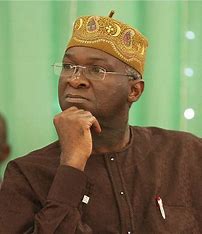
The Minister of Power, Works and Housing, Mr Bababtunde Fashola, has advised construction experts to tailor international laws that suit Nigeria’s needs to reduce conflicts in project execution for economic growth.
Fashola gave the advice at a regional workshop organised by the Lagos Chamber of Commerce International Arbitration Centre (LACIAC) on Friday.
The programme was put together in collaboration with the Association of Consulting Engineering in Nigeria (ACEN) and some law and construction firms.
It had the theme “Dispute Management in Africa Infrastructure Projects’’.
Fashola noted that costs and risk management were important factors that must be taken into account when undertaking projects.
He said that most Federal Government projects adhered to the International Federation of Consulting Engineers (FIDIC) principles.
The minister noted the need to ensure that the FIDIC researches were adapted to local construction needs and policies.
Citing various countries as examples, the minister explained that Nigeria had a land tenure system with ancestral lands or shrines where people were prohibited from building on.
He said the Mambila Power project suffered some setbacks because of several conflicts that led to litigations.
“If we apply international processes, there must be some room to reflect on international diversity and way we do things without necessarily being sub-optimal.
“Our land tenure processes, for example, are not exactly the same as that of Europe.
“So, if you bring contracting rules based on land tenure processes of another jurisdiction, it may be sensible to want to adapt them here if you really want to use infrastructure to create growth and wealth,” he said.
The minister said that lawyers sometimes made some project agreement ambiguous and so difficult to understand, adding that adaptation of laws to suit local requirements was important.
He said that the Mambila Power Project would provide huge employment and investment opportunities for the quarries, haulages companies, banks and other stakeholders in the construction value chain.
According to him, 18 million tonnes of stones and 42,000 tonnes of steel were some of the materials needed for the Mambila Power project which was a huge opportunity for job creation and local businesses.
“If you own a quarry now, you are sitting on a gold mine, especially if it is near Taraba State. That is the tomorrow I see; that is work; that is prosperity and the driver is infrastructure,” he said.
He said Mambila project would be guided by FIDIC rules, adding that guidelines for procurement process of the project had begun.
Fashola reeled out statistics of cement, stones and other inputs needed for the construction of the second Niger Bridge that would boost revenue in the construction value chain.
He said that 644,000 tons of aggregates, four million cubic meters of sand; 68,000 tonnes of cement and about 21,000 tonnes of reinforcement materials were needed for the construction of the bridge.
“This is the way to create prosperity; this is the way to get manufacturing back; this is the road to employment and this is the commitment of the government in which I serve,” he said.
He urged the workshop to fashion out ways to tackle contracting rules to create jobs, economic opportunities and remove conflicts that might end up in courts to increase costs of projects as well as cause delays.
Mr Charles Akindayomi, the President, Association of Consulting Engineering in Nigeria (ACEN), said the programme was aimed at nipping in the bud some of the construction related problems.
Akindayomi said it was better to avoid conflicts from the beginning, according to the News Agency of Nigeria, NAN.
He said that Nigeria was a member of FIDIC and that there were several well researched publications local engineers could use as reference materials to avoid conflicts.
“Avoiding risks is much more cheaper than arbitration,’’ he said.
He said this was the first time lawyers and engineers were coming together to proffer solutions to the several problems in the construction industry in the nation.
He said that cost, risk management and adjudication issues were all captured by FIDIC to ensure less litigations.
Mr Tunde Fagbohunlu, Chairman, Board of Directors of LACIAC, said that African countries had problems in the management of infrastructure disputes, hence, the workshop to develop capacity.
Mr Ayodeji Karim, Managing Director of Costain West Africa Plc, while delivering his lecture said that it was important to authenticate ownership of land to be built upon as well as resolve community issues on any piece of land for project.
“Finance is important and as a contractor you must know the capability of your clients before going to site,” he said.
Other speakers highlighted the importance of Alternative Dispute Resolutions as well as adaptation of technology through computer programming to avoid disputes that might slow down construction and make projects more expensive.
The workshop was the first Regional Training on dispute management in Africa construction industry.

TANZANIA FINES ACACIA MINING FOR BREACHING ENVIRONMENTAL RULES
TANZANIA FINES ACACIA MINING FOR BREACHING ENVIRONMENTAL RULES
Acacia Mining said on Thursday the Tanzanian government has fined the miner 300 million Tanzanian shillings ($129,143), two days after the government appointed a new mining minister, over allegations of breaching environmental regulations at its North Mara mine.
Acacia said it has been asked verbally to build a new tailings storage facility (TSF), a structure for storing uneconomical ore, but had not yet received any written notice from the government.
“Acacia expects that a new TSF is likely to be an economically viable alternative to further expansions of the existing TSF at the mine,” the company said.
The company’s North Mara mine, where operations remain unaffected, received an Environmental Protection Order (EPO).
Although the National Environment Management Council found discharges of a hazardous substance at the mine, the company said it was unaware of it and was awaiting a detailed report.
Acacia is in the middle of a prolonged spat with the government over a $190 billion tax bill, which has severely limited the London-listed company’s operations in the East African nation.
The Barrick Gold-owned company has been accused of tax evasion by the government, which charged three of its local subsidiaries, an employee and a former staffer for money laundering and tax evasion last year.