
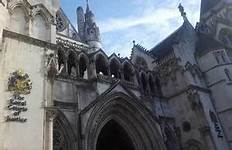
WHY U.S. COURT GAVE $6.59 BILLION DEFAULT DECISION AGAINST NIGERIAN GOVT – OFFICIAL
WHY U.S. COURT GAVE $6.59 BILLION DEFAULT DECISION AGAINST NIGERIAN GOVT – OFFICIAL
The federal government has explained the legal proceedings which resulted in a default decision for the enforcement of the payment of $6.59 billion against Nigeria to a British firm, Process & Industrial Development Limited (P&ID).
Addressing judiciary reporters in Abuja on Tuesday, the Solicitor-General of the federation, Dayo Apata, said the court’s decision was a “default entry made by the clerk of the United States’ District court” after the Nigerian government failed to defend itself from an allegation made by the P&ID.
Mr Apata however stated that the ‘default entry’ was not a judgement, adding that the court lacks constitutional powers to institute such an order against a sovereign state like Nigeria.
PREMIUM TIMES reported how Nigeria’s failure to comply with a contract agreement resulted in the default decision against Nigeria. The attorney general, Abubakar Malami, had repeatedly refused to respond to our enquiries before the story was published. Other officials like the petroleum minister and the office of the vice president could also not clearly explain the government’s stance.
In his press briefing on Tuesday, Mr Apata, who claimed media reports on the matter were “false”, did not contradict the various facts mentioned in our story, but said what the U.S. court decided was only a “default entry” and not a “default judgement.”
“It needs to be stated that what is being taunted as a default judgement was actually a default entry made by the court clerk. Under the Foreign Sovereign Immunities Act (FSIA), a defendant has up to 60 days period to answer to a petition filed against it.
“Where no response is entered for the defendant, the court clerk upon application by the petitioner, makes a default entry, which in this case was made on June 5.”
The government official did not disclose why Nigeria failed to make representation within 60 days as expected especially as the government was fully involved in previous arbitration on the matter which led a tribunal to rule against Nigeria for the payment.
He said there are certain conditions that must be attained before such a judgement by the U.S. court can be delivered, essentially explaining the arguments the government will now take to the U.S. court.
“It is to be noted that under the FSIA, a default judgment cannot be entered against a foreign state like Nigeria unless the presiding judge determines so after the petitioner/claimant must have established its entitlement to a default judgment.”
“Based on the presumption of sovereign immunity, the US District Court is still under obligation, despite default by a Foreign State, to determine whether the Foreign State is immune from the jurisdiction of the US Court under FSIA or whether the case before it falls within one of the recognised exceptions.
“Even where the court determines that it has jurisdiction, a default judgment will not be granted automatically or as a routine matter to be handled by a court clerk as this can only be done after a formal trial.
“We place reliance on the provision of Section 1608(e) of the FSIA which states thus: “No judgment by default shall be entered by a court of the United States or of a State against a foreign state, a political subdivision thereof, or an agency or instrumentality of a foreign state, unless the claimant establishes his claim or right to relief by evidence satisfactory to the court…”
He said the federal government has taken steps to set aside the enforcement of the court’s proceedings.
“The federal government through its foreign solicitors, Messrs. Curtis, Mallet-Prevost, Colt & Mosle LLP, has commenced the process of challenging and defending the enforcement proceedings.”
HOW PROBLEM BEGAN
PREMIUM TIMES earlier reported how a gas processing and production agreement reached between Nigeria’s Petroleum ministry and the P&ID was foiled after the British company accused Nigeria of failing to keep its own end of the bargain.
Under the terms of the contractual agreement, P&ID was to construct an accelerated gas development project to be located in Cross Rivers State.
The federal government was to source for natural gas from oil mining leases (OMLs) 123 and 67 operated by Addax Petroleum and supply to P&ID to refine into fuel suitable for power generation in the country.
Initial volume was about 150 million cubic feet of gas per day, and eventually to ramp up to about 400 million cubic feet per day during the 20-year period.
However, P&ID alleged that after signing the agreement, the federal government reneged on its obligation after it opened negotiation with the Cross River State Government for allocation of land for the project.
P&ID said the failure to construct the pipeline system to supply the gas frustrated the construction of the gas project, thereby depriving it the potential benefits expected from 20 years’ worth of gas supplies.
The company said attempts to settle out-of-court with the federal government failed.
In August 2012, P & ID served the Nigerian government a Request for Arbitration.
The federal government argued before the tribunal that “the failure of P & ID to acquire the site and build Gas Processing Facilities was a fundamental breach and that no gas could be delivered until this has been done.”
But the tribunal ruled that the Nigerian government’s obligations under Article 6B were not conditional upon P &ID having constructed the gas processing facilities.
In July 2015, the tribunal found that Nigeria had repudiated its obligations under the GSPA and that P & ID had been entitled to accept the repudiation and claim damages for breach.
On December 23, 2015, the government asked for the award to be set aside. That was after earlier committing that the arbitration decision shall be final and binding upon parties.
Hence, on February 10, 2016, the application was dismissed, paving way for the hearing on July 22 to 24, 2016 to determine the damages.
In the tribunal’s opinion, the damage suffered by P&ID was the loss of net income the company would have received if government kept its side of the contract.
Two members of the three-man tribunal, Lord Hoffmann and Anthony Evans, held that P&ID’s expenditure and income should have been about $6.597 billion if the GSPA was duly performed by government.
Both officials said the award should be paid together with interest at the rate of 7 per cent from March 20, 2013.
The other member, who is Nigeria’s former Attorney-General and Minister of Justice, Bayo Ojo, in his minority ruling said although P&ID was entitled to compensation for the breach, its damages could not have been more than three years from the date of the alleged breach.
Apart from being a new company incorporated in 2006, Mr Ojo noted the project could not have started yielding benefits earlier than 2015.
Mr Ojo said the highest amount payable as damages to P&ID should not be more than $250 million.
However, considering that the final award remained unsettled since 2013, it attracted additional $2.3 billion in uncollected interest as of March 2018.
The tribunal said damages were calculated as the present value of 20-year income, minus certain capital and operating costs incurred from building and running the refining facility.
Although the federal government challenged the award, P&ID said Nigeria was bound by a treaty to pay up, having waived its right to immunity as a sovereign nation when it signed the agreement.
“The final award is governed by such a treaty — the New York Convention. So, Nigeria’s status as a foreign sovereign does not deprive this court of jurisdiction to confirm the award,” P&ID said in its March 16, 2018 application seeking enforcement of the award.
Following its failure to stop the arbitration, PREMIUM TIMES learnt the federal government opened initial negotiations for the settlement of the award. But, the effort was unsuccessful.

Evelyn Okakwu

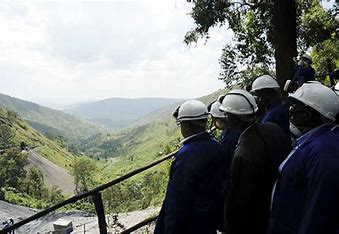
US INVESTORS DEMAND $96M FOR LOSS OF RWANDA CONTRACTS
US INVESTORS DEMAND $96M FOR LOSS OF RWANDA CONTRACTS
A group of US investors have taken Rwanda to an international court, seeking compensation of $95 million after the government seized their mining concessions, effectively denying them operating licences.
The suit before the International Centre for Settlement of Investment Disputes (ICSID) is a setback to Rwanda’s mining sector, which has lately gone through a series of reforms aimed at attracting large-scale investors and increasing revenues from mineral exports.
The US investors trading as Bayview Group and Natural Resources Development, filed a lawsuit at the ICSID in 2017 under case file No. ARB/18/21, but it was not until mid-2018 that a procedure agenda was developed, documents show.
Three arbitrators — two British nationals, Barbara Dohman and Nicholas Phillips, and the American Truman Bidwell — were appointed for the hearing. The ICSID has set a procedure agenda for the tribunal hearing to begin in March and run till December 2020.
Bayview Group sent its first notice of intent in April, 2017 to Claire Akamanzi, the chief executive of the Rwanda Development Board and Francis Gatare, chief executive of Rwanda Mines, Petroleum and Gas Board. The case is expected to be handled by the Ministry of Justice, but officials were not available for comment by press time.
The US companies were, since 2008, involved in mining of tantalum, tin and tungsten at five Rwandan mining concessions: Bisesero, Nemba, Mara, Giciye, and Lutsiro-Sebeya, all valued at around $20 million.
Their mining sites, sitting on 15,000 hectares, had by 2016 been effectively seized by government and offered to other investors. The seizure came after a longstanding feud between the two parties, with the government accusing the investors of injecting less capital than what they had agreed to do.
At the time, government officials had constantly pointed out that the investors were running down the mining sites by failing to invest as agreed, and destroying the environment by employing crude mining methods.
COMPENSATION
After seizing the concessions, the government in 2016 awarded them to Tri Metals Mining — an Oman-based company — in a deal worth $39 million.
The investors however claim that Rwanda seized its concessions illegally, and “nationalised” their assets and mining businesses without payment of compensation.
“Rwanda inexplicably formally seized the mining concessions without any payment of compensation to the investors, returned only the environmental cash deposit, and made clear that it reversed its prior position on compensation,” Roderick Marshall, the representative of the companies said in documents seen by The EastAfrican.
According to the suit documents, the investors claim that Rwanda breached the bilateral investment treaty (BIT) “by not meeting minimum standards of fair and equitable treatment.”
On top of the $95 million compensation that they are seeking from Kigali, the investors also want the ICSID to make a formal declaration that Rwanda violated their BIT and international law obligations. They also want Rwanda to pay all costs of the trial and their attorneys’ fees, estimated to be over $1 million.
The investors say that their operations in Rwanda were disrupted by illegal miners whom the authorities supported, and that authorities ignored their reports about extortions and threats of violence from individuals who wanted to encroach on the mining area.
MINING LAWS
Rwanda has previously warned foreign investors against keeping their mining sites idle after winning tenders for large concessions.
The country is grappling with illegal mining and has over the years suspended the operations of several mining companies and co-operatives found to be breaching formal mining procedures.
Last year, Rwanda published a new mining law, increasing the price for mining licences with the cheapest now going for Rwf700 million ($8 million) for a mining field of 49 hectares over five years.
Rwanda generated $373 million in mineral revenues in 2017, exceeding its target by 55 percent.
The case against Rwanda highlights the challenges in the region’s mining sector, as countries institute reforms to safeguard national interests.
The increasing restrictions on foreign investments are being blamed for the decline in foreign inflows into the region’s mining sector. A recent survey by the US-based advisory firm AT Kearney, shows that investors are more concerned about the operating environment in emerging markets and prefer putting their money into the US economy due to the country’s large domestic market, improving economic performance and new, lower corporate tax rate.
In 2017, an Australian mining company, OreCorp, announced plans to review its operations in Tanzania after the country revised its mining laws to enable the government to renegotiate all mining contracts.
The US Agency for International Development says foreign investors seeking to inject capital into the region are facing regulatory and policy restrictions, that have reduced their appetite for putting money into in the six-member economic bloc.
Rwanda is not the first East African country to be sued at the ICSID. In 2015, Pacific Wildcat Resources, a Canadian mining firm, instituted a case against Kenya for cancelling its licence for the exploration and development of minerals in Mrima Hills, Kwale County. UK firms Cortec Pty Ltd and Stirling Capital, its subsidiaries, also jointly filed a request for arbitration against Kenya.
In 2013, Kenya’s then mining minister Najib Balala revoked the licences of Cortec Mining Kenya and other mining companies on the grounds that they were irregularly issued.
Pacific Wildcat, which fully owns Cortec Pty and Stirling, the majority shareholders of CMK, claimed Kenya unlawfully expropriated its investments and breached the bilateral investment treaty’s obligation to treat them fairly and equitably. ICSID dismissed the case on the grounds that there was no legitimacy to the claims made by Cortec.
IVAN R. MUGISHA

CASTER SEMENYA BEGINS FIVE-DAY COURT OF ARBITRATION FOR SPORT HEARING APPEALING IAAF REGULATIONS
CASTER SEMENYA BEGINS FIVE-DAY COURT OF ARBITRATION FOR SPORT HEARING APPEALING IAAF REGULATIONS
The lengthy stand-off between Olympic champion Caster Semenya and track and field’s governing body over issues of gender, hormones and athletic performance has reached a pivotal phase as a key tribunal begins a planned five-day hearing in a case that could have huge ramifications for sport.
Both sides acknowledged the ruling in the case, which is not expected until late March, could have huge implications, notably over where to draw the line between the genders and how to ensure fairness in top-tier competition.
Semenya’s lawyers issued a statement during the 10-hour session criticising the IAAF’s release of a list of names of five experts that they planned to put forward to make their case.
Her legal team said that manoeuvre violated the spirit of confidentiality over the proceedings “in an effort to influence public opinion”.
Her team of four lawyers said it had received the three-judge panel’s OK to release the names of its own experts on Tuesday.
A woman wearing a jacket enters Court of Arbitration for Sport building in Lausanne, Switzerland. PHOTO: Semenya is challenging proposed rules on athletes with hyperandrogenism. (AP:/Keystone: Laurent Gillieron) Insisting on the need for fairness, the IAAF defended “eligibility standards that ensure that athletes who identify as female but have testes, and testosterone levels in the male range, at least drop their testosterone levels into the female range in order to compete at the elite level in the female classification”.
The IAAF has proposed eligibility rules for athletes with hyperandrogenism, a medical condition in which women may have excessive levels of male hormones such as testosterone. Semenya wants to overturn those rules.
The scheduled five-day appeal case is among the longest ever heard by the sports court.
Neither of the delegations spoke on the way out of Monday’s proceedings.
“The core value for the IAAF is the empowerment of girls and women through athletics,” IAAF president Sebastian Coe said as the day began.
“The regulations that we are introducing are there to protect the sanctity of fair and open competition.”
A colleague then pulled Coe away from reporters and said he wouldn’t say more.
The IAAF wants to require women with naturally elevated testosterone to lower their levels by medication before being allowed to compete in world-class races from 400 metres to one mile.
Under the proposed eligibility rules Semenya, a double Olympic and triple world champion over 800m who won the 800m and 1,500m titles at last year’s Commonwealth Games on the Gold Coast, would have to take daily medication or shift distances to run for South Africa over 5,000m.
Days before the hearing, the South African minister for sport and recreation, Tokozile Xasa, released a statement critical of the proposed regulations.
“What’s at stake here is far more than the right to participate in a sport,” Xasa said.
“Women’s bodies, their wellbeing, their ability to earn a livelihood, their very identity, their privacy and sense of safety and belonging in this world, are being questioned.
“This is a gross violation of internationally accepted standards of human rights law.”

AFRICA: MINING THE VALUE OF ALTERNATIVE DISPUTE RESOLUTION
AFRICA: MINING THE VALUE OF ALTERNATIVE DISPUTE RESOLUTION
International commercial arbitration and international investment treaty arbitration both offer effective and efficient alternative dispute resolution mechanism to assist with Africa mining related disputes and avoid some of the downsides often associated with judicial resolve.
When a mining project does not run according to plan, there is an immediate increase in the probability of disputes rising across all levels of the mining operations with parties in various jurisdictions. Given the potential complexity of disputes in the mining sector, careful consideration must be given to how disputes should be best dealt with in contractual agreements.
Resolving matters through court litigation raises many potential concerns: court orders from one jurisdiction are not enforceable across jurisdictions; and litigation is also often costly and slow with matters frequently taking many years to be determined. Parties may also be faced with a judge dealing with complex mining issues, with little industry knowledge.
When devising a dispute resolution strategy, a company’s chances of a fair outcome is highest when the dispute is aired in a neutral forum, in front of a decision-making body with the correct expertise, which process results in a final decision that can be widely enforced across many jurisdictions.
International commercial arbitration has been progressively refined to facilitate international trade and investment by providing a stable, predicable and effective legal framework in which these commercial activities may be conducted. Pursuant to the parties’ agreement, international commercial disputes can be finally resolved by independent, non-governmental decision-makers, who are selected by or for the parties, applying neutral judicial procedures that provide the parties with an opportunity to be heard.
The African continent is building itself into a hub for international commercial arbitration, with South Africa, as well as Rwanda and Mauritius leading the charge. Not only is the continent garnering expertise in international arbitrations; but, from a cost perspective, counsel costs and the general expense of arbitrating are also far more reasonable when compared other seats in countries such as London or Paris.
From a South African perspective specifically, the International Arbitration Act has recently been enacted. The Act establishes it as a competitive seat for international commercial arbitration – South Africa has a formal legal structure, neutrality and impartiality of its legal system, and has a track record of enforcing agreements to arbitrate and arbitral awards.
Another alternative to litigation in a court is investment treaty arbitration. Mining companies always need to be aware of the existence of investment treaties between the host state and their home state.
In Africa, there are approximately 854 Bilateral Investment Treaties (BITs), the content of which generally refer disputes with the host state to investment arbitrations. These treaties give investors comfort in that they can seek recourse in a neutral forum in cases where adverse measures have been taken by the host state, such as discrimination, expropriation or unfair treatment.
Including recourse to international commercial arbitration or investment treaty arbitration as part of a contractual agreement is a key way of ensuring the enforceability of awards, avoiding specific legal systems, increasing flexibility, saving costs and time and ensuring that parties in the mining industry have the ability to select experts in law and sector to resolve complex disputes.
By Priyesh Daya and Sarah McKenzie, Partners at Webber Wentzel specialising in dispute resolution with deep mining sector expertise
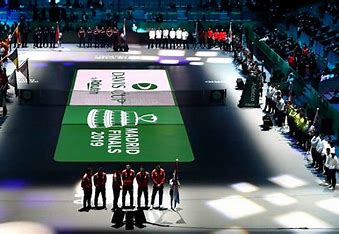
KENYA, NAMIBIA TO MISS TENNIS DAVIS CUP TOURNEY OVER NEW RULES
KENYA, NAMIBIA TO MISS TENNIS DAVIS CUP TOURNEY OVER NEW RULES
NAIROBI, Feb. 7 (Xinhua) — Kenya and Namibia have been dealt a major blow and will not compete in the lucrative Davis Cup tennis tournament as part of the Europe/Africa Zone II teams.
This follows the decision by International Tennis Federation (ITF) to adopt new rules that were endorsed in August last year during its Annual General Meeting in Orlando, the United States. The rules bring sweeping changes in the Davis Cup starting 2019.
Tennis Kenya chairman James Kenani said Thursday in Nairobi that with the new ranking system, Kenya has been ruled out.
“The new rules saw a ranking system backdated to four years. It is what is being used and as a result Kenya has dropped to 13 position in Euro/Africa Group II. The new selection is limited to the first 12 ranked countries,” said Kenani on Thursday in Nairobi.
The new ranking system takes effect immediately following the signing of new sponsor for the tournament, Kosmo, an investment firm owned by FC Barcelona and Spain defender Gerard Pique, which signed a deal worth 3 billion U.S. dollars covering 25 years.
The tournament had previously been sponsored by French bank BNP Paribas but with the new windfall, ITF says Davis Cup will attain new status as World Cup of tennis.
However, Kenani noted that Kenya, which was ranked 76 in the world by the end of last year, has been disadvantaged.
Kenya’s poor ranking was occasioned by failing to enter a team for the 2015 Davis Cup, which meant they earned zero points.
Other teams affected by the new rule include Namibia, Poland and Honduras.
Kenani disclosed that Kenya and Poland are the only countries that appealed against the decision at the ITF Arbitration Committee in London but their case was dismissed.
“We are very disappointed since we didn’t know the changes adopted at the AGM would affect the Davis Cup format in 2019,” said Kenani. “It’s demoralizing to countries even if the prize money in Davis Cup has been increased.”
It means the end of Kenya in the Davis Cup having been promoted last year from Europe/Africa Zone III.
“These changes should have come into effect after 2019 since teams had already qualified in 2018. You can’t punish countries who had invested their energies to qualify because a new sponsor has come on board,” said Kenani.
Kenya had budgeted 87,000 dollars for the tournament but Kenani said they will have to channel the funds elsewhere.
Mu Xuequan

TESTOSTERONE LIMITS FOR FEMALE ATHLETES BASED ON FLAWED SCIENCE
TESTOSTERONE LIMITS FOR FEMALE ATHLETES BASED ON FLAWED SCIENCE
Should high testosterone levels disqualify elite female athletes from competing among women?
That will be the question at hand in a Swiss court this month when South African sprinter Caster Semenya faces off against the world governing body for track and field over controversial new rules requiring women with high levels to medically lower them in order to compete.
The rules, established in 2018, hinge on a previous study concluding that elevated testosterone gives women a significant advantage in at least five events.
But a new paper led by CU Boulder suggests that research is “fatally flawed.” The authors, who will appear as expert witnesses in the case, are now calling for a retraction of the original research and asking the International Association of Athletics Federations to reconsider the rule change.
“In almost any other setting of science, errors of this magnitude would lead to a paper being retracted,” said lead author Roger Pielke Jr., director of the Center for Sports Governance at CU Boulder. “And it certainly would not be the basis for broad regulations that have a profound impact on people’s lives.”
TESTOSTERONE AND COMPETITIVE ADVANTAGE
In April 2018, the IAAF announced new regulations requiring certain female athletes with naturally high testosterone levels to take testosterone-lowering hormones if they want to continue to compete in the women’s category for the 400m, the 400m hurdles, the 800m, the 1500m and the one mile.
The rule, which applies to IAAF-sanctioned international competitions, requires that they maintain serum testosterone levels below 5 nanomoles per liter (nmol/L) for at least six months prior to competition. Most females have testosterone levels ranging from 1.12 to 1.79 nmol/L while the normal adult male range is 7.7 – 29.4 nmol/L. About 7 in every 1,000 elite female athletes have high testosterone levels, according to IAAF.
The association had attempted to put forth similar regulations in 2011, but that rule was thrown out when the Swiss-based Court of Arbitration for Sport (CAS) – the highest court for international sport – concluded in 2015 that there was a lack of evidence linking high testosterone to “a real competitive advantage” in women.
“While a 10% difference in athletic performance certainly justifies having separate male and female categories, a 1% difference may not justify a separation between athletes in the female category, given the many other relevant variables that also legitimately affect athletic performance,” the CAS panel concluded, calling for more research.
In 2017, the IAAF came back with that research, publishing a paper in the British Journal of Sports Medicine (BJSM) which claimed that elite women runners with the highest testosterone levels performed as much as 3 percent better than those with the lowest levels.
Pielke and co-authors Erik Boye, a professor emeritus of molecular biology at the University of Oslo, and Ross Tucker, a University of Cape Town exercise physiologist, challenge those results.
“We found problematic data throughout the study and consequently, the conclusions can’t be seen as reliable,” Pielke said.
FATAL FLAWS IN DATA COLLECTION
When the three tried to replicate the original findings using data from the study’s authors and publicly available results from four of the races included, they uncovered “significant anomalies and errors.”
For instance, they found performance times that were erroneously duplicated and “phantom times” that did not exist in official IAAF competition results. In addition, some athletes disqualified for doping were included in the study dataset – a fact that could confound the results.
In all, from 17 to 32 percent of the data used in the study was found to be in error.
“The IAAF should retract their paper containing faulty data, and the new rule based on this paper should be removed,” said Boye.
The researchers also note that IAAF researchers themselves conducted the BJSM study and have declined to share the majority of their research data.
“We would not find it appropriate for cigarette companies to provide the scientific bases for the regulation of smoking, or oil companies to provide the scientific bases for regulation of fossil fuels. Sport regulation should be held to the same high standards,” they write.
The IAAF researchers did correct what they characterized as “data capture errors” and re-ran their analysis in a subsequent letter to the journal. But flaws remain, Pielke said.
The IAAF “remains very confident of the legal, scientific, and ethical bases for the regulations,” according to a statement on its website.
SCIENTIFIC INTEGRITY AT PLAY
The research will be at issue in February when Pielke and Tucker serve as expert witnesses at the Court of Arbitration for Sport, where Semenya and Athletics South Africa have brought a case against the IAAF.
Under the new regulations, those who decline to medically reduce their testosterone levels must relinquish their right to compete as females.
Semenya, 28, a two-time Olympic champion in the 800 meters, has said the rules stigmatize women who do not conform to perceived notions of femininity and called them “discriminatory, irrational and unjustifiable.”
Originally set to take effect in November, 2018 implementation of the rules has been postponed until after the outcome of the case.
“Fundamentally, the issues that we raise with our paper are about the integrity of science in regulation,” said Pielke.
“Any agency, in sport or beyond, should be expected to produce science that can withstand scrutiny and which actually supports the justification for proposed regulations. That simply did not happen here.”
Lisa Marshall
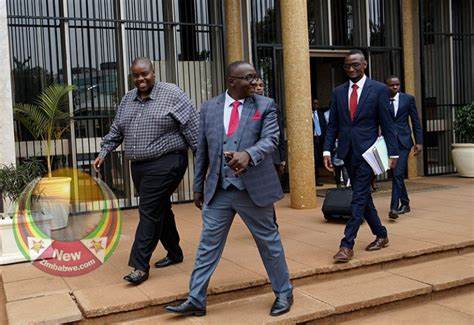
ZIMBABWE: JUDGMENT ON CHIVAYO'S LAWSUIT EXPECTED TODAY
ZIMBABWE: JUDGMENT ON CHIVAYO'S LAWSUIT EXPECTED TODAY
The High Court is today expected to deliver judgment in a case in which Intratrek Zimbabwe managing director Wicknell Chivayo sued the Zimbabwe Power Company (ZPC) for US$25 million for instigating malicious criminal charges of fraud against him and frustrating his company from performing its obligations at the Gwanda Solar Power Project.
The civil trial was heard last month and Justice Tawanda Chitapi reserved judgment. The judgment is expected today after ZPC lawyer Mr Trust Manjengwa, who had requested to peruse the record of Chivayo’s bail application in the criminal proceedings, had made his final submissions.
At the hearing last month, Chivayo’s lawyer Advocate Lewis Uriri argued that the criminal prosecution of his client was designed to frustrate him and his company from performing their obligations.
He accused ZPC of acting in bad faith, arguing that allegations against Chivayo were meant to create the basis for terminating the deal on the grounds of breach of contract due to non-performance.
It emerged during the trial that ZPC never filed any report to either the police or Zimbabwe Ant-Corruption Commission against Chivayo regarding the criminal charges he is facing. Mr Manjengwa confirmed this while defending the claim.
He acknowledged in his submission that most of the pre-commencement works had been done, saying the geotechnical survey was 82 percent complete, while a third of the land to be used for the project had been cleared. The power company also conceded that the delay in the fundraising for the project implementation was caused by Government’s failure to clear Sinosure arrears. Intratrek accused ZPC of making false allegations of fraud and corruption against both Chivayo and his company, when its procurement team adjudicated and awarded the tender through the then State Procurement Board.
Both parties subsequently signed an Engineering and Procurement and Construction contract of $173 million. Chivayo is seeking an order declaring that the procurement contract Intratrek signed with the power utility valid and binding to the parties. He also wants the court to grant him a decree of specific performance and that the pre-commencement works satisfaction period deemed to have been relocated for a period of 24 months from the date of the order.
Fidelis Munyoro
JUDICIAL REVIEW IN SOUTH AFRICA – HOW LOCAL COURTS APPROACH SPORTS DISCIPLINARY DECISIONS
JUDICIAL REVIEW IN SOUTH AFRICA – HOW LOCAL COURTS APPROACH SPORTS DISCIPLINARY DECISIONS
International sports federations (ISFs) and national sports governing bodies (SGBs) have traditionally argued that their decisions do not fall within the purview of public law. To help their case, they often have intricate rules regulating the sport that prescribe, among other things, that participants must resolve their disputes before internal tribunals rather than the national courts.1 Despite these efforts, a large number of sports disputes still find their way into the national courts.
This article outlines the approach of the South African courts when dealing with sports disciplinary disputes, with a particular focus on the role of public law judicial review. South African courts have traditionally treated disciplinary disputes as private matters not falling within the purview of public law and have been reluctant to intervene despite their inherent jurisdiction and supervisory powers. However, this position changed significantly with the introduction of the Promotion of Administrative Justice Act, 2000, and courts are now increasingly finding that decisions of SGBs are “administrative action” (explained below) and reviewable under public laws.
The author will explain this progression and argue that it is welcomed as it provides important checks and balances against potential abuses of powers by SGBs.
THE INHERENT JURISDICTION OF THE DOMESTIC COURTS
In terms of the common law and the Constitution of the Republic of South Africa, 1996 (the Constitution),2 the High Court of South Africa3 has inherent jurisdiction. This includes power to review decisions of public organs or administrative action and supervisory jurisdiction over private associations.
The grounds of review at common law are primarily:
failure by a tribunal or a functionary to comply with its own rules; and
violation of the principles of natural justice.
In both cases, the review is limited to whether a proper or correct procedure was followed by the tribunal or functionary. Focus is mainly on the procedural aspects of the matter rather than the merits. However, the courts will in exceptional cases, consider the merits of the challenge and substitute the decision of the tribunal or functionary.
Despite these powers of review and having supervisory jurisdiction over private associations, South African courts have historically been reluctant to get involved in sports disputes. They have traditionally emphasised the contractual relationship between SGBs and their members instead of the nature of the power or function exercised by SGBs challenged before the courts. This invariably resulted in the courts finding that SGBs were private associations and their decisions were not susceptible to public law or judicial review.
JUDICIAL REVIEW OR SUPERVISORY JURISDICTION?
There is a long list of court decisions, especially in the pre-constitutional era, relating to decisions of SGBs in which the courts held that decisions of SGBs were private in nature and not subject to judicial review.4 A discussion of these court decisions is beyond the scope of this article as the focus is on the constitutional era.
Even in the constitutional era, however, the courts have to a degree continued to exclude decisions of SGBs from judicial review. A good example is the court’s decision in the Cronje v United Cricket Board of South Africa (Cronje)5 which was decided about four years after the Constitution came into effect. This matter was a result of the famous match fixing scandal that rocked South African cricket in the year 2000. After Hansie Cronje admitted to match fixing, the United Cricket Board of South Africa (Cricket Board) banned Cronje from all its activities and those of its affiliates. Cronje approached the court to review and set aside the resolutions of the Cricket Board.
One of the issues that the court was required to determine was whether the resolutions of the Cricket Board were susceptible to judicial review. The court held that, because the Cricket Board was a voluntary association that was not connected to the state, which exercised contractual, rather than statutory power, and the conduct of private bodies was governed by private law and not public law, thus the Cricket Board was not subject to public law rules of natural justice.
THE SHIFT IN JUDICIAL REVIEW PURSUANT TO THE ACT
The Cronje matter supports the argument that the courts have to a degree continued to treat decisions of SGBs and sports disputes as private disputes that are not susceptible to public law review, despite the advent of the Promotion of Administrative Justice Act, 3 of 2000 (the Act).
Section 33 of the Constitution guarantees the right to administrative action that is lawful, reasonable and procedurally fair to everyone. It prescribes that legislation must be enacted to give effect to the rights guaranteed in this section. The Act is the legislation enacted to gives effect to the constitutional rights guaranteed in section 33 of the Constitution. Section 1 of the Act defines administrative action, among other actions, as any decision taken, or any failure to take a decision, by
“a natural or juristic person, other than an organ of state, when exercising a public power or performing a public function in terms of an empowering provision, which adversely affects the rights of any person and which has a direct, external legal effect…”
Empowering provision is defined as “… a law, a rule of common law, customary law, or an agreement, instrument or other document in terms of which an administrative action was purportedly taken.”
Pursuant to section 6, a decision or administrative action may be judicially reviewed if, among other things,
the administrator who made the decision did not have to the power to make the decision or was biased or reasonably suspected of bias,
a mandatory and material procedure was not complied with,
the procedure followed was unfair,
the decision was influenced by an error of law or contravenes the law,
the decision was taken in bad faith or arbitrarily or capriciously,
the decision is not rational or is otherwise unconstitutional or unlawful.
The grounds of review under the Act are wider than the supervisory jurisdiction of the courts or the common law grounds of review.
It is therefore not surprising that SGBs (and other private associations) go to greater lengths to protect their decisions from review under the Act.
THE MEANING OF ADMINISTRATIVE ACTION
To decide whether a decision of an SGB is an administrative action and thus reviewable under the Act, the main consideration is the nature of power exercised by, rather than the nature of, the functionary or body exercising the power.6 There are three main issues that the courts must consider in determining whether the decision of an SGB is administrative action susceptible to judicial review, namely whether:
there was a decision made by the SGB;
the decision was made exercising a public power or performing a public function; and
the decision was made in terms of an empowering provision.
The first and last issues are straightforward in most cases as there is always a decision challenged and that decision would have been made in terms of an empowering provision such as the rules or constitution of the SGB. The issue that has occupied the courts most is whether an SGBs decision was made by the SGB exercising public power or performing a public function.
In Coetzee v Comitis and Others (Coetzee)7 (which has been hailed as the Bosman ruling of South African football) the court held that the transfer rules of the National Soccer League (NSL) were unconstitutional and invalid. This followed a challenge by Coetzee against the rules of the NSL which restricted the transfer of footballers whose contracts with clubs had expired unless a transfer fee was paid to his former club. In deciding on the validity of the rules, the court considered the nature of the powers exercised, or functions performed, by the NSL. It held that the NSL, an SGB, was a body that performed a public function because football enjoyed large support in South Africa and the “fate of soccer players is of public interest.” This “victory” for public law enthusiasts was short lived as the court ruled in the Cronje matter (discussed above) that the Cricket Board, an SGB, did not exercise public power or perform a public function, thus its decisions were not administrative action and were not subject to judicial review.
In Tirfu Raiders Rugby Club v SA Rugby Union (Tirfu Raiders),8 the court departed from its position in the Cronje matter and issued a ruling that was more in line with the position adopted in Coetzee. It held that the power of the South African Rugby Union (SARU), the SGB responsible for the regulation of rugby throughout South Africa (the counterpart of the Cricket Board), was sufficiently public in nature and fell within the purview of the Act. However, the court cautioned that not every power exercised by SARU was public power and reviewable in terms of public law.
The court’s approach in Tirfu Raiders was confirmed in National Horse Racing Authority of Southern Africa v Naidoo and Another (Naidoo).9 In Naidoo the National Horse Racing Authority of Southern Africa (NHA) argued, among other things, that its decision to ban Naidoo (effectively ending his career) as a horse trainer was not administrative action susceptible to judicial review under the Act. It also argued that SGBs were excluded from the purview of the Act. The NHA further argued for the adoption, by the court, of the approach by English courts which generally excludes decisions of SGBs from judicial review as they are not statutory bodies or organs of state. The court held that the decision of the NHA was administrative action and there was no suggestion in the language used in the Act that the legislature intended to exclude SGBs and their decisions from the purview of the Act. It further held that the language of the Act is very wide to include decisions of SGBs where they exercise public power or perform a public function. The court once again cautioned that only some of the decisions of the NHA (an SGB) would constitute administrative action susceptible to judicial review under the Act.
The cases that followed Naidoo are in unison with the decision reached in Naidoo that only certain decisions of SGBs constitute administrative action reviewable under the Act. In Nyoka v Cricket South Africa (Nyoka),10 the court held that Cricket South Africa (CSA)11 was a juristic person exercising public power and performing public function within the purview of the Act, therefore its decisions were susceptible to judicial review were it exercised public power or performed a public function. The dispute in Nyoka related to a resolution by CSA to sack Nyoka as its President. The court reviewed and set aside a resolution by the CSA and ordered that Nyoka be afforded a fair hearing in terms of the CSA’s own rules and compliant with the rules of natural justice.
Similarly, in Louisvale Pirates v South African Football Association12 the court held that a decision of the South African Football Association (SAFA), the national association responsible for the administration of football in South Africa, was administrative action reviewable in terms of the Act. The court held that because SAFA was the dominant and only body governing football, a sport that was of public interest, in South Africa, exercised powers nationally, its decisions affected the public, it received funding from the government and performed a public function to, among other things, control sporting activities for the young and old, SAFA’s decision to discipline or suspend its members was a matter of public interest or concern reviewable under the Act. However, it must be noted that the court emphasised the need for applicants or claimants to exhaust internal remedies as prescribed in section 6 of the Act before resorting to the court for judicial review, unless it was blatantly clear that recourse to internal remedies would be a complete waste of time.
SGBS’ DISPUTE RESOLUTION PROCEDURES – ARBITRATION OR ADMINISTRATIVE ACTION?
When confronted by the question whether the decision of an arbitrator presiding over a football dispute in terms of the rules of SAFA was administrative action and reviewable by the court in terms of public law (the Act) in the seminal case of Ndoro and Another v South African Football Association and Other,13 the court answered the question in the affirmative. The dispute related to the eligibility of Ndoro, a professional footballer, to play for Ajax Cape Town Football Club (Ajax Cape Town) the third club he was registered with during the same season in two countries. The Dispute Resolution Chamber of the NSL had ruled that Ndoro was eligible to play for Ajax Cape Town. The arbitrator ruled that the Dispute Resolution Chamber of the NSL did not have jurisdiction over the dispute and directed that the matter be referred to the FIFA Players’ Status Committee.14
Ndoro and Ajax Cape Town approached the court to review and set aside the arbitrator’s decision. They argued, among other things, that the arbitrator’s decision was administrative action reviewable under the Act. The NSL argued that the arbitration proceedings were private and only subject to review under the Arbitration Act.15The court considered whether the arbitrator’s decision was reviewable and, if so, on what basis. The court, following the decisions in Tirfu Raiders and other earlier cases, held that not all decisions of SGBs were administrative action and susceptible to public law review. It added that
“there is no warrant to conclude that simply because a private entity is powerful and may do things that are of great interest to the public that it discharges a public power or function. Rather, it is the assumption of exclusive, compulsory, coercive regulatory competence to secure public goods that reach beyond mere private advancement that attract the supervisory disciplines of public law.”
The court then concluded that the NSL and SAFA (SGBs) exercised public powers, and the decision of an arbitrator sitting in terms of the SAFA rules was administrative action reviewable under the Act. The decision of the arbitrator was not set aside. The court ordered that the matter be referred to FIFA for consideration of the merits but for reasons different to the arbitrator’s reasons.16
INTERNATIONAL SPORTS FEDERATIONS AND ADMINISTRATIVE ACTION UNDER THE ACT
In Ndoro the court also considered whether the decisions of ISFs (FIFA in this case), insofar as they regulate sport in South Africa, are administrative action in terms of the Act and therefore susceptible to judicial review in South Africa. The court held that these decisions would be subject to judicial review where ISFs regulate sport in South Africa. This is very important as in most cases ISFs prescribe that any disputes in their respective sporting codes must be dealt with internally, with the Court of Arbitration of Sports (CAS) at the apex. Ndoro changes the position completely, in South Africa at least.
Similarly, a decision of an ISF such as the decision of the International Association of Athletics Federations (IAAF) to impose Eligibility Regulations for the Female Classification (Athletes with differences of Sex Development) (the Gender Regulations), which have been viewed by some commentators17 as targeting Caster Semenya, among others, can be reviewed in terms of the Act before South African courts were the IAAF to insist on the application of the Gender Regulations in South African athletics.18 It is therefore important for ISFs to consider, and ensure that they comply with, the Act when they regulate sport in South Africa.
COMMENT
It is clear that since the advent of the Act the courts have been more willing to intervene in sports disputes by way of public law judicial review. However, it must be reiterated that not all decisions of SGBs are subject to judicial review. A distinction must be drawn between decisions of SGBs that are made in the exercise of public power or performance of public function and decisions of SGBs that are private in nature. This distinction is undoubtedly important and welcome to SGBs and ISFs that may be concerned that every decision they make may land before, and be reviewed and set aside by, South African courts.
It is also important to note that South African courts are reluctant to exercise their jurisdiction where a party has not exhausted internal remedies set forth in the SGBs’ internal rules. Thus, judicial review in terms of the Act will in most instances be at the tail end of the process of challenging a decision of an SGB (or ISF), after an aggrieved party has exhausted internal remedies available in terms of the rules of the SGB (or ISF).
To some, the approach by South African courts is interventionist and may restrict SGBs and ISFs in regulating sport in South Africa. This is because sport is generally treated as, and is to a degree, unique and there are calls around the World to treat it differently acknowledging the specificity of sport. Indeed, the international hierarchy of sports regulation may justify the uniqueness of sport and the need for sport to be left to its own devices. This is more so where the SGBs or ISFs have put efficient dispute resolution procedures and tribunals in place that deal with disputes in sport expeditiously. Some of the proceedings before the tribunals of various SGBs or ISFs are a replica of court proceedings. The presiding officers in these tribunals are experienced sports administrators and lawyers, the parties are permitted legal representation and can raise any procedural challenge, or any defense, that a party would normally raise before a court. In such circumstances some argue it is not desirable for the courts to “interfere” sports disputes.
However, it is important for the courts to play an oversight role in terms of public law and maintain checks and balances in sport. Sport has a history of SGBs and ISFs trying to preserve their autonomy by any means, and in some instances disregarding fundamental rights of their members or participants in sport. Some SGBs and ISFs have attempted to elevate their rules, especially those of ISFs, above national laws. Internal dispute resolution tribunals have upheld this conduct of the SGBs or ISFs, perhaps genuinely believing that they do not offend national laws or public policy, only for such conduct to be ruled unlawful by the courts. Therefore, the courts’ oversight role is important, especially in South Africa where “everyone has the right to have any dispute that can be resolved by the application of law decided in a fair public hearing before a court or, where appropriate, another independent and impartial tribunal or forum.”
FARAI RAZANO

SWISS RULING PAVES WAY TO SHARE DOCUMENTS IN NIGERIA OIL GRAFT CASE
SWISS RULING PAVES WAY TO SHARE DOCUMENTS IN NIGERIA OIL GRAFT CASE
GENEVA (Reuters) – A Geneva prosecutor is reviewing material in a suitcase seized nearly three years ago to decide what can be shared with Italian authorities in a case involving oil majors Eni and Royal Dutch Shell and corrupt payments in Nigeria, his office said on Friday.
The prosecutor received the green light after Switzerland’s top court, the Federal Tribunal, rejected an appeal by Nigerian defendant Emeka Obi to prevent his bag from being unsealed.
The Lausanne court’s Nov. 8 ruling, published online, said that the confiscated material – including documents, an external hard drive, British and African passports, and USB keys – could have “potential pertinence” in the criminal investigation and the sealing could be lifted without violating Swiss law.
“The Geneva prosecutor now has access to all the material in conformity with the Federal Tribunal ruling,” it said in a reply to Reuters.
He will select the material to be handed over, it said. Under Swiss law, privileged information cannot be shared in international judicial assistance in criminal matters and the prosecutor’s choice of documents can be appealed.
Obi’s Geneva lawyers Paul Gully-Hart and Charles Goumaz told Reuters that they were cooperating with the prosecutor’s office.
“With respect to the ongoing proceedings in Switzerland, regarding the suitcase of our client, we can confirm that no decision has yet been taken in respect of the transmission of any of its contents to the Italian authorities,” they said in a statement.
“Our client has maintained his innocence in regards to the various allegations made by the Milan prosecutors and is confident that the final evaluation of the contents of his bag will confirm this.
“Our position remains, as it has always been from the beginning, that the only material that should even be considered for transmission to the Italians must be strictly limited to non-protected material that is directly related to our client’s involvement in the OPL 245 transaction,” they added.
An Italian judge said on Monday Eni and Shell were fully aware their 2011 purchase of a Nigerian oilfield would result in corrupt payments to Nigerian politicians and officials.
Eni and Shell bought the OPL 245 offshore field for about $1.3 billion in a deal that spawned one of the industry’s largest corruption scandals. It is alleged that about $1.1 billion of the total was siphoned to agents and middlemen.
The Milan judge made the comment in her written reasons for the September conviction of Obi and Italian Gianluca Di Nardo, both middlemen in the OPL 245 deal, for corruption. The pair were jailed for four years.
Obi and Di Nardo have been tried separately from Eni and Shell, which also face corruption allegations over the same deal in a hearing that is expected to drag on for months.
Eni has denied any wrongdoing. Shell said on Monday that neither Obi nor Di Nardo had worked for Shell, and that there was no basis to convict it or any of its former staff of alleged offences related to the deal.
Obi brought the Swiss case to keep the contents of the bag seized in Geneva in April 2016 from being shared with foreign authorities.
Its confiscation led the Geneva prosecutor to open a criminal case for suspected corruption of foreign officials and money-laundering. Days later Italian authorities requested judicial assistance, arguing that the suitcase and its contents had been deliberately stashed in Geneva, the Swiss ruling said.
Italy’s proceedings targeted 13 defendants and two companies suspected of corruption activities from 2009 and 2014 linked to acquiring prospecting rights in Africa, it said.
LIBYA SUCCESSFULLY DEFENDS MAJOR ARBITRATION CONSTRUCTION CASE IN PARIS
LIBYA SUCCESSFULLY DEFENDS MAJOR ARBITRATION CONSTRUCTION CASE IN PARIS
Libya has successfully defended a case at the Paris ICC Arbitration Court claiming €562 million against it in various types of compensation by a consortium of construction companies building its stalled Tripoli International Airport project.
The Libyan Transport Projects Implementation Authority reported yesterday that the Paris Court of Arbitration of the International Chamber of Commerce (ICC) issued its final judgement in case No. DDA/MCP/20892, which was filed by the consortium of Companies (Odebrecht Engineering and Construction, TAV-Tepe Akven for Operations and Investment, and the Contractors Union), contracted to implement the two passenger terminals at Tripoli International Airport.
In 2008, the Civil Aviation Authority (CAA), as the former contractor and executing agency for transport projects, as the competent authority to execute, monitor and close the project, where the total claims of the plaintiff were valued by more than €550 million, consisting of certified and ready-to-pay receivables and compensation for loss of profits and damage in general, as alleged by the plaintiff.
The case management, through an international law firm, has argued and presented defences, and has provided the execution of transport projects through the Committee in charge of the Commission and the consultants by providing all relevant documents and documents, studying the claims of the plaintiff and providing technical and financial analysis to refute the claims. The final verdict was as follows:
1. The arbitral tribunal’s refusal to claim the plaintiff’s value for the extracts submitted after the suspension of the work as a result of force majeure , valued at 113 million euros.
2. The arbitral tribunal refused to require the plaintiff to pay the penalty for the delay in payment for the amount of EUR 60 million.
3. The arbitral tribunal rejected the plaintiff’s claim for losses of expected profits (loss of earnings) valued at €111 million.
4. The arbitral tribunal rejected the plaintiff’s claim for compensation as a result of the sub-contractors ‘ claim of €70 million.
5. The authority rejected the plaintiff’s claim for additional costs not approved by the project consultant valued at €12 million.
6. Rejection of the amounts claimed under the preliminary contract, valued at 515 thousand euros.
7. Rejection of claims for pre-sentencing interest amounts of €23 million.
8. Ruling that the defendant must pay for the approved disposals for the executed works valued at 73.5 million Euro
9. Ruling that the delay in paying the value of the extracts contained in 8 should be paid by a reduction of 71.5 million euros, according to the second party’s claim to 27.5 million euros, according to the ruling.
10. The judgement that the extracts under the procedure must be paid prior to the occurrence of the force majeure conditions of 7.8 million euros.
11. The payment of bank guarantee letters to the plaintiff, valued at 15.4 million euros.
12. The judgement that the amount of the remainder of the payment made to the respondent must be restated and worth €49.6 million.
THE SUMMARY OF THE PROVISION IS AS FOLLOWS:
– Total claims of the plaintiff (contractor) are approximately €562 million.
– The total amount awarded to the plaintiff is approximately 124.3 million:
Approximately 79.9 million euros of which are receivables for performing work payable.
€15 million of which are the cost of bank guarantee letters that have already been collected by banks.
– The total amounts awarded to the plaintiff, i.e. the duty to be recovered from the contractor in favour of the Libyan Transportation Projects Implementation Authority is approximately €49.6 million.
It will be recalled – and as reported on by Libya Herald at the time – that a number of arbitraton cases against Libya had been flagged up by the Libyan Audit Bureau in its 2015 Annual Report (pages 99-104) in which it had called on the Libyan authorities to appeal compensation settlements which it viewed with suspicion. It had pointed out possible corruption and foul play in some of these cases.
It will also be recalled that Libya had also successfully defended another case in February last year against Brazilian company Odebrecht LBCDC.
Libya was defending a compensation claim case brought against it by the Libyan Brazilian Construction and Development Company and Oderbrecht for about US$ 99 million (LD 129 m).
In May 2018 it also successfully defended two cases, one in Paris and the other in Beirut.
Sami Zaptia.