INVESTOR-STATE DISPUTE SETTLEMENT IN TANZANIA
INVESTOR-STATE DISPUTE SETTLEMENT IN TANZANIA
The government of Tanzania recognises that foreign direct investment can act as a driver for economic development. The Fifth Phase Government has demonstrated renewed commitment to industrialisation for Tanzania’s economic development and foreign investors are vastly encouraged to invest. But in what would seem as an illogical move, Tanzania has embarked on process of regulation of its foreign investment regime by enacting legislation, which exclude international arbitration.
In September 2018, the government passed the Public Private Partnership (Amendment) Act, No. 9 of 2018. The Act bans international arbitration as a method of resolving investor-state disputes. Public Private Partnership agreements will be governed by Tanzanian law and subject to local arbitration under the arbitration laws of Tanzania.
Another significant reform was done by the government by terminating its bilateral investment treaty (BIT) with the Kingdom of the Netherlands. The government gave the Dutch government a notification of its intention to terminate the treaty before the 1 October 2018 deadline when the treaty was set to expire on 1 April 2019. It is unclear whether this move was directed only towards the Netherlands BIT or whether the government will also terminate all its remaining BITs.
SIGNIFICANT REFORMS
In July 2017, Parliament passed three pieces of legislation that introduced significant reforms to the legal and institutional framework governing oil, gas and mining sectors. These are the Written Laws (Miscellaneous Amendments) Act 2017, the Natural Wealth and Resources (Permanent Sovereignty) Act 2017 and the Natural Wealth and Resources (Review and Re-Negotiation of Unconscionable Terms) Act 2017.
These laws are aimed at safeguarding the nation against exploitation of its mineral resources. However, these legislation outrightly diminished foreign investor appetite in these sectors.
For instance, the Natural Wealth and Resources (Permanent Sovereignty) Act 2017 prohibits proceedings in foreign courts and tribunals and rule out any arbitration clause that makes reference to international arbitration bodies as well as the application of foreign laws to dispute. Judicial bodies or other bodies established in Tanzania and the application of Tanzanian laws are deemed to be incorporated in any development agreement with the government or publicly funded projects.
What triggered the government’s decision to review international arbitration is that, Tanzania has appeared as a respondent before international arbitration tribunals for violating its investment treaty obligations. In most cases, the government was found liable and paid large compensation to foreign investors.
As an example, Tanzania went through a costly, difficult and only partially successful arbitration with an investor in the water sector (Biwater Gauff arbitration). This arbitration was based on a BIT with the UK and negatively affected the general take on the BITs in Tanzania.
LACK OF LEGITIMACY
Tanzania has raised concerns about the traditional investor-state dispute settlement system including lack of legitimacy and transparency. Tanzania has also complained that the system allows foreign investors to challenge legitimate public welfare measures of host states before international arbitration tribunals.
Tanzania is concerned about its sovereignty as international arbitration discouraged governments from adopting regulatory measures aimed at promoting public policy objectives (Biwater Gauff arbitration).
With the recently enacted legislation, the largely outdated Arbitration Act which was originally enacted in 1931 is in dire need of reforms necessary for creating an able robust machinery of alternative dispute resolution in a global competence capacity.
Moreover, the government needs to review its investment policies and amend all the relevant laws to be in line with the government’s new policy on international arbitration. The government should perhaps terminate BITs that have reached their end date and enact a domestic legislation as the primary mechanism for protecting foreign investors. The government may also offer its partners the possibility to renegotiate and develop a Tanzanian Model BIT as the basis for any new agreement. Further, the government needs to also highlight areas of institutional weakness that need to be addressed in order to realise its mission.
In conclusion, Tanzania’s experience in overhauling its investment regime is far from complete. The long-term effects of this new policy on international arbitration cannot yet be assessed.
It is too early to tell whether the government met its objectives or equally, if the new policy will impact foreign investment flows. However, important lessons can be drawn from the experience so far.

Aisha Ally Sinda

WAV, STG SIGN SETTLEMENT AGREEMENT
WAV, STG SIGN SETTLEMENT AGREEMENT
The over two years of dispute between the West African Ventures (WAV), a 100 per cent Nigerian company and Sea Truck Group (STG), a British Virgin Island company, has finally ended through a commercial settlement.
WAV and STG had been engaged in a protracted commercial dispute that resulted in several court and arbitration actions in Nigeria and outside Nigeria until the Nigerian Content Development and Monitoring Board (NCDMB) and the National Petroleum Development Management Services (NAPIMS) mediated and facilitated a commercial settlement rather than a legal resolution between the parties.
The settlement agreement, which provided for satisfaction of limited conditions, was formalised on Tuesday at the agreement signing ceremony chaired by the Executive Secretary of NCDMB, Mr. SimbiWabote, thereby bringing the settlement agreement to a conclusion.
In his remarks, Wabote commended the amicable resolution of the dispute, saying it is a win-win for the two companies and the oil and gas industry.
He said: “In every business endeavour, there are disagreements and individual interests but the most important thing is having the mindset to settle through dialogue rather than getting through legal tussle that will last for a very long time that will create a lose-lose for everybody.
“So, if businesses see people with integrity and reputation, that they want to bring in to enable them settle any of their rift, they should bring those people in and be able to sit round the table and iron out their individual differences rather than resorting to legal battles that will last forever. So, my advice to businesses that are in conflict is to create the opportunity to dialogue because for every problem there is solution.”
Wabote pointed out that the significance of the peace agreement and the decision to work together amicably was to correct the impression outside the country where people believe that coming to invest in Nigeria as an international business would only leave people to losing their investment and assets.
According to him, this shows “we can amicably resolve our issues. Any foreign investor who wants to come here has a mechanism for dispute resolution, which this agreement has shown that it could work”.
“STG is an international company while WAV is a local company, they had issues but they got the services of NCDMB and NAPIMS and other mediators to be able to resolve it. So, there exists in the country mechanism to resolve issues like this between international and local company,” he added.
The Managing Director of WAV, Mr. Michael Dumbi Amaeshike, said the agreement had brought great relief to the company which he described as vital to the oil and gas industry.
“It (WAV) has always provided marine services to the industry and it is the number one marine service company. In the past two and halve years, it has been difficult to provide those services and the industry has been impacted by this dispute. Therefore, to be here today and to signal an end to that dispute is very significant to me and the oil and gas industry,”Amaeshike said.
On his part, the Chief Executive Officer of Telford Offshore and representative of STG, MrFraiser Moore, said the amicable resolution of the dispute was significant to the industry and promised that the two firms would promote local content and capacity development.
Peter Uzoho
Sports Arbitration Explained
Podcast | Africarbitration
By Leyou Tameru (Founder @ I-Arb Africa)
iarb
It’s World Cup time which means it is the best time to explore world of sports arbitration! My guest, John Ohaga, gives us the rundown about sports arbitration, how it works, what it looks like in Kenya and other countries and the challenges in the field for the users as well as the service providers.
Guests
John Ohaga, Managing Partner at TRIPLEOKLAW Advocates in Kenya & Chairman of the Kenya Sports Disputes Tribunal
Host
Leyou Tameru
Music
Ellias Fullmore
Editing
Beruk Mengestu, Leyou Tameru

An I-Arb Africa Production
AfricArbitration is the podcast about Arbitration in Africa & Africa in arbitration. Produced by I-Arb Africa, it hosts dialogues and debates on arbitration related developments from across the continent through interviews with African arbitration experts
Africa's New Free Trade Agreement
Podcast | Africarbitration
By Leyou Tameru (Founder @ I-Arb Africa)
A glimpse into arbitration in Mozambique
Welcome to our episode about the African Continental Free Trade Agreement. My guest co-host Loic Samuel Youth and I interview Prudence Sebahizi, the man responsible for the African Continental Free Trade Agreement at the African Union. He tells us about the project, what it means for the continent and the dispute resolution mechanisms envisaged.
This is a shared episode with the Citizens and Diaspora Directorate at the African Union and their podcast “AU on the Go”, Enjoy!
Guest
Prudence Sebahizi, Chief Technical Adviser on the African Continental Free Trade Agreement, African Union
Editing
Beruk Mengestu, Leyou Tameru
Music
Ellias Fullmore
Host
Leyou Tameru
Co-host
Loic Samuel Youth
An I-Arb Africa Production
AfricArbitration is the podcast about Arbitration in Africa & Africa in arbitration. Produced by I-Arb Africa, it hosts dialogues and debates on arbitration related developments from across the continent through interviews with African arbitration experts
Africa's 1st Woman Legal Counsel
Podcast | Africarbitration
By Leyou Tameru (Founder @ I-Arb Africa)
iarb
In this dialogue with the first woman Legal Counsel of the African Union, we learn more about her role, her work in creating more opportunities for African counsel on the continent, lessons to be learned from African countries regarding representation in arbitration, whether or not we will have an African investment court and so much more. Tune in and be inspired!
Guest
Amb. Dr. Namira Negm, Legal Counsel, African Union
Host
Leyou Tameru
Music
Ellias Fullmore
Editing
Tinsae Teferi
An I-Arb Africa Production
AfricArbitration is the podcast about Arbitration in Africa & Africa in arbitration. Produced by I-Arb Africa, it hosts dialogues and debates on arbitration related developments from across the continent through interviews with African arbitration experts
Dialogue with African Arbitrators
Podcast | Africarbitration
By Leyou Tameru (Founder @ I-Arb Africa)
iarb
For this episode we have an enlightening dialogue of leading African arbitrators. Hailing from Nigeria and Kenya, the panel of arbitrators discuss issues related to setting fees, meddling by parties and courts, how to get appointments, being an arbitrator in the age of social media, corruption and bribery and so many intriguing topics.
Did I mention that it is an ALL WOMEN panel?
Here is more information about my guests: Wairimu Karanja is the founding partner at Envantage Law in Kenya. Njeri Kariuki is an arbitrator based in Kenya. Adedoyin Rhodes-Vivour is an arbitrator and the managing partner at Doyin Rhodes-Vivour & Co. in Nigeria. Eunice Lumallas is an arbitrator and a partner at Lumallas, Achieng & Kavere in Kenya.
Guests
Wairimu Karanja, Njeri Kariuki, Adedoyin Rhodes-Vivour, Eunice Lumallas
Host
Leyou Tameru
Music
Ellias Fullmore
Editing
Editing: Tinsae Teferi
An I-Arb Africa Production
AfricArbitration is the podcast about Arbitration in Africa & Africa in arbitration. Produced by I-Arb Africa, it hosts dialogues and debates on arbitration related developments from across the continent through interviews with African arbitration experts
Enforcement & Third Party Funding
Podcast | Africarbitration
By Leyou Tameru (Founder @ I-Arb Africa)
iarb
Episode 3 explores a topic that is relevant to absolutely everyone in international arbitration, and it’s all about MONEY! Yes, money is necessary to conduct an arbitration case and it is also very important in the end as parties look to enforce the award. My guests, Hannah Van Roessel and Juriaan Braat discuss their experiences in working on arbitration cases as third party funders as well as enforcing awards with a focus on African parties.
More information about my guests: Jurriaan Braat is Managing Director at Omni Bridgeway based in Switzerland and Hannah Van Roessel is Director and Senior Legal Counsel at Omni Bridgeway based in Netherlands.
Guests
Jurriaan Braat, Hannah Van Roessel
Host
Leyou Tameru
Music
Ellias Fullmore
Editing
Beruk Mengestu
An I-Arb Africa Production
AfricArbitration is the podcast about Arbitration in Africa & Africa in arbitration. Produced by I-Arb Africa, it hosts dialogues and debates on arbitration related developments from across the continent through interviews with African arbitration experts
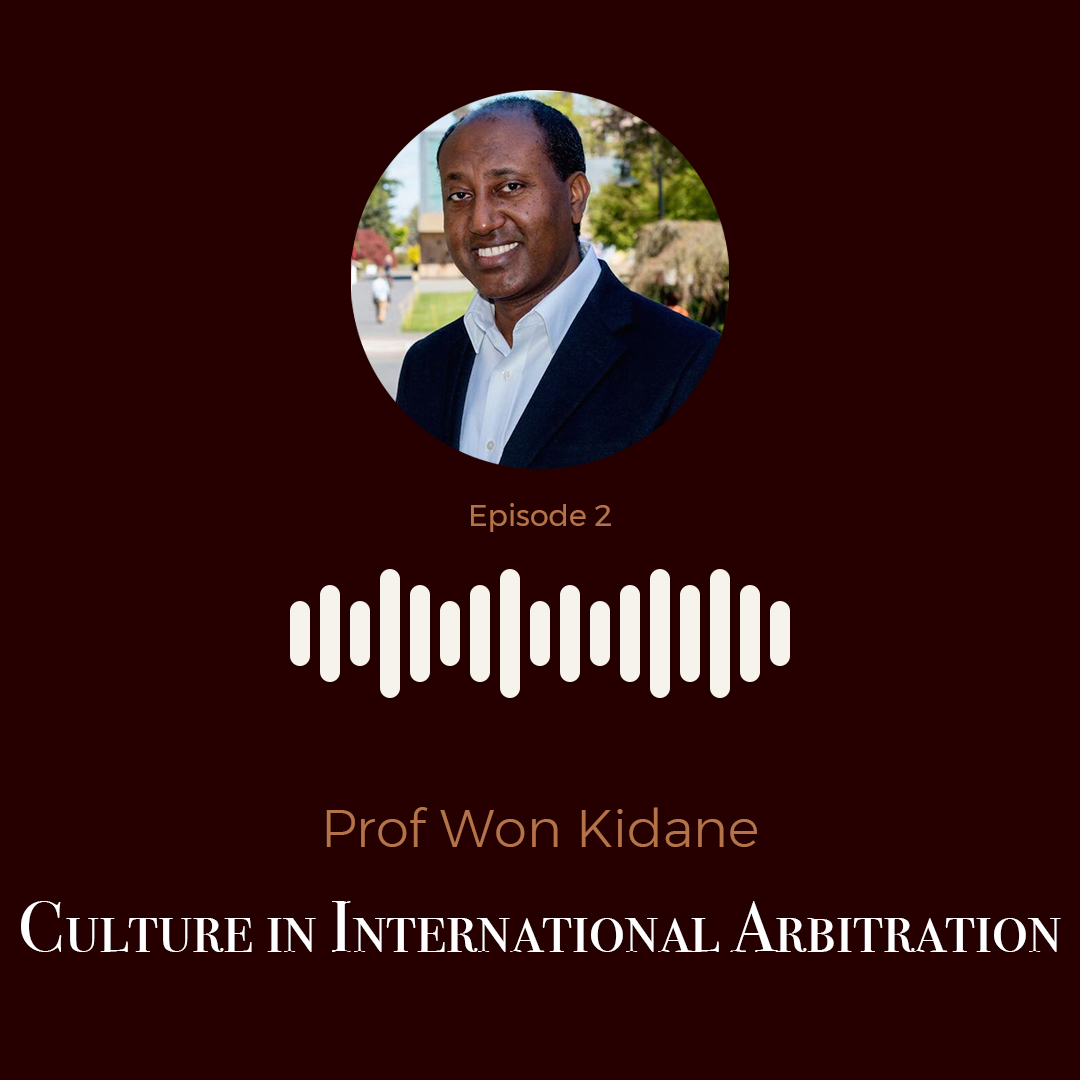
Culture in International Arbitration
Podcast | Africarbitration
By Leyou Tameru (Founder @ I-Arb Africa)
iarb
Episode 2 is a riveting interview with Professor Won Kidane about culture in international. arbitration. We discuss the impact of the nationality of parties, counsel, arbitrators and laws on the proceedings and outcome of the case. We also discuss practical issues concerning diversity, especially in investment arbitration cases, and how to make international arbitration more inclusive, and so much more.
More information about Prof Kidane:
Prof Won Kidane is an associated professor as the Seattle University School of Law and a Principal Addis Law Group LLP, a boutique international arbitration firm. He is the author of the book “The Culture of International Arbitration”.
Guest
Prof Won Kidane
Host
Leyou Tameru
Music
Ellias Fullmore
Editing
Beruk Mengestu
An I-Arb Africa Production
AfricArbitration is the podcast about Arbitration in Africa & Africa in arbitration. Produced by I-Arb Africa, it hosts dialogues and debates on arbitration related developments from across the continent through interviews with African arbitration experts
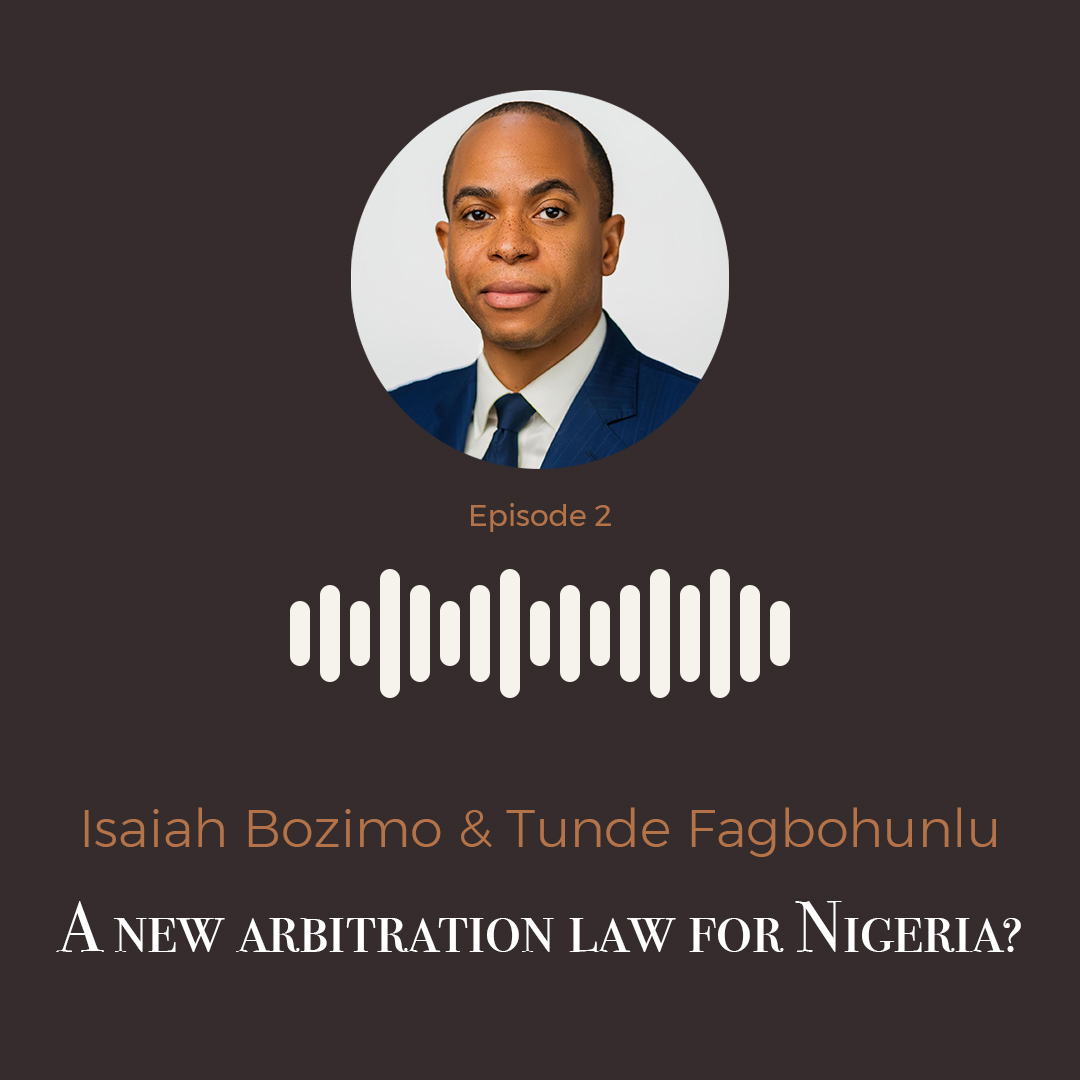
A new arbitration law for Nigeria?
Podcast | Africarbitration
By Leyou Tameru (Founder @ I-Arb Africa)
iarb
Welcome to our very first episode. In this first episode we present to you an interview about the new draft arbitration bill in Nigeria. Isaiah and Tunde discuss the draft arbitration bill for Nigeria and the challenges of enforcement of arbitral awards. They also discuss an interesting feature included in the draft arbitration bill: the award review tribunal. Listen and find out more! While you’re at it, check out www.iarbafrica.com
More information about Tunde and Isaiah:
Isaiah Bozimo, Partner, Broderick Bozimo & Company; Tunde Fagbohunlu, SAN. Partner, Aluko & Oyebode. Chairman, Board of Directors, Lagos Chamber of Commerce International Arbitration Centre (LACIAC)
Guests
Isaiah Bozimo,Tunde Fagbohunlu
Host
Leyou Tameru
Music
Ellias Fullmore
Editing
Editing: Tinsae Teferi
An I-Arb Africa Production
AfricArbitration is the podcast about Arbitration in Africa & Africa in arbitration. Produced by I-Arb Africa, it hosts dialogues and debates on arbitration related developments from across the continent through interviews with African arbitration experts
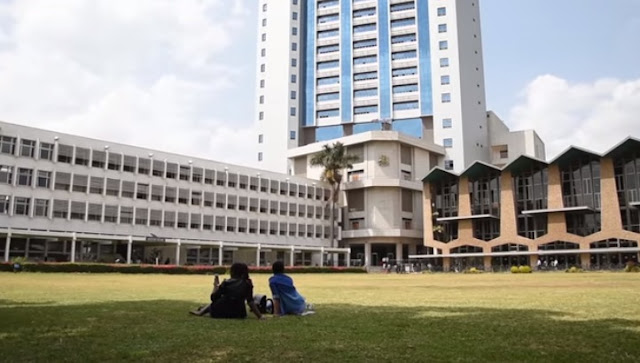
UON FACES SH237M CLAIM FROM TOWER CONTRACTOR
UON FACES SH237M CLAIM FROM TOWER CONTRACTOR
The University of Nairobi is facing a Sh237 million claim from a quantity surveyor who was hired during construction of its Sh2.3 billion tower, adding to financial woes facing the institution.
Songa Ogoda & Associates has filed a suit seeking to compel the university to pay a Sh193.8 million arbitral award plus interest on the overdue debt.
The firm was retained in November 2011 to undertake quantity surveying consultancy for the construction of the University of Nairobi Tower but the agreement was terminated a few months later, leading to the current dispute that was referred to arbitration.
“That the honourable court be pleased to adopt as a judgment of the court capable of enforcement in execution the final arbitral award dated November 24, 2017… in favour of applicant for the sum of Sh193.8 million with simple interest thereon at 14.5 percent per annum from December 2017 to date,” reads the order sought by the quantity surveyor.
The firm also wants the university to reimburse it its Sh13 million arbitrators’ cost.
The claim adds on the financial woes facing the University of Nairobi, which earlier last week revealed that among the huge debts facing the institution is Sh1.6 billion in unremitted pension and statutory deductions for its workers.
Documents filed in court on January 8, 2019 by Songa Ogoda & Associates show that the UoN had put up a robust defence before the tribunal but it is not clear why it did not appeal against the decision of the arbitrators.
The firm is now asking the court to enforce the award since it has not been challenged.