
BATTLE OF THE SEATS: DEVELOPING NATIONS AND INTERNATIONAL ARBITRATION CENTERS
BATTLE OF THE SEATS: DEVELOPING NATIONS AND INTERNATIONAL ARBITRATION CENTERS
In recent months, several governments have announced their intention to establish international arbitration centers. This is a noteworthy trend as these states are predominantly developing nations.
The fact that many developing nations are turning to international arbitration as a way to attract financial investment and increase their country’s pedigree abroad is a significant development that will have repercussions in the arbitration industry.
THE NEW ARBITRATION CENTERS
A quick perusal of recent developments in the realm of arbitration demonstrates that several developing nations are either planning or have recently opened their own arbitration centers. For example, in 2018, the International Arbitration Centre, part of the Astana International Financial Centre, was officially launched. Other arbitration centers located in developing nations include the Mumbai Centre for International Arbitration; and the Saudi Centre for Commercial Arbitration.
As for upcoming centers, there are several initiatives worth mentioning. For example, in mid-January a delegation from the Oman Centre for Commercial Arbitration traveled to Qatar to discuss co-operative ties between Qatar and the Oman Chamber of Commerce and Industry (OCCI), “especially in the areas of commercial arbitration.” Reports detailing Oman’s intention to create an arbitration center appeared around 2015, but it was only established in 2018 via Royal Decree No 26/2018. Oman is now looking to Qatar, which has its own Qatar International Center for Conciliation and Arbitration, for assistance to get its arbitration center started.
Also in November 2018, Uzbekistan announced the creation of the Tashkent International Arbitration Center (TIAC), which will operate under the country’s Chamber of Commerce and Industry. Meanwhile, in late January 2019, during an international conference on arbitration, the minister of financial services, trade & industry and immigration in The Bahamas, Brent Symonette, reiterated the commitment of this Caribbean nation to become an international arbitration hub. Even more, the governments of Singapore and the People’s Republic of China agreed in late January “to set up an international panel of mediators, to better handle disputes that may arise from projects under the multi-billion dollar Belt and Road Initiative.”
Moreover, other developing states could establish their own arbitration centers in the near future. For example, a February 12 op-ed published on Africa.com, titled “Africa: Mining The Value Of Alternative Dispute Resolution,” argues that:
The African continent is building itself into a hub for international commercial arbitration, with South Africa, as well as Rwanda and Mauritius leading the charge. Not only is the continent garnering expertise in international arbitrations; but, from a cost perspective, counsel costs and the general expense of arbitrating are also far more reasonable when compared to other seats in countries such as London or Paris.
We may soon add even more nations to the growing list of international arbitration centers, many of which may be based in Africa.
… Will Have to Struggle Against other Centers
At this point, it is important to stress that commercial arbitration is an industry, and there are plenty of other arbitration centers around the world. The most well-known arbitration centers include the International Chamber of Commerce, headquartered in France; the International Centre for Settlement of Investment Disputes, of which the proceedings usually take place in Washington DC; Sweden’s Arbitration Institute of the Stockholm Chamber of Commerce; and the Hong Kong International Arbitration Centre.
In other words, any new player will have to compete for clients with more established and reputable arbitration entities.
POTENTIAL NEW SEATS ARE CONFIDENT
The aforementioned list demonstrates that commercial arbitration centers are en vogue right now. A successful arbitration center can help a country’s image grow in the international arena, not to mention help protect the country’s business interests. Moreover, arbitration centers are ideal for local economies, as they imply greater usage of airports, hotels, and other facilities as arbitrators and clients travel to said centers for their cases.
Part of the challenge for any new arbitration center to be successful is that it has to appear attractive to potential clients, hence local governments have to “sell” the image of their nation. For example, the aforementioned Bahamian Minister Symonette, argued why The Bahamas would be a great location for an arbitration center:
Our accessibility by air transport to several major continents; our infrastructure by way of hotels and convention centers; our advanced technology; a long standing commitment to the rule of law; stable government; our trained judiciary and let us not forget an experienced and skilled cadre of professional lawyers, accountants, trust officers and insurance specialists to name a few. These attributes should not be taken lightly as they give The Bahamas a competitive advantage over many competitors.
There are reasons for these governments to be confident about their possible success as some arbitration centers in developing regions are doing quite well. For example, the Kigali International Arbitration Centre is an African success story, and according to the Rwandan daily The New Times, in early 2019 the center registered its 100th case.
Similarly, Kazakhstan has high hopes for the AIFC, which is a conglomerate of different financial entities, aimed at attracting global investors to the Central Asian state. Apart from the previously mentioned Arbitration Centre, the AIFC includes the Astana International Exchange; the AIFC Court, which “provides a common law court system for the first time in Eurasia;” and other administrative agencies.
ANALYSIS
While Kigali can be regarded as a success story, we would be neglectful if we did not mention some of the challenges that new international arbitration centers will face as they try to make a name for themselves.
One obvious challenge is convincing legal professionals that they should, in turn, convince their clients to utilize a new arbitration center rather than a more well-known institution, like the ICC. After all, nobody wants to be the “guinea pig” of a new arbitration center.
One positive aspect of the AIFC’s IAC is that it is its own entity, independent from the Kazakhstani judicial system and other government agencies. This, combined with its army of arbitrators, will hopefully encourage clients to turn to it due to its impartiality. On the other hand, the TIAC, for example, will operate under the Chamber of Commerce and Industry of Uzbekistan, meaning that potential clients may perceive it to be inherently biased in favor of the Uzbek government. The perception of impartiality of arbitrators and the system as a whole is a critical pillar necessary for any arbitration center to flourish.
An additional issue to keep in mind is the effect that these new entities will have on international arbitration as a whole. How will these new centers affect commercial arbitration as we know it? How will the increase of “supply” affect the “demand”? Future analyses about commercial arbitration should pay attention to this issue.
THE FUTURE OF ARBITRATION: TECHNOLOGY AND CRYPTOCURRENCIES
The Shenzhen Court of International Arbitration in China has ruled that “bitcoin is not a legal currency” but that “does not prevent it from being protected by law as a property.” In fact, several hotels in major Chinese now accept cryptocurrencies, case in point the Ethereum Hotel, which offers discounts to those that pay their bills using the Ether cryptocurrency.
This ruling clearly demonstrates that state regulation should be a priority and, thankfully several governments have drafted bills to regulate cryptocurrencies. For instance, the government of India has announced that a draft legislation on crypto regulation is in its the final stages. Meanwhile, the government in Kiev announced its intention to legalize cryptocurrencies and draft relevant regulations, an initiative led by the ministry of economy. As for the Russian Federation, it has already enacted bills on this matter, and, according to reports, at least 51 cryptocurrency ATMs operate in compliance with the current regulations in Russia.
However, bills and regulations are not enough to fully guarantee the protection of property rights. A relevant dispute settlement mechanism is necessary for that. This is the reason why the Russian Industrialist Union has launched an Arbitration Body for Crypto Disputes. Similarly, Uzbekistan’s aforementioned TIAC will be a platform to settle disagreements over investments, intellectual property and, interestingly, crypto-related technologies.
Resolving the disputes arising from cryptocurrencies not only require arbitrators and laws, but also a technical knowledge regarding how a virtual currency, like Bitcoin, exists, how much it is worth, and how can it be tracked.
Contrary to litigation, where parties cannot select a judge of their preference, arbitration is an alternative dispute settlement mechanism that allows parties to appoint an arbitrator that is a specialist in subject of the dispute. As Redfern and Hunter correctly suggested “it is, above all, the quality of the arbitral tribunal that makes or breaks the process” (Law and Practice of International Commercial Arbitration, 4th Ed, 2004). Appointing authorities is a critical component of the arbitration process, in order to be represented in the most professional and efficient way possible, parties must be sure that their case is heard by highly specialized arbitrators. Moreover, as it is not necessary to be represented by lawyers, parties may be represented by themselves or by financial technology specialists.
While this analysis has focused on new arbitration centers in developing nations, the rise of cryptocurrencies will also have an effect on how arbitration is conducted. Hence governments, parties, as well as current and future arbitration centers must think of how cryptocurrencies will affect future contracts.
FINAL THOUGHTS
Nations like Kazakhstan, The Bahamas, Qatar and Uzbekistan are in the process of setting up their own international arbitration centers, or have recently created them. This is an interesting strategy as these countries seek greater international recognition, and other benefits that come from having a respected arbitration center within their territory; the center in Kigali stands as an example of a successful arbitration center in a developing nation. Nevertheless, the arbitration industry is fairly well-established by now, and these new entities will have to complete against the ICC or ICSID.
Commercial arbitration is an evolving industry, it will be important to monitor how new centers and the rise of cryptocurrencies affect it in the near and long term.
About the authors: Wilder Alejandro Sanchez is an analyst based in Washington DC who focuses on geopolitical, military and cyber security issues. Lucia Scripcari is a Moldovan student finishing her degree in law at Istanbul Sehir University (Turkey).
The views expressed in this article are those of the authors alone and do not necessarily reflect those of Geopoliticalmonitor.com or any institutions with which the authors are associated.

Wilder Alejandro Sanchez & Lucia Scripcari


KENYA TO HOST DAVIS CUP AFRICA ZONE GROUP III TOURNAMENT JUST LIKE IN 2018
KENYA TO HOST DAVIS CUP AFRICA ZONE GROUP III TOURNAMENT JUST LIKE IN 2018
Founded in 1974, the Kenyan Davis Cup selection has passed a rough road in the last 45 years, performing in every season between 1986-2005 and reaching Group I at the beginning of the 90s, which was a huge success back then.
After losing all five ties in 2005, Kenya had vanished from Davis Cup for the next four years, returning in 2010 and struggling to find the winning formula before 2017-18 editions when they grabbed eight out of ten ties!
Last June, Kenya hosted other eight African countries in Nairobi, winning four out of five ties to secure the place in Europe/Africa Zone Group II in 2019. Instead of that, ITF implemented new rules that forced Kenya to stay in Group III despite the fact they were very productive in the last two years and deserved that promotion, dropping to the 13th in the Euro/Africa Group II while 12 countries were picked.
Kenya and Poland had sent an appeal to the ITF Arbitration Committee although they were rejected, keeping Kenya in Group III Africa together with Algeria, Benin, Cameroon, Mozambique, Namibia, Nigeria, Rwanda, Tunisia and Uganda.
2019 Davis Cup Africa Zone Group III tournament will take place in September and Keny has earned the right to host it, beating Tunisia to gather probably the crucial advantage in front of the home fans in Nairobi. “The team was frustrated not to play in the group II category,” Kenya Davis Cup team’s head coach Rosemary Owino said.
“We have time to prepare well for the championship to give our players a chance to be in top form ahead of the championship. I have faith in the boys that they can deliver. We have the advantage of playing on home soil.”
JOVICA ILIC
2019 AFRICA CUP OF NATIONS: SEEDORF ADDRESSES CAMEROON'S GOAL-SCORING ISSUES
2019 AFRICA CUP OF NATIONS: SEEDORF ADDRESSES CAMEROON'S GOAL-SCORING ISSUES
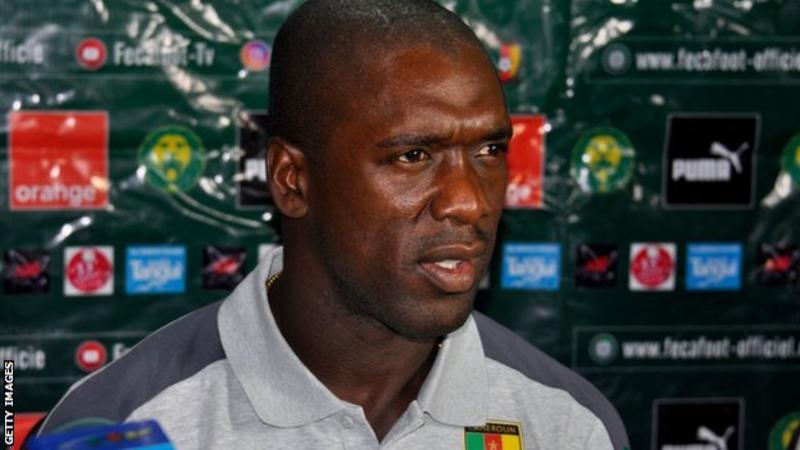
Cameroon head coach Clarence Seedorf says he is addressing the team’s goal-scoring worries ahead of their decisive Africa Cup of Nations qualifier against Comoros on 23 March in Yaounde.
The Indomitable Lions, second in Group B, need a draw to qualify for this year’s finals in Egypt, after Cameroon were stripped of hosting rights.
Cameroon have scored twice in five games since Clarence Seedorf took over and have failed to score in their last three games against Malawi, Morocco and Brazil.
“Scoring goals comes and goes with time but the most important thing is that we continue creating chances. The entire team must work and we then we have to score goals,” Seedorf told reporters in Yaounde on Monday.
“We have to improve on our free-kicks and corners. We have to take advantage of our great physical power and the height in the team. This is something we’ve analysed and are keen on improving,” the former Dutch international said.
Group B after five matches:
Morocco…… 10 points (qualified)
Cameroon….. 8 points
Comoros….. 5 points
Malawi….. 4 points (eliminated)
With Villarreal striker Karl Toko Ekambi suspended for the Comoros game and FC Porto marksman Vincent Aboubakar and Angers forward Stephane Bahoken both injured, Seedorf knows getting the goals will be problematic.
“Our hottest striker at the moment, Toko Ekambi is unavailable. He’s been on fire in the last months and would have had a good impact on the team. We have to work with those in the squad who’ve shown some exciting things during training sessions.”
Seedorf has been criticised in local media for some of his call-ups, amongst them 35-year-old goalkeeper Idris Carlos Kameni who is yet to play a game this season with Turkish outfit Fenerbache.
“Kameni brings in great leadership to the team and this is something we need in the squad at the moment. His leadership qualities are more important to the team now than whether he is playing or not. We have two other good keepers,” said Seedorf, who was also questioned about why Liverpool centre-back Joel Matip and Torino defender Nicholas Nkoulou are not in the squad.
“We’ve been speaking to Matip, Nkoulou and other players. Their absence in the national team is not down to us but them. We’ve been hunting for players and it’s either they want to play for Cameroon now or they don’t.
“We have shown lots of interest but it’s a personal decision the players have taken and we respect it. We hope with time things will change.”
A complaint filed by the Comoros football federation at the Court of Arbitration for Sport (Cas) calling for the elimination of Cameroon after they lost the hosting rights of the 2019 Nations Cup has threatened to cast a cloud over the game.
Seedorf says he is unaware of what is happening with that challenge, but insists his players will stay focused ahead of Saturday’s game.
“This is not something we’re thinking about. Officials of Fecafoot will handle this. As a team we just want to play and win the game. I hope the fans will come out in their numbers to cheer us.”
Seedorf, who turns 43 on 1 April, has said he is undecided about his future should Cameroon miss out on a place in the 2019 Nations Cup.
“I don’t know what the future will be and I’d stay optimistic. We have a good team and I’m sure we’ll get a positive result.”
The Indomitable Lions begin preparations on Monday for their encounter against Comoros at the Ahmadou Ahidjo stadium in Yaounde.
Njie Enow
DAMIETTA LNG TO EXPORT 550 MCFD IN APRIL
DAMIETTA LNG TO EXPORT 550 MCFD IN APRIL
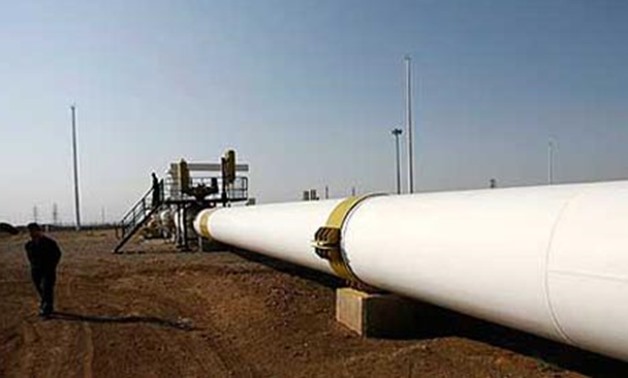
CAIRO – After six years, Damietta liquefaction will resume its work in April and export around 550 million cubic feet per day of natural gas, a Petroleum Ministry source told the local newspaper.
This decision came after the Egyptian government signed an agreement with the foreign partners of the project, as the plant is a joint venture between Union Fenosa Gas and the Italian Company Eni.
In January, it was reported that the government was about to sign an agreement with the main partner of the plant, the Spanish Union Fenosa, to drop a $2 billion arbitration claim lodged after gas to the facility was cut off in 2012.
The source stated that the Ministry of Petroleum agreed with the partners to compensate the company for its loss through the stoppage period with profits derived from the Egyptian Natural Gas Holding Company (Egas)’s 10 percent ownership of the facility.
The ownership of the Damietta Liquefaction plant is 26 percent for Italy’s ENI, 26 percent for Union Fenosa and Spanish Egyptian Gas Co. (Segas) and 48 percent for the Egyptian government.
The source added that the ministry agreed to allow the Damietta plant to export quantities of natural gas produced locally, until the arrival of gas from the fields of Cyprus and Israel in the Mediterranean Sea, thus achieving an economic return in Egypt and ending the arbitration disputes.
Negotiations with foreign partners in the Damietta Dam plant were conferred with gas prices and charges of the use of the national gas network in exchange for the gradual re-operation of the plant and the export of locally produced natural gas.
Also, Eni is now waiting for approval from the Petroleum Ministry to connect the Damietta plant to the Zohr gas treatment plant.
Union Fenosa filed a lawsuit against Egypt at International Centre for Settlement of Investment Disputes (ICSID) in 2014 to compensate it with $8 billion after the Ministry of Petroleum stopped supplying liquefied gas to Damietta plant due to lack of energy resources inside the country following the January 2011 revolution.
With gas production amounting to around 6.4 billion cubic feet per day, Egypt achieved self-sufficiency of gas by the end of September 2018, aiming to become a regional hub of energy.
AFRICA'S RICHEST WOMAN TO BE OUSTED AT ANGOLA TELECOMS COMPANY
AFRICA'S RICHEST WOMAN TO BE OUSTED AT ANGOLA TELECOMS COMPANY
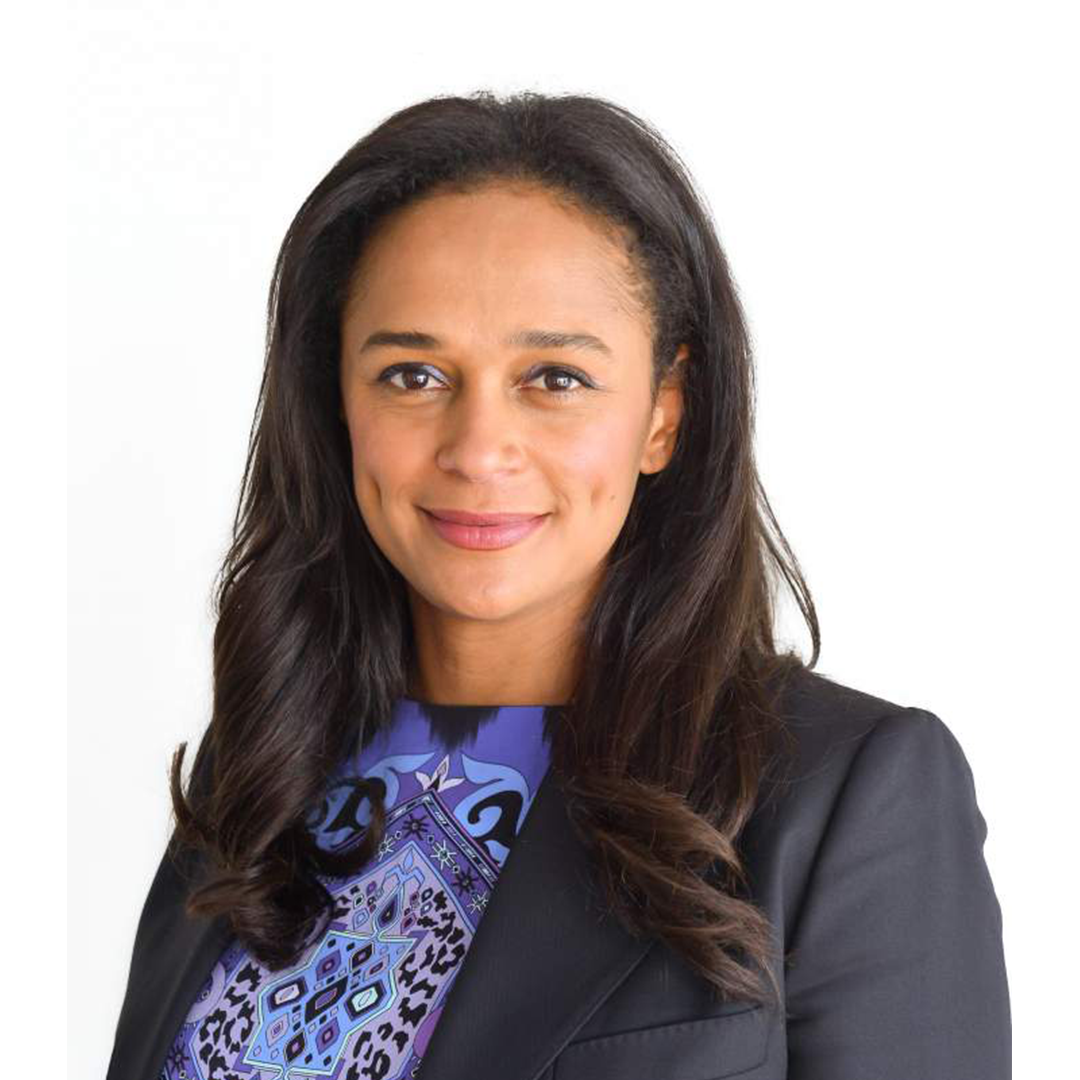
Africa’s richest woman is set to be ousted from the helm of Angola’s biggest telecommunications company as shareholders meet Tuesday to discuss corporate governance in the wake of legal action by one of its biggest investors.
The meeting at Unitel SA, whose chairwoman Isabel dos Santos owns 25%, comes after an arbitration court ruled that Brazilian telecommunications company Oi SA was entitled to receive $654 million from other Unitel shareholders because they violated several clauses of the company’s shareholders’ agreement and failed to pay dividends to Oi.
Shareholders with as much as 75% of Unitel are likely to vote for the removal of dos Santos, according to Antonio Estote, an independent economist and professor at the Universidade Lusiada de Angola. Besides Oi, the shareholders are state oil company Sonangol and army general Leopoldino do Nascimento, who each hold 25%, according to Estote.
The daughter of former Angolan President Jose Eduardo dos Santos, Isabel amassed a fortune during her father’s almost four-decade rule and has an estimated net worth of about $2bn, according to Bloomberg. Besides Unitel, her business interests include media, retail, finance and energy, both in Angola and in Portugal.
Joao Lourenco, who replaced dos Santos in 2017, has made the battle against graft the cornerstone of his administration, dismantling the influence of his predecessor’s family over key sectors.
“Dos Santos’ withdrawal weakens her in terms of power in Angola but she is likely to maintain her stake in Unitel,” Estote said in an emailed response to questions.
Sonangol has repeatedly said it wants a new board at Unitel, while Oi has publicly expressed its disapproval with management for withholding millions of dollars in dividend payments. Do Nascimento, who has close ties to the Dos Santos family, is likely to vote in favor of Isabel dos Santos’ removal to win favor with Lourenco, according to Estote.
“We can’t accept that a single shareholder with 25 percent stake can take unilateral decisions at the company, Sonangol Chairman Carlos Saturnino told reporters on February 25. “We need to reach an agreement to appoint a new board.”
A spokesman for Oi declined to comment on how the company will vote or whether it to sell its Unitel stake. Do Nascimento and Isabel dos Santos weren’t immediately available to comment.
Henrique Almeida and Candido Mendes

AMCU ACCEPTS CCMA PROPOSED SETTLEMENT
AMCU ACCEPTS CCMA PROPOSED SETTLEMENT
A protracted strike waged by the Association of Mineworkers and Construction Union might soon come to an end after the union’s members agreed to accept a proposed settlement agreement advanced by Commission for Conciliation, Mediation and Arbitration.
AMCU, which represents 13,000 of the 32,200 people employed at Sibanye-Stillwater’s South African gold operations embarked on the strike four months ago demanding an annual wage increase of R1 000 for the next three years.
The union announced in a media statement yesterday it had received “a resounding mandate from its members to accept the proposed settlement agreement advanced by the CCMA, in an attempt to break the wage negotiations deadlock with Sibanye-Stillwater”.
MPHO SIBANYONI
AIR NAMIBIA TO WAIT FOR COURT JUDGEMENT
AIR NAMIBIA TO WAIT FOR COURT JUDGEMENT
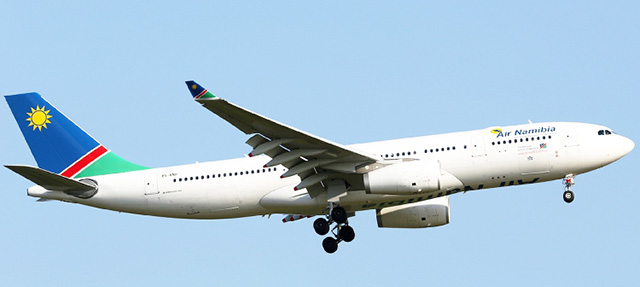
AIR NAMIBIA says it will not engage with any Namibian individuals or companies claiming to be official representatives of the Belgian airline ChallengAir until the courts recognise a local liquidator for the bankrupt Belgian company.
In a statement released today (Friday), the state-owned company said it would not engage with the liquidated Belgian airline, adding that the question of the validity of an arbitral award in ChallengAir’s favour still remained to be determined in the courts.
The Namibian reported in January that ChallengAir, which is being liquidated, was pressuring Air Namibia to pay N$400 million to it, despite an ongoing court case.
The government said last year it would defend a case brought by ChallengAir in the Namibian High Court in an attempt to take over Air Namibia and TransNamib assets because of a payment dispute around a cancelled aircraft lease transaction from the late 1990s.
Following a 2008 arbitration ruling against Air Namibia and TransNamib and in favour of ChallengAir, the Belgian company was awarded 25 million euro – currently the equivalent of about N$$467 million – by courts in Paris (in 2011) and Munich (in 2015) as compensation for outstanding debts owed by Air Namibia in connection with a an aircraft lease agreement with ChallengAir that was cancelled in 1998.
“It is unfortunate that certain individuals have chosen to create incorrect perceptions about the facts in this matter, thereby attempting to unduly influence Air Namibia for their personal gain or to engage underhandedly to pre-empt the outcome before the Namibian High Court has pronounced itself on the matter,” Air Namibia spokesperson Paul Nakawa said.
Nakawa further said the Namibian courts have not officially recognised any local liquidator for ChallengAir, and that Air Namibia would therefore not acknowledge, engage or negotiate with any Namibian individuals or companies purporting to be official representatives of ChallengAir in Namibia.
“We remain committed to finalising the matter swiftly and will provide a further update for the benefit of all our loyal stakeholders once the Namibian High Court has ruled on the matter,” he said.
Nakawa added that during the recent weeks Air Namibia had been in direct engagement with ChallengAir, through their legally appointed and recognised European receiver, to determine viable options to resolve the situation.
Okeri Ngutjinazo
PARLIAMENT ABANDONS CROSS-EXAMINING AG OVER SHS 6BN HANDSHAKE
PARLIAMENT ABANDONS CROSS-EXAMINING AG OVER SHS 6BN HANDSHAKE
Parliament has withdrawn its application in which they wanted the attorney general William Byaruhanga cross-examined over the Shs 6 billion ‘presidential handshake.’
In 2017, Ali Sekatawa,, the former lawyer of Uganda Revenue Authority (URA) petitioned court to stop government from implementing the findings and recommendations of the parliament’s committee on Commissions, Statutory Authorities and State Enterprises (Cosase).
Cosase investigated circumstances under which top government officials shared Shs 6 billion between themselves as a bonus reward for helping Uganda secure Shs 1.4 trillion in capital gains tax from Heritage Oil’s sale of its stake to Tullow Oil.
According to Sekatawa,, who received Shs 242 million from the ‘handshake’, the committee selectively evaluated evidence leading to wrong conclusions. He also challenged the fact that parliament went ahead to adopt a report, which was not signed by all the members of the committee that investigated the matter.
While appearing before justice Andrew Byabashaija of the High court on Thursday, the lawyers of parliamentary commission Tina Cherotich and Solomon Kirunda told court that they had made consultations with their superiors who advised them to abandon cross-examining attorney general and the applicant Sekatawa, over their affidavits sworn in the matter.
Presiding judge, Byabashaija also told Cherotich it was not going to be possible to cross-examine the attorney general because he is a witness and also a respondent. He told Sekatawa, to file his written submissions on the matter and serve the respondents before March 1.
Byabashaija said that if there is any rejoinder it should be made by April 5 and then the judgment will be delivered on May 31. The respondents were faulted for having recommended the inspector general of government Irene Mulyagonja to do investigations yet she is also biased on grounds that she appeared before Cosase and gave her opinion that the president had no powers to give the handshake.
Sekatawa, also argued that the Cosase committee led by Abdu Katuntu was composed of legislators who had also given their opinions prior to the commencement of investigations. In his petition, Sekatawa, says that Katuntu and MP Medard Sseggona shouldn’t have been part of the investigation since it was improper on grounds that they had earlier approved the expenditure during the ninth parliament when they were members of Legal and Parliamentary Affairs Committee.
Last year, Justice Byabashaija issued an interim order blocking the IGG from ordering the beneficiaries to refund the money and also to start investigations until this main case is determined.
BACKGROUND
On February 24, 2015, the United Nations Commission on International Trade Law (UNCITRAL) dismissed a case filed by Heritage, which had challenged a decision by URA to collect a Shs 1.1 trillion capital gains tax. This was after Heritage sold its stake to Tullow Oil. The court directed Heritage to pay 11.5 billion in costs to Uganda.
Doris Akol, Uganda Revenue Authority (URA) commissioner general on May 17, 2015 went to Museveni’s upcountry residence in Rwakitura in Kiruhura district to discuss URA’s court win. Akol then wrote a follow up letter to Museveni on June 26, 2015, reminding him of the “presidential handshake” in appreciation of a team of 42 members who handled the tax arbitration case in London.
Akol proposed that Shs 6 billion be paid to the team as take-home package for their work.
“The amount recommended as a reward is an amount that will enable the beneficiaries use the funds for something tangible, i.e, to leave a legacy to remind them and their offspring of their contribution to the nation,” the letter reads in part.
She said the recommended amount, of which Shs 2.3 billion was deduction of taxes, would enable the beneficiaries acquire a decent plot of land or facilitate finishes for their home constructions.
In response, Museveni, in a November 16, 2015 letter, directed the minister of Finance, Matia Kasaija to effect the payments, as a token of appreciation to the team. The ministry’s permanent secretary, Keith Muhakanizi wrote to Akol on May 25, 2016, stating that the funds could not be allocated as supplementary then, but that it would be paid out in FY 2016/2017.
The money was paid out in August 2016, with Akol receiving Shs 242 million. Former attorney general, Peter Nyombi receiving Shs 226 million; his deputy then Fred Ruhindi got Shs 93 million, while Muhakanizi is quoted to have got Shs 108 million.
In April 2017, it was reported that Museveni had agreed to refund the Shs 6bn off the State House budget after he reportedly agreed that it was wrong for the officials to have got the money from URA’s budget instead of State House or Office of the President.
URN
HEDGE FUND JOINS FIRM IN $9BN NIGERIA CLAIM
HEDGE FUND JOINS FIRM IN $9BN NIGERIA CLAIM
A hedge fund managed by VR Capital Group has taken a large stake in Process & Industrial Developments (P&ID), an energy company that won a claim against Nigeria which is now worth $9bn.
P&ID, a small energy company founded by two Irishmen, is trying to make Nigeria settle or allow the company to start seizing assets, according to a report from Bloomberg.
Nigeria did not honour a deal allowing the small natural gas company to harvest hydrocarbons.
Two years ago, P&ID won a decision against the government of Nigeria, with a London arbitration tribunal awarding it $6.6bn while interest of $1m is accruing daily.
P&ID, owned by the hedge fund and a firm called Lismore Capital, has hired lobbyists, lawyers, and a public-relations firm to press for collection of the award.
The legal team is also trying to confirm the award in Washington and London courts, which would allow P&ID to start seizing Nigerian assets in the US and the UK.
The company was founded by Irishmen Brendan Cahill and Michael Quinn, a music manager and oil man who died in 2015.
Cahill told Bloomberg: “It is disappointing that Nigeria chose to repudiate the terms of a deal that would have benefited the country by bringing electricity to millions of its citizens.”
Samantha McCaughren

KENYA: WALUKE FIRM FORGED PAPERS TO SHOW MAIZE STORED IN SOUTH AFRICA, COURT TOLD
KENYA: WALUKE FIRM FORGED PAPERS TO SHOW MAIZE STORED IN SOUTH AFRICA, COURT TOLD
Sirisia MP John Waluke and his business associate Grace Sarapy Wakhungu forged documents to show that they stored maize in a South African warehouse as part of a ploy to justify a Sh500 million claim from the National Cereals and Produce Board (NCPB) in a 2004 scandal that haunts taxpayers to date.
Following an acute shortage of maize that year, NCPB floated a tender for the provision of 180,000 tonnes of white maize.
COUNTER-CLAIM
Erad Supplies & General Contractors Ltd was contracted to supply 40,000 metric tonnes at $229 per tonne and was obliged to ship the maize to the Mombasa port within four weeks from the date of signing the contract.
But a dispute later arose between NCPB and Erad. Ultimately, no maize was delivered and Erad referred the disagreement to an arbitrator.
NCPB, through lawyer Patrick Lutta, argues that using these forged documents, the two business partners, who are directors of Erad, were able to successfully argue an arbitration case against NCPB, and were awarded $3,106,000 (Sh311,184,072.50) in 2009.
This included $1,960,000 (Sh196,378,641) on account of loss of profit, and $1,146,000 (Sh114,861,580) on account of storage costs due to the supplier, as well as interest at 12 percent per annum with effect from October 27, 2004, along with the costs of the arbitration proceedings.
The arbitrator also dismissed NCPB’s counter-claim, in the total sum of $71,006,549 (Sh7,113,097,436).
GARNISHEE ORDERS
NCPB, which is supporting requests by the Ethics and Anti-Corruption Commission (EACC) and the Director of Public Prosecutions (DPP) to have Mr Waluke and Ms Wakhungu prosecuted for graft, said the two proceeded to demand and recovered over Sh314 million from it on the basis of the award.
“Mr Waluke and Ms Wakhungu executed the arbitral award and recovered over Sh314 million from NCPB after attaching and selling its assets and obtaining garnishee orders against its bank accounts,” Mr Lutta says.
EACC investigations locally and abroad — made possible through Mutual Legal Assistance (MLA), an arrangement where the State requests the government of another country to help it obtain evidence — has established that the procurement process and alleged purchase and storage of 40,000 metric tons of white maize was a well-orchestrated fraud by Erad’s directors.
EACC wants Mr Waluke and Ms Wakhungu prosecuted for graft, saying that investigations had established that Erad used an invalid tender security bid and ought not to have been technically evaluated as responsive. “The firm also procured the award fraudulently by means of false testimony and forged documents,” says EACC in court papers. Mr Waluke and Ms Wakhungu, through lawyer Nelson Havi, are seeking to stop their prosecution, arguing that the evidence being relied upon to justify their prosecution was adequately dealt with during arbitration, and that it had also been rejected by the Court of Appeal.
DOCUMENTS
NCPB, for its part, says EACC has the legal mandate to carry out investigations including issues relating to the claim by the two business partners arising out of the arbitration award.
“Mr Waluke and Ms Wakhungu will have an opportunity to defend themselves at the trial and clear their names,” said lawyer Lutta, for NCPB.
EACC, through lawyer Ben Murei, states that Erad alleged that it had made all arrangements to bring maize that had been procured and stored by M/S Chelsea Freight, South Africa, for a period of 123 days but that NCPB failed to meet certain conditions and hence it could not import the maize.
It was this testimony that resulted in the arbitration award, including storage charges of $1,146,000 purportedly paid to M/S Chelsea Freight.
Pursuant to MLA, EACC obtained evidence from South African authorities demonstrating that the documents purportedly emanating from firms in the country on the basis of which huge awards were made were forgeries.
“In particular, one of the documents (an invoice) on the basis of which storage charges of $1,146,000 were awarded to Erad and its directors, is forged and did not emanate from the purported supplier, M/s Chelsea Freight in South Africa,” EACC says in court papers. The hearing of the case has been set for March 11.
Abiud Ochieng