

LAWYER SEEKS TO STOP MTN’S STOCK MARKET LISTING
LAWYER SEEKS TO STOP MTN’S STOCK MARKET LISTING
A Lagos Lawyer Dr. Charles Mekwunye has asked the Securities and Exchange Commission (SEC) to stop telecoms giant, MTN from listing its shares on the Nigerian Stock Exchange (NSE).
In a March 18 letter, Mekwunye, of Charles Mekwunye and Co, stated that MTN could not list its shares on the market because of a suit before the Supreme Court concerning the “massive” divestment of its assets.
The letter claimed that MTN had been unfair to the Nigerian public and regulators by allegedly not disclosing the pendency of a civil matter over its shares when it recently announced its proposed initial public offer.
In the letter to SEC, Mekwunye said: “We are disappointed that you have refused and/or failed to call MTN to order in the light of recent publications relating to its proposed Initial Public Offer (IPO) without any reference whatsoever to the appeal pending before the Supreme Court involving the massive divestment of its assets.
“We consider the move by MTN as unfair, misleading, and a calculated attempt as usual to defraud the Nigerian economy and the Nigerian investing public.
“Please be advised that under Nigerian law and jurisprudence, MTN cannot disrespect the Supreme Court by interfering with the subject matter of litigation before the apex court in the land.”
Mekwunye, in 2008, sued MTN, Lotus Capital and Stanbic IBTC Asset Management, IHS Holding LTD and INT Towers Ltd at the Federal High Court for alleged breach of contract in the divestment of MTN assets.
Mekwunye claimed at the lower court that MTN, through its appointed nominee, Stanbic IBTC Asset Management and LOTUS Capital, defaulted in a share investment agreement with him.
He urged the court, to restrain MTN from listing its shares on the stock market pending the determination of the suit.
Justice Mojisola Olateru, while ruling on a preliminary objection raised by MTN on the competence of the suit, asked parties in the suit to explore the arbitration clause embedded in the contract.
Dissatisfied with the ruling of the lower court, Mekwunye filed a motion on notice on February 26, 2018 at the Court of Appeal.
He argued that an arbitration clause in agreement between him and MTN cannot be used to determine the suit involving IHS Holdings Ltd and INT Towers Ltd who are not parties to the arbitration clause.
The Court of Appeal, in its ruling, also asked parties in the suit to pursue arbitration earlier pointed out by the lower court.
Still not satisfied with the appellate court’s ruling, Mekwunye approached the Supreme Court, insisting that the crux of the matter is the failure of the respondents to list MTN shares on NSE in 2011 as agreed by parties and that until the suit is properly determined, MTN ought not to be allowed to list its shares at the stock market.

Adebisi Onanuga


DELAYED RESPONSE COSTS TANZANIA $50 MILLION IN KONOIKE SAGA
DELAYED RESPONSE COSTS TANZANIA $50 MILLION IN KONOIKE SAGA
Tanzania is to pay a Japanese contractor, Konoike, Sh116 billion after a court in the United States confirmed a decision by the International Court of Arbitration (ICC) requiring Tanzania to settle outstanding payment on a road construction contract.
According to court documents seen by The Citizen, Konoike has been awarded by the court after Tanzanian attorneys failed to timely respond to a petition in which Konoike sought confirmation of the award.
The deadline for Tanzania to responded to Konoike’s petition passed without response, pormotin clerk of the United States District Court for the District of Columbia to declare Tanzania in default.
The development gave room for Konoike to seek for entry of a default judgment.
Defendants in the petition were the Ministry of Works, Tanzania National Road Agency (Tanroads), the Ministry of Transport and the Attorney General (AG), according to court documents.
In deciding whether to set aside a default judgment, US Judge Richard Leon who presided over the matter considered whether (1) the default was willful, (2) a set aside would prejudice plaintiff and (3) the alleged defence was meritorious.
“I do no doubt Tanzania’s good faith in this regard, but a finding of bad faith is not a necessary predicate to the conclusion that a defendant acted ‘willfully’” said the judge at the March 6 ruling.
The dispute arises from a contract Konoike entered into with the Tanzanian Ministry of Works in 2003 for the upgrade of a 79-mile stretch of road between Dodoma and Manyoni.
After a series of delays and disputes, Konoike terminiated the contract in 2008, having completed most of the anticipated work.
The contractor then initiated arbitration, seeking payments due under the contract, compensation for delays and disruption to the project, and costs arising from the contracts’s termination.
Tanzania participated in the arbitration but ultimately lost. In 2016, the ICC awarded Konoike contract damages of Sh20.7 billion, $38.9 (approx. Sh89.4 billion) and Japanese Yen 324, 734, 551 (approx Sh6.83 billion), all totaling Sh116.93 billion.
In an effort to enforce the arbitral award, Konoike then petitioned the US court to confirm the award in September2017.
However, a three month deadline for Tanzania to respond to Konoike’s petition at the US court passed (in January 2018) without any response, allowing clerk of the court to delcaire Tanzania in default. In March, Konoike moved for entry of default judgment.
Tanzania participated in the case shortly after it was served with the motion for default judgement and opposed the motion for default judgment, pleading with the court to set it aside.
Tanzania acknowledged that it was aware of the case but explained it did not immediately repond to Konoike’s petition because it believed in good faith that a prompt settlement would be possible.
Four top government officials in the ministires of Justice and Consitution Affairs and that of Foreign Relations declined to comment on the matter when contacted by The citizen on Monday.
The Constitutional and Legal Affairs minister, Augustine Mahiga, was not ready to comment because he had not been handed over the new docket. “I have not been handed over this docket, it would be better if you ask the former minister or permanent secretary” he said.
The permanent secretary in the ministry of Justice and Constitutional Affairs, Prof Sifuni Mchome, on the other hand threw the bail to the solicitor general. “These are issues to do with the solicitor general and the AG” he said.
Solicitor General, Dr. Clement Mashamba, when reached for comment said “in all matters, particularly on foreign affairs, the spokesperson is always the minister. Our job is to represent the government and not do media engagement’ said Dr. Mashamba.
The Atoorney General , Adelardus Kilangi, on his part, told The Citizen “Normally, the AG is not the government spokesperson. He deals with technical legal issues and advise the government accordingly, responosibilities are shared like that” he told The Citizen on Monday.
However, the state-run newspaper, Daily News quoted him yesterday as saying that the government is currently engaged in netotioans with Konoike and the agreed terms will be signed soon.
“So, what the American court has done is not new; it is just to recognize what hwas decided by ICC,” he was quoted by the Daily News as saying, adding that the decision has come as the negotiations between the government and Konoike were at an advanced stage.
MBONGENI MGUNI
JUDGMENT DEBT: APPROVAL WAS GIVEN TO PAY GHC67M TO CONSTRUCTION PIONEERS – AG
JUDGMENT DEBT: APPROVAL WAS GIVEN TO PAY GHC67M TO CONSTRUCTION PIONEERS – AG
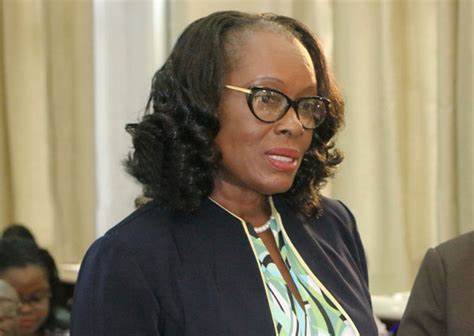
The Attorney General, Gloria Akuffo has disclosed that cabinet in 2013 gave approval for the payment of GHC67m judgement debt to a private company, Construction Pioneers contrary to claims that payment was made without cabinet’s approval.
In a 2016 auditor general report, it was purported that former Attorney General, Marietta Brew Appiah-Oppong in 2015 paid an amount of GHC67,380,718.20 to Construction Pioneers without consulting cabinet.
The amount was paid in two tranches; the first being GHC42,820,418.48 paid on February 20, 2015 and the second of GHC24,560,299.72 paid on April 1, 2015.
But speaking at the Public Account Committee sitting today, Gloria Akuffo indicated that cabinet on July 29, 2013 gave approval for the payment of the judgement debt stressing that the report couldn’t be captured because of unavailability of some records at the time.
“I believe once again that perhaps it’s a matter of availability of records at the time when the audit was conducted. But I have a decision note; a cabinet decision note dated 29th July 2013 giving authorisation for the payment, the equivalent of £18m, so approval was given”, she revealed.
According to her, though £18m was approved by cabinet to be paid, the money accrued to GHC67m due to an international arbitration at the International Criminal Court between Construction Pioneers and the government of Ghana.
“Again the money arose out of an international arbitration at the ICC between Seed Construction Pioneers and the government of Ghana so yes approval was given and the purpose was to pay a judgement debt”.
The Attorney General further revealed that the cancellation of contracts and delay in payments is the cause of the country’s huge judgement debts.
According to her, although judgment debts can’t be avoided, it could be reduced to some extent if monies are paid quickly to contractors.
Reacting to her statement however, Chairman of the Public Accounts Committee James Klutse Avedzi advised state institutions and agencies to avoid awarding contracts to people if there’s no money to pay them.
According to him, the root cause must be known if the problem of judgment debts will be fixed permanently.
“The Minister has no problem; they’ve done the work and need to be paid, she’s not the one who will give the final directive for the money to be paid. In fact it’s the Finance Minister and if the money is not there the Finance Minister also can’t do anything. So the issue is that we have to look at the root cause of that; where we give out contracts we know we don’t have money or we’ll give out the contract oh you just go and do it when we finish we will pay you. And you finish the work, there’s no money. That’s the problem”, Mr Avedzi lamented.

RUGEGE ROOTS FOR ARBITRATION IN DISPUTE RESOLUTION
RUGEGE ROOTS FOR ARBITRATION IN DISPUTE RESOLUTION
Africa’s corporate organisations should seek the services of arbitrators in resolving their disputes, Chief Justice Prof. Sam Rugege said.
Rugege made the call yesterday while opening a conference of International Arbitration in Kigali.
The first annual conference, co-organised by African Arbitration Association (AfAA) and Kigali International Arbitration Centre (KIAC), brought together over 300 participants.
It was organised under the theme: “The Coming of Age of International Arbitration in Africa”
Rugege said that arbitration is important in reducing the case backlog in courts and delays in the resolution of disputes.
The Chief Justice also disclosed that cases involving huge sums of money in Africa are quite often taken abroad, which demonstrates the lack of confidence in the continent’s legal system.
Moreover, he says, African arbitral institutions have able arbitrators.
“It is common knowledge that western arbitrators and lawyers are preferred to handle international disputes, even those arising from transactions or activities in African,” he said.
“Arbitration flights from Africa to Europe, America or other Non- African arbitration centres should be stopped, especially now that we have quite a number of African Arbitration centres.”
Rugege noted that the rise of arbitration centres should be an incentive for African contracting parties to opt for arbitration institutions on their continent in order to lower arbitration cost.
Unfortunately, he noted, even our own governments and companies hire Europeans or American firms or individuals to represent them in international disputes.
He challenged African arbitrators to uphold professionalism and integrity because, in most instances, they have the last word.
The Chief Justice said that an efficient judicial system boosts confidence in the country and encourages investment which, in turn, fosters economic growth and social progress.
“There are many benefits of arbitration in the resolution of the disputes, including flexibility, confidentiality, promoting access to justice and rule of law, especially regarding investments and commercial cases,” he said.
‘MORE NEEDS TO BE DONE’
Rugege said that whereas the international arbitration had been successful in the western world and in a few countries elsewhere, it had not taken root in Africa, calling for more efforts by all players to ensure arbitration becomes an effective alternative to offer justice.
“It is clear that there are still challenges to achieving vibrant arbitration, some of them based on perceptions on the skills level and competency of African arbitrators and councils, obviously a lot has to be done to reverse the trend,” he said.
“If we are to realise all the benefits offered by arbitration including reducing litigation volume in courts and speeding up resolution of commercial disputes for accelerated economic development, then you may want to expand your client base and include smaller players, which means greater awareness campaigns to promote use of arbitration but also lowering the fees of arbitrators’ council and institutions.”
“Currently, arbitration is not cheap but I want to make the point that making arbitration affordable could make it an attractive alternative to litigation for the business community, thereby becoming more profitable to all of you,” he noted.
According to Prof. Githu Muigai, an arbitrator from Kenya, continental arbitrators need to keep building capacity if they are to attract more clients.
“To professionalise, we must have the capacity, we must be trained, we need to make arbitration effective and be time sensitive so that we don’t keep clients waiting for long,” he said.
Jean d’Amour Mbonyinshuti

BRAZIL'S VALE SAYS BSG ORDERED TO PAY IT $1.25 BLN
BRAZIL'S VALE SAYS BSG ORDERED TO PAY IT $1.25 BLN
SAO PAULO – Brazil’s Vale SA said on Tuesday a London arbitration court had ordered BSG Resources Limited to pay the iron ore miner $1.246 billion related to a dispute between the companies over a joint venture in Guinea.
The joint venture intended to explore for iron assets at the Simandou prospect, but the concession was revoked in 2014 by Guinea’s government. (Reporting by Marcelo Teixeira, Editing by Rosalba O’Brien)

UGANDA: GOVERNMENT RETAKES NAGURU-NAKAWA LAND
UGANDA: GOVERNMENT RETAKES NAGURU-NAKAWA LAND
Kampala — Government has repossessed the Nakawa-Naguru Housing Estate land, nearly a decade after the investor failed to develop the planned satellite city.
The decision was made by the Cabinet on Monday.
On October 15, 2007, Opec Prime Properties – Uganda Ltd entered into a public-private partnership (PPP) agreement with government to redevelop the dilapidated estate.
The agreement provided for construction to begin in no later than four years from the date of sealing the contract, starting with 1,747 subsidised residential units (dedicated units) for purchase by and resettlement of the registered former tenants.
The prioritisation of the displaced tenants as beneficiaries of the first housing units was provided for in a Memorandum of Understanding between the prospective investors, tenants’ association and government.
A source, who attended the April 1 Cabinet meeting, revealed yesterday that they terminated the agreement with Opec Prime Properties – Uganda Ltd over what they described as ‘fundamental breach” of contract and or non-performance.
The source, who declined to be named, further said the ministers also approved the compensation value for former sitting tenants of the Naguru-Nakawa estates.
In a telephone interview last evening, Mr David Mpanga of KAA, a law firm that represents the company, said they were not aware of the Cabinet decision. He said government wrote a termination notice, which the company protested and the matter has since been referred for arbitration.
“The matter is in court but as far as the developer is concerned, the project was delayed 100 per cent by government. The interruptions were done by government since 2007,” Mr Mpanga said.
The executive director of the government-run Uganda Media Centre, Mr Ofwono Opondo, declined to comment on the matter and referred Daily Monitor to ministers Beti Kamya (Kampala Affairs) and Dr Chris Baryomunsi (state minister for Housing and Urban Development), who were not available for a comment. Calls to Ms Kamya’s telephone numbers went unanswered while Dr Baryomunsi’s phone numbers inaccessible.
Mr Dennis Obbo, the spokesperson of the Ministry of Lands, said by telephone: “I am not aware of the Cabinet decision.”
However, he added that government re-entered and repossessed the estate land in September 2018 and a notice was put up.
“When the re-entry was done, Opec Prime Properties – Uganda Ltd went to court,” he said and added that the case is still pending in court.
Mr.Obbo said the re-entry and takeover was done in line with the law.
He said the repossession effectively terminated the agreement between government and Opec Prime Properties – Uganda Ltd.
BACKGROUND
On October 14, 2013, President Museveni laid the foundation stone for construction of the Naguru-Nakawa satellite city estate. The project dubbed “New Kampala”, was expected to see the 160-acre land, formerly home to the Naguru-Nakawa low-cost housing units, redeveloped to have 1,747 flats, bungalows, commercial buildings, a five-star hotel, a referral hospital, schools, houses of worship and recreational facilities.
The Comer Group International was to own the estate for 30 years. Under the agreement signed on October 15, 2007, Opec Prime Properties – Uganda Ltd was to meet the financial, technical and operational costs, while government would provide land for the project.
The developer was also expected to deliver the project within at least four years from the date of signing.
Ephraim Kasozi

NORILSK 'DEATH MATCH' SHIFTS TO LONDON
NORILSK 'DEATH MATCH' SHIFTS TO LONDON
Representatives of the Russian nickel giant –the world’s biggest producer of the base metal – told BusinessWeek that all eyes were on the LCIA giving its go ahead for proceedings to commence in the British capital.
Last Friday, Norilsk won a Botswana Court of Appeal decision granting the group the right to “commence and prosecute” arbitration proceedings at the LCIA towards damages in the failed deal. “The next step will be for the English court to lift the stay on the LCIA arbitration and get the LCIA arbitration going,” officials said in a written response to BusinessWeek enquiries.
“The timing will depend on how quickly the English court will lift the stay on the LCIA arbitration. “Norilsk hopes it will be a more straightforward process given that the judgement of the Botswana appeal court is in favour of the LCIA arbitration proceeding.”
Norilsk first applied to the LCIA in November 2016, shortly after BCL’s closure, but the matter was stayed after BCL’s liquidator, Nigel.
Dixon-Warren successfully argued that the Russians had not sought the High Court’s leave to approach London. Under the terms of the 2014 deal between the two parties, any dispute is to be arbitrated in London.
In the aftermath of the botched deal, Norilsk sued in Gaborone and also defended a BCL suit in South Africa, which has since roped in that country’s Minerals Minister for possible arbitration.
Norilsk officials told BusinessWeek that while the path to the LCIA was now open, the cases in Gaborone and South Africa would continue being pursued. In Gaborone, Norilsk’s case involves a charge of reckless trading against government and certain former BCL directors.
“The (South African) Minister has not yet announced his decision and Norilsk is not withdrawing from that case.
“Having said that, the question whether the conditions precedent under the deal were fulfilled will need to be determined by the LCIA arbitration.
“Norilsk will continue claiming damages from BCL due to BCL’s material breach of its obligations.“The amount of damages will need to be determined by the LCIA arbitration,” the officials said. The October 2014 deal involved BCL purchasing Norilsk’s assets which included a 50% stake in Mpumalanga mine, Nkomati Nickel, as well as Tati Nickel Mine near Francistown. Payment was due to be made once several regulatory conditions were concluded, the last of which was the transfer of Nkomati mining rights to BCL, by South African mining authorities.
BCL closed down before the deal was finalised and the parties locked horns in Johannesburg and Gaborone courts over payment of the deal.
MBONGENI MGUNI

ISRAEL ELECTRIC CORP. PASSED UP $1.3B TO LET DELEK, NOBLE EXPORT GAS TO EGYPT
ISRAEL ELECTRIC CORP. PASSED UP $1.3B TO LET DELEK, NOBLE EXPORT GAS TO EGYPT
The Israel Electric Corporation voluntarily gave up $1.3 billion in compensation after Egypt reneged on a gas-sale contract in order to let private-sector companies – led by Israel’s Delek and Houston-based Noble Energy – export Israeli gas to Egypt.
The electricity utility took an 85% haircut on the Egyptian gas companies’ debt, and intentionally did not inform the public, it emerged on Tuesday.
The IEC argued that its approach was “important from a diplomatic standpoint,” the Government Companies Authority said.
The agreement with the Egyptian gas companies came after two years of secret negotiations, after they reneged following the unrest in the country in 2011.
The companies had been ordered to pay the IEC $1.76 billion, not including interest and linkages due to inflation, under an international arbitration agreement.
But the IEC offered the Egyptian companies a “compromise,” stating that it would accept a mere $500 million, to be paid over eight and a half years.
The arbitration agreement is one of the main obstacles to Israel exporting natural gas from the Tamar and Leviathan offshore gas fields to Egypt. Egypt has conditioned its approval for importing gas on a compromise on the arbitration deal.
The gas, however, is being exported not by a party related to the IEC, but by the companies that have the license to drill at Tamar and Leviathan, led by Delek and Noble Energy.
The agreement with Egypt came together two months ago, and was approved by the IEC’s board on January 31. But the utility kept the deal secret, given how controversial it would be.
The company said it feared publicizing the negotiations or the compromise before an agreement was signed because it might undermine the deal.
The company informed the Tel Aviv Stock Exchange about the agreement only now, after the Government Companies Authority decided not to approve the deal. It also ordered the IEC’s board to vote on it again.
In a letter sent a week ago to IEC executives, the chairman of the Government Companies Authority, Yaakov Quint, criticized the agreement, arguing that the board’s approval for the negotiations was based on partial data that skewed decision-making.
The allegedly misleading information concerned the fact that the IEC portrayed its debt arrangement as similar to the agreement struck with EMG, the owner of the gas pipeline between Egypt and Israel. But the companies authority learned that EMG had additional agreements that complemented its debt collection, not just from the Egyptian gas companies but also from the Egyptian bank that financed the debt settlement.
The companies authority believes that the IEC did not do enough to collect its compensation. For instance, the IEC could have turned to an international debt collection company and taken in more than $500 million, or the IEC could have filed a lawsuit, say officials at the companies authority.
Instead, the IEC did not take extra measures, citing the “diplomatic standpoint,” the authority said.
Ora Coren

KENYA REBUKES SOMALIA FOR TAKING MARITIME BORDER ROW TO THE HAGUE
KENYA REBUKES SOMALIA FOR TAKING MARITIME BORDER ROW TO THE HAGUE
Kenya prefers to have an African solution in its maritime border dispute with Somalia.
According to documents in our possession, Kenyan authorities argue that Somalia ought to have engaged the East Africa Community first, then move to the African Union if the dispute escalated, instead of filing the case at the International Court of Justice (ICJ) in The Hague, Netherlands.
Kenya’s position is that Somalia did not exhaust all dispute resolution mechanisms before going to The Hague based court which Kenya accuses of bias and links to the war-scarred country.
“Is the ICJ the ideal place to resolve the maritime dispute between Somalia and Kenya? Was it procedurally right for Somalia to go to the ICJ while at the same time presenting for auction subjects of the maritime dispute?” states Kenya’s argument.
“Why did Somalia not seek recourse at the African Union under the African Union Convention on Cross Border Cooperation? Was the Intergovernmental Authority on Development (Igad) not an option for Somalia to present its case? What of the East African Community?” the documents read in part.
In the document, Kenya accuses Somalia of ignoring African dispute resolution methods.
“Somalia played the race card by opting for a Eurocentric legal system as opposed mediation and conciliation as practiced within the African traditional methods of dispute resolution. What then would be the consequences of the ICJ favoring Somalia against Kenya in the maritime dispute?” states the writers.
According to the documents, Kenya refers to its relationship with Somalia as that of Siamese twins sharing a common destiny.
“The issue is that the two countries not only share a common heritage but Kenya has continued to play the role of protector and defender of the interests of the peoples of Somalia since time immemorial,” the documents read.
President Uhuru Kenyatta early this month met Somali’s President Abdullahi Mohamed Farmajo to try and resolve the dispute. This closed-door session was mediated by Ethiopian Prime Minister Abiy Ahmed.
“The pair discussed extensively the matter. As an outcome, both agreed to work towards peace and to take measures in addressing particular issues that escalated the tensions,” said Ahmed on his Twitter account.
While criticising Somalia for jumping the gun to file a case in ‘a Eurocentric court,’ Kenya argues that the United Nations Convention on the Law of the Sea (UNCLOS), which governs maritime dispute settlement mechanism, demands that countries should first consider general, then regional or bilateral agreements with each other.
It also argues that UNCLOS allows countries to try to resolve disputes through other means before submitting these to either the International Tribunal for the Law of the Sea (ITLOS), the ICJ or to any other arbitration tribunal.
It vows not to honour the decision of the court as other UN member countries have brushed off its decisions in the past.
Kamau Muthoni

HYFLUX RECEIVES ARBITRATION REQUEST FOR DESALINATION PLANT IN ALGERIA
HYFLUX RECEIVES ARBITRATION REQUEST FOR DESALINATION PLANT IN ALGERIA
TROUBLED water treatment company Hyflux said on Tuesday that it has received a request for arbitration from Algerian Energy Company (AEC) in relation to its seawater desalination plant in Algeria.
The request, filed with the International Chamber of Commerce’s (ICC) International Court of Arbitration in Paris, concerns disputes surrounding several agreements related to the plant dating back to 2007, the company said in a bourse filing.
The Souk Tleta plant marked Hyflux’s entry into the water treatment market in the region. In operation since 2011, it supplies water to Algérienne des Eaux, the state-owned national water company of Algeria, and Sonatrach, the national oil company.
Hyflux had disclosed in November last year that the offtakers or buyers of the plant’s water were trying to terminate their water purchase agreement. The plant’s developer and operator is Almiyah Attilemcania, whose shareholders are Tlemcen Desalination Investment Company (TDIC) with a 51 per cent stake and AEC, with 49 per cent. TDIC, in turn, is 70-per cent owned by Malakoff Corporation Berhad and 30-per cent held by Hyflux.
Hyflux had said in November that it did not agree with or accept the allegations made in the purported termination notice and would seek advice to enforce and protect its rights.
In its Tuesday filing, Hyflux said it has until April 20, 2019, to file an answer to the arbitration request, which will be administered by the ICC in accordance with the terms of the 2007 agreements.
Hyflux said the company and the other respondents to the request, TDIC and Malakoff, are currently seeking legal advice on AEC’s claims, and will “take all necessary steps to protect their rights”.
It added that it is currently unable to assess and disclose the financial impact of the arbitration proceedings on the group for the current financial year ending Dec 31, 2019. This is due to the “uncertainty of the outcome of the company’s ongoing reorganisation process and the unpredictability of the financial outlook for 2019”, it said.
Shareholders will be updated when there are material developments concerning the matter, it added.
In the same filing on Tuesday, Hyflux addressed what it called “unverified and speculative statements” concerning the group and its court supervised reorganisation process. In particular, it referred to a Straits Times article dated March 23, 2019, which quoted an anonymous source saying that CEO Olivia Lum had received dividends based on her ordinary shareholding in the company at a time when it was making losses.
Hyflux called the statement “incorrect”, quoting its letter to the Securities Investors Association (Singapore) dated Feb 15, 2019, which said that Ms Lum only received dividends based on her ordinary shareholding in the company from 2007 to 2016 during which the company recorded cumulative profit after tax.
“It was not until 2017 that the company recorded a net loss and no cash dividends were declared for 2017 onwards. It is to be noted that 2017 is the first year that Hyflux had recorded a net loss in its operating history,” the statement said.
In response to the article’s point on the possibility of breaches of Singapore’s strict listing rules on continuous disclosure, Hyflux said it has been “committed to corporate transparency and material disclosures at all times”.
VIVIENNE TAY