
'PROTECT ME FROM YOURSELF ' SARS IT BOSS HEADS TO THE CCMA
'PROTECT ME FROM YOURSELF ' SARS IT BOSS HEADS TO THE CCMA
South African Revenue Service (SARS) IT head Mmamathe Makhekhe-Mokhuane, of “Protect me from yourself” fame, has approached the Commission for Conciliation, Mediation and Arbitration (CCMA), claiming she is being bullied to resign from the tax body.
In a CCMA dispute submission form, seen by News24, Makhekhe-Mokhuane states that: “I am currently being bullied to accept a separation without any charges being put against me.
“The employer has placed me on discretionary leave since the 14th of January when I was due to come back to work.
“The employer sent me back home saying I must reflect on a mutual separation. Since then I have not been informed what is the basis of a mutual separation. If I don’t accept the separation, I would face a disciplinary action.
“Therefore, the employer has already concluded that I cannot be permitted to return to work as per his numerous letters in this regard,” she alleged.
‘AMICABLE MUTUAL SEPARATION’
Sources close to Makhekhe-Mokhuane said the tax body offered her a four-month settlement to step down, which she refused.
News24 understands that she indicated that she wants to go back to work and that she will fight to keep her job.
Makhekhe-Mokhuane has been at home on “discretionary leave” since October last year.
She claims she does not know whether she has been placed on suspension, pending the institution of a disciplinary inquiry against her.
When News24 previously approached SARS for comment on this matter, the tax body said: “Kindly note that according to SARS’ HR policies and practices, internal processes and information related to its employees [are] deemed confidential between the organisation and its employees and are thus not discussed or divulged in the public domain.”
News24 has seen a letter that her lawyers addressed to acting commissioner Mark Kingon.
In the letter, Makhekhe-Mokhuane asked if she had been suspended or if she was investigated for any wrongdoing.
Kingon recently responded saying he requested her to take leave to consider discussion about an “amicable mutual separation” and that SARS could not permit her to return to work.
“Should the parties not agree to a mutual separation, SARS will serve your client with a disciplinary charge sheet and will proceed with a disciplinary hearing,” he wrote in his response.
“Consequently, SARS rejects your client’s offer to return to work. She is requested (and if she refuses to comply with the request, she is instructed to remain on leave, pending the conclusion and outcome of the mutual separation discussion or the disciplinary proceedings.”
He also said employees at digital information services and technology objected to Makhekhe-Mokhuane returning to work because of the “reputational damage to SARS and the professional damage suffered by them because of the performance in the interview”.
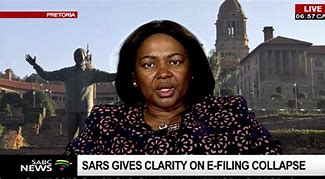
In October last year, South Africans reacted with outrage and disbelief after a video of Makhekhe-Mokhuane, speaking to Sakina Kamwendo on Morning Live, went viral.
At one point, Kamwendo asked what needed to be done to fix the tax body’s IT infrastructure. Makhekhe-Mokhuane responded: “Ma’am, can you give me protection from yourself?” Kamwendo and others in the studio are heard laughing at her comment.
‘Protect me from yourself’ – SARS IT head’s bizarre TV interview goes viral.
City Press also reported on perplexing comments she made when addressing the Nugent commission of inquiry into the tax service in October last year.
When offered the chance to inspect minutes apparently showing that she had not attended many SARS meetings, she reportedly responded: “I have a very rare eye disease, but let’s try.”
The newspaper also reported that when she was asked to give clarity on what she said in her affidavit, confusion ensued when she cited the date on which the Drakensberg Boys’ Choir was established and later dropped the analogy.
In a letter to Kingon, Makhekhe-Mokhuane’s lawyer Moeketsi Thebe Raselo from MT Raselo Incorporated, said that when his client appeared on Morning Live, she was asked questions about things of which she had no knowledge of and/or was not part of what should have been discussed with her.
“Simply put, our client was ambushed with questions she could not properly reflect upon and was expected to provide answers on the said spot.
“It is evident that given the fact that the programme was live, our client was placed in an awkward position as she was expected to answer the aforesaid questions.”
Raselo said when Makhekhe-Mokhuane appeared before the Nugent inquiry, she was “surprised” to be asked about various meetings that she had allegedly failed to attend.
The lawyer accused the Nugent inquiry of seeking to portray his client as an “incompetent leader”.

Jeanette Chabalala


EGYPT, ISRAEL INCH CLOSER TO RESOLVING GAS ARBITRATION: MINISTER
EGYPT, ISRAEL INCH CLOSER TO RESOLVING GAS ARBITRATION: MINISTER
JERUSALEM – Israel’s energy minister said on Sunday that an arbitration case with Egypt over a defunct natural gas deal could be solved in the coming months, but that the issue was not holding back cooperation in the sector.
In 2015, the International Chamber of Commerce ordered Egypt to pay state-owned Israel Electric Corp about $1.8 billion in compensation after a deal to export gas to Israel via pipeline collapsed in 2012 due to attacks by insurgents in Egypt’s Sinai peninsula.
Egypt appealed the decision and a final agreement has yet to be reached, though earlier this month Israel Electric said they were close to reaching an agreement in which Egypt would pay it $500 million over eight and a half years.
“I think there is already a final understanding, but it needs approval of the Israeli electric authority and maybe also of someone on the Egyptian side,” Energy Minister Yuval Steinitz said in an interview with Reuters. “Probably it’s an issue of a few months.”
In the meantime, Steinitz said, the dispute was not stopping Israel from expanding energy ties with Egypt, one of two Arab countries to have made peace with Israel.
Egyptian officials have said the arbitration could hold up commercial agreements.
Israel sees Egypt as a key market to export its newfound gas and a landmark $15 billion export deal is due to commence this year.
One Israeli company, Delek Drilling, is considering expanding its presence in Egypt by buying into liquefied natural gas terminals that would then export gas to Europe.
“There is no linkage, whatsoever, between this arbitration and Israeli and Egyptian energy cooperation and relations. We have no government control on such kind of commercial arbitration,” Steinitz said.
Ron Bousso and Ari Rabinovitch; Editing by Raissa Kasolowsky
TRUCK DRIVERS ALLEGE SALARIES 'CUT' BY 40%
TRUCK DRIVERS ALLEGE SALARIES 'CUT' BY 40%
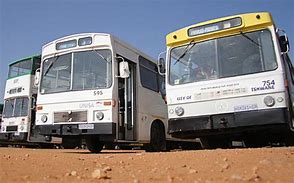
Dozens of truck drivers have had their salaries cut by thousands after their employers allegedly dumped them onto a labour broker.
Their union, the South African Transport and Allied Workers Union (Satawu), is embroiled in a labour court challenge with freight company Moody Blue Trade Invest, while the industry’s bargaining council has appointed an inspector to gather evidence in a Commission for Conciliation, Mediation and Arbitration case against Green Door Cargo 2 Congo.
This was after the companies had also “off-loaded” their permanent employees, some of whom had worked for the companies for over 10 years, to RP Africa Fleet Services.
Some drivers at Moody Blue told Sowetan that they were forced to resign and join RP Africa Fleet Services to do the same jobs they were doing before, but at a lower pay.
Some of Green Door’s employees showed Sowetan their payslips which showed that their basic salaries had dropped from R8,000 in 2014 to R4,800 18 months ago.
The National Bargaining Council of Road Freight and Logistics Industry stipulates a minimum salary of R11,000 for truck drivers.
A Zimbabwean truck driver who resides in Tembisa, who spoke on condition of anonymity, said he joined Green Door more than four years ago taking home a basic salary of R8,000. In addition, he used to receive a R1,500 food allowance and a R1,200 bonus for reaching his truck off-loading point in Koelwezi, in the Democratic Republic of Congo (DRC) within 10 days.
However, his salary has dropped to R4,800 in three years. He showed Sowetan copies of his payslips dating back to early 2016.
“The quality of my life has constantly gone down over the last five years… Those who asked questions or tried to fight this are now unemployed,” he said while adding that 40 employees who had questioned the salary cuts had been either laid off or told that the routes they were operating were no longer available.
Richard Hall, a manager at Green Door, said they did not employ any cross-border drivers. “We have an agreement with RP Africa to supply us with cross-border drivers.”
He said the company would not comment on the issue unless Sowetan revealed the employees it had spoken to. He also declined to respond to questions relating to the salary cuts Green Door’s employees had seen over the years.
“Once again, unless we know who these employees are we cannot comment. Suffice to say that as far as we are concerned, this is untrue,” Hall said.
In court papers seen by Sowetan and filed before the labour court in Johannesburg, Moody Blue has applied for a review of a CCMA November arbitration ruling which found that the matter should fall under the ambit of the freight industry bargaining council.
Moody Blue, which has already transferred more than 100 truck drivers to RP Africa Fleet Services, has applied for a review of a CCMA ruling.
Neil Demaris, a Moody Blue director, argued in court papers that his company was being forced to be registered under the scope of the road freight bargaining council when it was in actual fact operating in retail.
He claimed in court papers that Moody Blue is a wholesaler which transports its own goods from SA to the DRC while employing a majority Congolese workforce.
“The majority of staff is Congolese and only 30 are South African-born,” Demaris said in an affidavit that is before the labour court in Braamfontein.
‘No truth in salary cut claims’
Satawu’s Zanele Sabela said: “The situation at Greendoor is grossly unfair as workers who have been employed there permanently for over 10 years have now had their salaries reduced from R10,000 to R3,000 a month. The company claims it pays them according to Zambian salary scales. However, Greendoor is registered in South Africa and operates it business from here and its employees were hired here.”
Sabela said the union was ready to support their bargaining council in the CCMA dermacation case against Green Door.
RP Africa’s general manager Johann van Aswegen, said the company did not merely provide truck drivers to clients, but had valuable infrastructure in African countries in which clients delivered cargo.
Van Aswegen denied drivers were forced to resign or that they provided cheap labour.
“There are also trip bonuses that these guys get but again if they waste time on the road they might not achieve bonuses.
“They might also have had lawful deductions in some cases.
“ I just cannot share other payslips with you due to confidentiality reasons.”
He said there was a year-long consultation with truck employees before they were absorbed by RP Africa and no one was forced to join RP Africa.
Isaac Mahlangu
THE ROLE OF GOVERNMENTS IN SUPPORT OF AFRICAN ARBITRATION
THE ROLE OF GOVERNMENTS IN SUPPORT OF AFRICAN ARBITRATION
As at May 2016, there were at least 72 Arbitration institutions in Africa. Most of these institutions are privately run. By implication, arbitration is driven more by the efforts of private persons than by the efforts of government. While that is not in itself wrong, there are success stories in government-supported arbitral institutions. For instance, the Cairo Regional Centre for International Commercial Arbitration (CRCICA) is a respected arbitral institution in Africa.
It started as the product of an agreement between the Asian-African Legal Consultative Organization (AALCO) and the Egyptian government. The government, therefore, played a major role in setting this organisation on its feet. Even better, the Egyptian Government endowed the CRCICA with all the privileges and immunities that will permit it to run as a truly independent body. To that end, CRCICAis accepted for its independence and the Centre is not known to have been unduly influenced by the Egyptian state, which has itself received heavy fines by CRCICA panels. For instance, on 31 January 2018, a CRCICA panel awarded damages over $1 billion against the Egyptian government. Lastly, the Global Arbitration Review reports that the Egyptian government has provided caseload opportunities for CRCICA by selecting CRCICA as the institution of choice in bilateral and multilateral agreements.
In Mauritius, the LCIA ran an institution known as the LCIA-MIAC which was the product of a 2011 joint agreement between the Mauritian government and the LCIA. That agreement ended in 2018 with LCIA terminating its role and leaving the Mauritius International Arbitration Centre (MIAC) to operate independently. The government’s role was crucial to negotiating the joint-venture which exposed MIAC to the top-tier arbitration access that LCIA provides. The Mauritian government has also not hidden its intentions to make Mauritius a state-of-the-art hub for arbitration in Africa. Till date, MIAC prides itself in the full support that it gets from the government of Mauritius. However, MIAC is independent ofthe government, and strict provisions for independence are in the MIAC constitution.
Another good example is the Kigali International Arbitration Centre (KIAC).KIAC is a generally a private-sector idea. However, it received the strong support of the Rwandan government to take off and operate. The Rwandan government promulgated LAW N°51/2010 which established the KIAC and its organs. That Act confers KIAC legal personality as well as financial and administrative autonomy. The Rules of the Centre were created by ministerial order in an official gazette. In essence, the government threw its weight behind the KIAC to facilitate the Centre’s swift development.
In Nigeria, the Lagos Court of Arbitration (LCA) completely revolutionised arbitration in Nigeria, particularly in Lagos State. In a state where arbitration was rapidly growing, the establishment of the LCA caused arbitration practice to explode. The centre is home to at least three different arbitration bodies; the hearing rooms are purpose-built for arbitral proceeding and thus more convenient than hotel rooms and meeting rooms which used to be the norm. The hearing rooms are just floors above the administrative offices of several arbitration institutions which means that the facilities and staff of those institutions are only an elevator-ride away from hearing venues, thereby significantly reducing secretarial costs. The Court has different auditoriums which imply that the centres can now host symposiums, workshops and pieces of training in a venue exclusively for arbitration and where they get scheduling preferences, as opposed to hotels and eventual public halls. Also, a sprawling building dedicated solely to arbitration has significantly reduced the risks of non-parties chancing upon parties, witnesses, arbitrators and hearings. All these have been made possible by the building of the LCA by the Lagos State Government and the enactment of the Lagos Court of Arbitration Law (Law No. 8 of 2009.
These examples all show that governments can play a strong role in assisting arbitration. The greatest fear that arises from government assistance in arbitration is the threat of interference. The models above may present a guide of just how a government can ensure and demonstrate the independence of arbitral practice within its shores.
CREATION OF A MULTILATERAL FRAMEWORK
Governments are in a position to create a multilateral framework for arbitration. Governments have the manpower to negotiate at that level and governments have the financial capacity to fund such arrangements. Three examples are relevant here.
The first is OHADA (Organisation pour l’harmonisationen Afrique du Droit des affaires or Organisation for the Harmonization of Corporate Law in Africa). OHADA is the creation of 17 West and Central African civil law states. The OHADA framework includes the Common Court of Justice and Arbitration (CCJA) which supervises the OHADA Arbitration Centre. The Arbitration Centre, headed by the Secretary-General, administers arbitrations under the supervision of the President of the CCJA. The CCJA ultimately entertains appeals/challenges from arbitral proceedings as well as enforcement and award-validity proceedings. The CCJA also performs appointment roles – the CCJA is responsible for creating and updating a list of arbitrators. Every year, the CCJA meets to consider the list and update same based on nominations received year-round. Members of the court are themselves excluded from the list. The court appoints arbitrators taking into account their nationality, domicile and qualifications.
The second is the Africa Continental Free Trade Agreement. This is a trade agreement to which about fifty-two (52) African countries have signified interest, in one form or the other. Arbitration features prominently in this agreement. A reference may be instituted upon referral by a Dispute Settlement Board (DSB) set up pursuant to the Agreement. On the other hand, it may be set up directly by the parties, pursuant to Article 27 of the Agreement. The Secretariat is required to provide support to tribunals including assisting in the composition of tribunals. The Secretariat is also authorised to avail tribunals with experts that may be relevant to references.
The third is the China-Africa Joint Arbitration Centre. Realising that about $60 billion of Chinese investment was flowing to Africa, China took steps to protect those investments by negotiating the creation of the Centre. Crucially, CAJACis not regarded as a standalone institution but a part of the Forum on China-Africa Cooperation (FOCAC), the official forum between the governments of all African states, except Swaziland and China. CAJAC utilises existing arbitral institutions in Africa, designated as CAJAC Centres– like the Nairobi Court of International Arbitration, the Arbitration Foundation of Southern Africa for Eastern and Southern African disputes respectively. The Chinese Centres are the Shanghai International Arbitration Centre (SHIAC), Beijing International Arbitration Centre (BIAC) and the Shenzhen International Court of Arbitration. This arrangement is expected to increase the frequency and quality of references that the arbitration centres will entertain.
INFRASTRUCTURE AND SUPERSTRUCTURE
When parties debate arbitration venues, they consider a lot of factors. In debating the seat of arbitration, parties consider the state of the law, the attitude of the judiciary, the ease of recognition and enforcement, the legal view on finality, etc. However, the considerations for the venue are completely different. Parties already have an idea of the lawyers they are likely to brief and the arbitrators they are likely to appoint. They want a venue that is easy to access, that is comfortable, and that is security for their representatives and arbitrators. They also do not want to inflate arbitration costs by having to fly in the support staff integral to arbitration. Thus, the more developed a country, the likelier it is to be chosen as a seat.
While discussing the rise of arbitration in Mauritius, Keating Chambers explains that Mauritius has certain practical advantages as a choice venue for arbitration. These advantages were identified as excellent hotels and conference centres which serve as excellent venues for arbitrations, available good secretarial support and good security. They also note that “Mauritius has good transport links with Dubai, Nairobi and Johannesburg and multiple flights a day to all of the major hubs”.[4]
The 2010 Queen Mary Arbitration Survey found that of the top six reasons for selecting arbitration venues, convenience ranked third, and general infrastructure ranked fifth. Both ranked higher than the “location of people, including legal advisors”. In effect, responders to that survey were willing to bear the cost of flying their people and legal advisors in, if it was convenient and the infrastructure was right. With particular regard to infrastructure, the (26% of responders identified good transport connections while 21% were concerned about hearing facilities (including translators, interpreters and court reporters). Safety and the absence of bribery also featured as important factors.
Experience tells us that infrastructure cannot grow without government support. The private sector cannot just decide to build connecting bridges between cities without the permission of municipal authorities. Permission alone is not all the private sector will need – active funding, legal backing and allied development are all essential. Nigeria has an oceanfront development, the Eko Atlantic City which was conceived to be a major upscale building development. However, property interests are reported to be low because the road network leading to the development is notoriously narrow for the traffic it caters to and heavily prone to flooding.
If the arbitration user is concerned about bribery, there is nothing he can privately do to prevent bribes from scuttling his arbitration, if the government does not pursue an aggressive campaign against bribery. If the country has a poor transport system that discourages arbitrators and foreign counsel from flying in, arbitral institutions might find themselves running small domestic claims only. Governments must provide infrastructural backing.
TREATIES AND CONTRACTS NEGOTIATION
As explained earlier, CRCICA is the arbitral institution of choice in most agreements to which Egypt is a party. Experience tells that agreements signed by the Nigerian government regularly select the Regional Centre for International Commercial Arbitration, Lagos as the arbitral institution of choice in its agreements. Per capita, no entity executes more contracts than governments. The government is therefore in the best position to popularise arbitration law by executing arbitration clauses and by choosing institutional references above ad hoc references to boost the reputation and caseload of verified arbitral institutions.
Presently, African governments have exported scores of arbitrations by choosing non-African arbitration centres, accepting foreign law jurisdiction clauses and agreeing to foreign venue arbitration provisions. When the disputes arise, it may just make economic and practical sense to choose a foreign arbitrator who lives a train-ride away from the venue and to instruct counsel who are just a few blocks away from the arbitration centre, to the detriment of local arbitrators and counsel. Thus, there is a need for a rethink.
LAW ENACTMENT
The example of the LCA Act and the Rwandan instruments in support of the KIAC show us that the government’s law-making powers are a compliment to arbitration. African Governments can support arbitration by deliberately pursuing the enactments of laws that support arbitration, standardise arbitration and make its arbitration practice less tedious for parties. Many African countries are already doing this.
COUNSEL INSTRUCTION
As governments are parties to so many arbitration clauses, they are the single most frequent appointer of arbitrators as well as the single most frequent instructor of counsel. It was recently reported that an analysis of ICSID cases involving East African state parties revealed that “all of them, save for one involving Burundi, involved the state being represented by an international law firm (ILF)”.[5]
If African state parties in arbitrable disputes continue to ship out references, homegrown arbitration competence will suffer. The report that all cases involved representation by an ILF does not paint the full picture – the truth is that in most of these cases, the ILFs partner with local counsel. Nevertheless, the point that is made by such analysis is valid – African practitioners do not often get a healthy bite of arbitration pie. The imbalance is also more vivid when it is noted that European state parties do not instruct African counsel,and the European counsel they instruct never see the need to partner with African counsel in defending such European states. The effect is that out of at least four separate counsel opportunities (as lead and supporting counsel in African/foreign references), the African counsel has just one, while his European counterpart has at least three.
African governments in supporting arbitration must deliberately pursue the education of domestic practitioners. This can be achieved by insisting that only local counsel are instructed (with liberty to partner with colleagues from anywhere else in the world). That way, the local counsel are not just spectators – they dictate the strategy of the reference, they conduct oral hearings (except when they cede/share responsibilities), and they sign the core arbitration documents. Scholastically, the globalisation of learning has placed African arbitrators practically at par with their Euro-American colleagues. Experientially, however, the gulf is wide; and African governments have to play a role in this regard.
A part of African governments playing a role is in African governments recognising their place as contractual parties and not just sovereign entities. African governments very rarely refer otherwise arbitrable disputes to arbitration – they choose rather to pressure their contractual parties using their sovereign apparatuses such as law enforcement and regulators. The result is that African states are now perpetually respondents in arbitration,and the lawyers that represent them have to wait for investors and contractual partners to take the initiative before they can experience arbitration.
While that is happening, developments in arbitration in other continents now see states going on the offensive. In Urbaser S.A. and Consorcio de Aguas Bilbao Bizkaia, Bilbao Bizkaia Ur Partzuergoa v Argentina, Argentina was the respondent, but it pursued and won a counterclaim. That decision has now sparked the contemplation that states can begin to institute human rights claims against investors before ICSID. Commendably, Nigeria too has taken steps to reverse the perpetual-defensive stance in arbitration as it just obtained a $2.6 billion judgement against an oil firm.
APPOINTING ARBITRATORS
There have been instances where an African state party submitted to a reference before a panel on which none of its nationals was present. In some instances, institutional rules prevent the appointment of nationals of disputing parties as arbitrators. However, such prohibitions do not explain the failure to appoint other Africans. Certainly, if the rules of an institution prohibit Nigeria from appointing a Nigerian to a tribunal, those rules do not prohibit the appointment of a Ghanaian. In any event, this unfortunate appointment imbalance hadexisted even when there were no institutional prohibitions, the presence of. In the past, African states have completely overlooked arbitrators from fellow African countries and appointed from other continents, blinded by the myth of superior arbitration knowledge.
Experience has shown that on some points in an international trade dispute, arbitration knowledge alone is not enough. Arbitrators have to have a working knowledge of the region and allied issues surrounding the dispute. Without a doubt, a non-African may have this knowledge, but it is likelier to be found in an African.For these reasons, as contractual parties, African states must now realise that the appointment of an arbitrator is not merely formal – it marks the first sword-stroke in the dispute resolution process. African disputes should be resolved by Africans.
Again, state parties thinking of themselves as contractual parties is crucial here. A private investor gives a lot of thought and strategy to appoint its arbitrator. Why then should a state appoint its arbitrator merely that an official may inflate official costs? Governments will have to pursue a policy of Afro-centric tribunals. Of course, this does not mean that African states will always prevail before such tribunals; however, such references will be shorn of the biases and disconnects that prevent a fair adjudication of disputes to which African states are a party.
BOOSTING TRADE
Arbitration follows trade. If trade increases in volume, disputes will also increase in frequency and value, as will the imperative to quickly resolve them. This will also spike the usefulness and appeal of arbitration. In the light of fears of African re-colonisation, a centre like CAJAC will never have received the broad African support it has received today, without the promise (partly fulfilled) of over $60 billion trade investment from China. China has demonstrated to African countries how African countries too can protect their citizens. So many African countries are exporting goods and services, and naturally, arbitration will grow from this economic activity. Indeed, the arbitration framework of the AfCTA is an acknowledgement of the fact that if goods are to move freely between 54 countries, a robust arbitration network must exist. Thus, if African governments boost trade, they will boost arbitration.
Adebayo Adenipekun

PRIVINVEST SUES MOZAMBIQUE FOR BREACH CONTRACT IN TUNA BOND SCANDAL - SPOKESMAN
PRIVINVEST SUES MOZAMBIQUE FOR BREACH CONTRACT IN TUNA BOND SCANDAL - SPOKESMAN
JOHANNESBURG – Abu Dhabi-based holding company Privinvest has begun arbitration proceedings to claim compensation against three Mozambican state-owned companies at the centre of $2 billion debt scandal, its spokesman Jeffrey Birnbaum said on Monday.
Privinvest’s claim comes nearly two months after Mozambique named the company in a lawsuit against firms that were involved in arranging the loans that tipped Mozambique into a debt crisis.
Adebayo Adenipekun
PT VENTURES SGPS, S.A. V. OI SA
PT VENTURES SGPS, S.A. V. OI SA
White & Case secured a substantial victory for PT Ventures SGPS, S.A., a Portuguese telecommunications company ultimately majority owned by Oi SA, the Brazilian telecommunications company, in an ICC arbitration related to PT Ventures’ shareholding in Unitel S.A., Angola’s largest telecommunications company.
The dispute concerned alleged breaches of a Shareholders’ Agreement governed by Angolan law and is at the forefront of a battle for control of one of Africa’s leading GSM network operators.
In October 2015, PT Ventures brought the arbitration against the three other shareholders in Unitel: Vidatel Ltd., a BVI company owned by Isabel dos Santos, the daughter of the former president of Angola and widely considered to be one of the richest women in Africa; Geni SA., majority owned by General Leopoldino do Nascimento, a prominent business and military figure in Angola; and Mercury Serviços de Telecomunicações SA., owned by Sonangol, the Angolan state oil company.
In February 2019, the tribunal handed down its Final Award in the arbitration, holding that:
the other shareholders had repeatedly breached their obligations to PT Ventures as set forth in the Shareholders’ Agreement
these breaches had significantly decreased the value of PT Ventures’ stake in Unitel
the other Unitel shareholders were liable for certain dividends that were not paid to PT Ventures.
The tribunal ordered the other Unitel shareholders to pay PT Ventures an amount totaling more than US$650 million plus interest, along with arbitration fees and costs of over US$12 million. The tribunal also dismissed the counterclaim against PT Ventures.
The matter was notable for being the first-ever ICC arbitration to be heard before a tribunal of five arbitrators. The President of the tribunal was Klaus Sachs, and the other members were Bernard Hanotiau, David Arias, Marcelo Roberto Ferro and Luca Radicati di Brozolo.
The White & Case team which represented PT Ventures in the arbitration was led by partners John Willems (Picture), Christophe von Krause (both Paris) and John Rogerson (London), with support from associates Lucas de Ferrari, Sven-Michael Volkmer, Samy Markbaoui, Hadia Hakim, Hazel Levent, Faustine Chapelin, Fadi Hajjar, Mounia Larbaoui (all Paris) and Gwen Wackwitz (London).
Paolo Bossi

DJIBOUTI SIGNS ICSID CONVENTION TO ENCOURAGE INVESTMENT
DJIBOUTI SIGNS ICSID CONVENTION TO ENCOURAGE INVESTMENT
The Republic of Djibouti signed the Convention on the Settlement of Investment Disputes between States and Nationals of Other States (the ICSID Convention) today at a ceremony on the sidelines of the World Bank and International Monetary Fund Spring Meetings.
The ICSID Convention, which entered into force in 1966, establishes the institutional and legal framework for foreign investment dispute settlement. It was created to facilitate investment amongst countries by providing an independent, depoliticized forum for arbitration, conciliation and fact-finding. To date, the Convention has been signed by 163 countries, of which 154 have also ratified it.
At today’s ceremony, Minister of Economy & Finance in Charge of Industry, Commerce &Tourism, Ilyas Moussa Dawaleh signed on behalf of the Republic Djibouti, with the ICSID represented by its Secretary-General, Meg Kinnear.
“Joining ICSID is part of a series of actions that the government of Djibouti has undertaken to transform the business and investment environment in Djibouti, create employment opportunities for youth and women, and to boost economic growth in the country,” said Minister Moussa Dawaleh.
“Today’s signature of the ICSID Convention underscores Djibouti’s commitment to creating an environment in which private investment serves as a catalyst for growth and job creation,” said Meg Kinnear, ICSID Secretary-General.
With this signing, Djibouti has become the 163rd country to sign the Convention. The Convention must now be ratified by Djibouti before coming into force.

SHARP DIFFERENCES EMERGE IN ZIMBABWE OVER COMPENSATING 4,500 WHITE FARMERS
SHARP DIFFERENCES EMERGE IN ZIMBABWE OVER COMPENSATING 4,500 WHITE FARMERS
WASHINGTON — Farmers, state officials and observers have expressed mixed reactions over the Zimbabwean government’s announcement this week that it will compensate about 4,500 white farmers whose land was forcibly grabbed and redistributed to almost 300,000 indigenous blacks in an attempt to redress what it called imbalances of the colonial era.
This followed years of debate over whether or not to compensate the farmers who lost productive land under the agrarian reforms, which started in 2000.
In a joint statement issued Monday by the ministries of Finance and Economic Development and Ministry of Lands and Agriculture, the government announced that it “is committed to finalize compensation to all former farm owners who were affected by the Land Reform Programme,” as per the country’s constitution, with the process of registration and list of farmers to receive compensation to “be completed by end of April, 2019.”
The issue of compensation has been a controversial issue in Zimbabwe, with some believing that the farmers should not be compensated since many did not pay for the land in the first place, arguing that they too forcibly took over the land from the indigenous blacks.
Right or wrong however, the chair of the Zimbabwe Revenue Authority and former president of the Zimbabwe National Chamber of Commerce, Callisto Jokonya, said the government has a constitutional obligation to compensate the farmers, as stipulated in Chapter 16 of the 2013 Constitution, Section 295 pertaining to the “Compensation for acquisition of previously-acquired agricultural land.”
“It’s non-implementation of it does not mean to say they are no longer entitled to compensation, because it’s something that is already in the law of the land,” said Jokonya. “So now what is being done is a question of executing what is in the law. So there is nothing one can send back. It’s already agreed to. Whether it’s fair or unfair, it’s immaterial, because it’s in the constitution,” he added.
In its 2019 budget, the government allocated $53 million in its local Real Time Gross Settlement or RTGS currency – which, at the current exchange rate of RTGS$1 to US$3,0675, is equivalent to about US$17 million.
Some of the 4,000 white farmers affected by the land grabs, have embraced government’s efforts as a first step in showing goodwill, but say the amount is a pittance to what the government should be paying, which some farmers have placed as high as S$10 billion.
Ben Gilpen, president of the Commercial Farmers Union (CFU) which assisted government in the compensation process, said “What government has entered into is an interim payment which basically means that those that are struggling financially, you know, so that will be shared to them on a sort of self-select basis. That’s you might say a sweetner to the bigger picture which is dealing with the overall compensation.”
Zimbabwe’s Permanent Secretary of Information, Nick Mangwana, says the government’s allocation is based on compensation for improvements to the land, not the land itself.
“Our constitution and law is very clear that what government is compensating for are the improvements, and developments that were on the farm, not for the land itself,” Mangwana said.
ZIMBABWEANS PAYING REVERSE REPARATIONS TO RHODESIAN FARMERS?
But Associate Professor of African History at the University of California, Santa Barbara, Mhoze Chikowore like firebrand South African opposition leader Julius Malema is not buying the government argument. Chikowore says, “Our government’s repeated stance that we are paying only for “improvements” and not the land itself does not make sense, either.”
He adds, “What are improvements on stolen property that the thieves proceeded to extensively exploit for over 120 years, utilizing chibharo (raped labour) to grow commercial crops using destructive pesticides and fertilizers that have polluted underground and overland water sources, vegetation, animal life, and denuded the soil? Is such undeserved gain not a debt to the generations of owners of the land that the Rhodesian farmers must pay, not the other way round? … And we have to pay them reverse reparations for cannibalizing us thus? In 2000, Zimbabwe took the bold stance to actually decolonize our economy and it became a model that South Africa, Namibia and the other countries still strangled by the legacy of settler colonialism are following. What are we telling them now with this cowardly move? That it is OK to foreground the humanity of colonists and enslavers over their victims–from Haiti to West African (former) French colonies and now in Zimbabwe?”
LAW SUITS
While the initial smaller allocation of compensation may appease some of the farmers who lost everything following the forced removals and are willing to settle, some white farmers who claim they lost billions, are promising to push harder for larger compensation.
Among them is former commercial farmer and human rights activist, Ben Freeth, who applauded the government’s efforts, as “a small step in the right direction,” but said the allocated amount of US$17 million doesn’t come close to what the government knows it will have to pay.
Freeth cited the case of German national Bernard von Pezold and eight of his family members who successfully sued Zimbabwe in 2015 and were awarded close to U$200 million, by the Washington-based International Center for Settlement of Investment Disputes (ICSID), which in addition ordered Zimbabwe to also return the land titles to von Pezold.
“When they took his properties, he went to international arbitration and in Washington DC he got an international arbitration award, where the Zimbabwe government put in its case and he put his case, for around US$200 million. So this $53 million RTGS will take about 10 years, if that is the amount they are going to put forward each year, it will take about 10 years just to pay off that one German national,” explained Freeth.
The Zimbabwe government challenged the ruling in favor of von Pezold, but in 2018 the ICSID annulled Zimbabwe’s application in its entirety, and ordered that “The Applicant shall bear in full the costs incurred by ICSID in these annulment proceedings, including the fees and expenses of the members of the ad hoc Committee, in the amount of US$359,711.12.”
Another white farmer and former legislator for the opposition Movement for Democratic Change, Ian Kay, said the government’s biggest challenge will be to establish what to pay farmers, given the lapse in time.
“I think it’s very ambitious for the government to say it’s going to evaluate the farms, and that number, the number of farms we are talking about for that number of farms and to do it two decades later nearly, it is going to be a very difficult task to perform and I would think it’s not possible, to tell you the truth,” said Kay.
While admitting that the initial compensation might be too little, finance minister Professor Mthuli Ncube assured the farmers that government and farmers are still assessing the amount to be paid for improvements made on the farms.
Kay says the compensation process might be complicated by Zimbabwe’s unstable currency but he says he had made his own evaluation.
“We had professional evaluators do the task, as did many farmers at the time. So we do have that evaluation in place, and it was done both in the currency of the time and hard currency, so that has been done. So whatever is done subsequently, it will be difficult for them to do it now, like I said, 20 years later, but when the evaluations were done the farm was productive so it’s a real value of what we left behind,” Kay said.
Concurring with Kay, CFU president Ben Gilpen, said most farmers evaluated the worth of their farms, and know their worth. Further, argued Gilpen, while government is only prepared to pay for improvements on the farms, some farmers actually bought their farms and wanted that factored into the overall compensation.
“The constitution provides for payment for improvements, it doesn’t cover land, but our farms were purchased basically land and improvements, we are yet to find a way forward. We are not looking for consequential payment which would make the bill much much higher, but I guess US$9 and a half billion is what the composite figure for land and improvement has been done by professional evaluators on our side,” said Gilpen.
LAND IN LIEU OF CASH
In trying to accommodate the government’s challenges in coming up with enough money to compensate all the farmers, Freeth, whose father-in-law died from injuries sustained during a take-over of their farm in 2008, are proposing that Harare consider resettling farmers on farms that are being underutilized in lieu of the compensation.
“Our view really is that many of these farms are lying idle at this point and time, there are still a lot of skills in Zimbabwe that could be utilized to get those farms up and running again. Why not do a restitution program where some farmers who want to come back … Let them go back when their farms are not being used at the moment,” said Freeth.
Former finance minister and opposition MDC legislator, Tendai Biti supported the proposal, and argued it could save the government from spending what it does not have.
“Our land is derelict, it’s not being used by the new farmers, 20 years after the land reform program. And to be honest, right now we can’t feed ourselves. We used to be the breadbasket of the region, now we are the basket case of the region, so allowing some farmers to get land as compensation, is very good because it will increase productivity apart from lessening burden of compensation,” Biti said.
Editor of the private weekly Zimbabwe Independent newspaper, Dumisani Muleya, said though paying the white farmers is a controversial and divisive issue among Zimbabweans, if done correctly, it could help normalize ties with the West and ultimately revive the economy.
“They have to do it, if they are interested in resolving these problems fundamentally. Because not doing it, you will be continued to be viewed by those, particularly the western countries, that you need to do business with, that you need to restore relations with, you need to trade with, you will continue to be viewed as a state that is founded on the pillars of lawlessness, so you can’t afford that,” said Muleya.
Muleya urged Harare to appeal to the international community for funds to settle the huge farmers’ debt.
“Zimbabwe needs to have a conversation with interested parties. United States in this case, obviously in view of the ZIDERA (Zimbabwe Democracy and Economic Recovery Act) laws, Britain in particular, and some European Union states who have farmers in Zimbabwe whose land was seized, and we still have farmers in Zimbabwe at the moment. And if you recall, in 1987, sometime in May, the United Nations Development Program, wanted to fund the land reform program, as long as it was done in an orderly and systematic manner. So those are some of the possible sources of funding that the Zimbabwean government can explore,” said Muleya.
Gilpen too agreed.
“We know that they’ve been approaching international lenders, international financial institutions, and I’m sure if they come up with a package that is attractive and proves the ability to repay, they will be able to source that money to finance this,” said Gilpen.
OPAQUE OPERATION
With plans to proceed with the compensation of white Zimbabwe farmers well underway, former finance minister and current chair of the parliamentary oversight committee on public finance, Tendai Biti said parliament should be involved in the process so as to ensure transparency.
“The question that any right thinking Zimbabwean would be saying, is what are the people that are to be compensated, what is the compensation for? Is it for land, or is it for improvement? If it’s for improvements, who valued those improvements? Two, what kind of land? Is this land protected by BIPA, the Bilateral Investment Protection Agreements, in respect of which then farmers from the Netherlands would be covered, or it’s none BIPA land? Thirdly, what is the role of parliament? Because all these monies are coming from the consolidated revenue, so parliament has to get involved.”
COMMAND AGRICULTURE
In the 2016/17 season, Zimbabwe launched a Cuba-style command agriculture scheme to subsidize newly-resettled black farmers, to reclaim its status as the regional bread basket. But despite pouring billions of dollars into the program, the United Nations estimated that about 5,3 million Zimbabweans are food insecure.
Finance minister Ncube has indicated a willingness to scale back on the program that the opposition alleged had been abused by senior government officials.
According to treasury data, expenditure on agriculture has been one of the major components driving the southern African country’s unsustainable budget deficit. Expenditure on the agriculture sector reached US$1,1 billion as of August 2018, against an annual budget target of US$401 million.
Of this, US$238 million went towards command agriculture, US$263 million towards vulnerable input support scheme and US$505 million to grain procurement.
At a recent press briefing in Harare, Minister Ncube said they plan to tap the private sector to ease the burden on the government.
“There is no question that it (command agriculture) has improved the food security situation in Zimbabwe. It has been a success, but what we are saying is that there are players that have been missing in the financing of command agriculture. It is the private sector banks who should begin to fund command agriculture,” Ncube said.
According to agricultural experts, at independence in 1980, white farmers owned more than 70% of the most fertile land in Zimbabwe, which caused friction with the majority blacks who constituted almost 80% of the population.
Blessing Zulu
voazimbabwe.com

ARBITRATOR AWARDS N3.5B TO FIRM OVER FAILED DEAL
ARBITRATOR AWARDS N3.5B TO FIRM OVER FAILED DEAL
A sole arbitrator, Olatunde Busari has awarded the sum of $9.7 million, approximately N3.5 billion to a businessman, Mr. Olatunde Titilayo and firm, Swap Technologies and Telecoms Plc. In a final award after ad hoc arbitration, the sole arbitrator also awarded $52,500 to the claimants, being a portion of the arbitrator’s fees.Mr. Kemi Pinheiro (SAN) represented claimants, while Mr. Adewale Atake (SAN) was the respondent’s lead counsel in the matter.
Swap Technologies and Telecom Plc was the claimant while IHS Towers NG Ltd was the respondent in the arbitration. The dispute arose over Managed Services and Collocation Services Agreement dated July 31, 2015.By virtue of the agreement, the claimants entered into a contract with the respondent for the management and operation of Swap Technologies and Telecoms’ 702 towers (tower sites).
A copy of the final award, made in January 21, was obtained yesterday.The sole arbitrator having heard and considered the evidence by the parties and submissions of counsel, directed in full and final settlement of all claims and counterclaims in the arbitration.
“The respondent shall pay to the claimants, within 21 days from the date of this award, $9,721,395.27 being the amount awarded on the claimants’ claim; $52,500, being 50 per cent of the portion of the arbitrator’s fees paid by the claimants; N12, 500,000, being 50 per cent of the assessed costs of legal representation for the claimants in this arbitration; N658, 235.50, being 50 per cent of the portion of the administrative expenses paid by the claimants in this arbitration,” the arbitrator held.
It was the claimants’ contention that the respondent had a contractual obligation to ultimately acquire Titilayo’s equity in Swap Technologies and Telecoms.The claimants said the agreement was only a stop-gap towards the actualisation of the acquisition goal.
But the respondent contended that the agreement gives it an option to acquire 100 per cent of Swap Technologies and Telecoms’s shares or such smaller percentage of Titilayo’s equity in the company at the relevant time pursuant to clause 12.3 of the agreement.IHS Towers was of the view that the option to acquire the shares was not an obligation under the agreement.
Joseph Onyekwere

PLEASE CALL ME INVENTOR BACK IN COURT, THIS TIME TO FACE LITIGATION FUNDERS
PLEASE CALL ME INVENTOR BACK IN COURT, THIS TIME TO FACE LITIGATION FUNDERS
Nkosana Makate’s drawn-out efforts to be financially compensated for inventing the Please Call Me concept have led to another dramatic and nasty clash with lawyers.
This time, Makate is not fighting telecommunications giant Vodacom, to whom he gave the Please Call Me idea in 2001 when he was a trainee accountant at the firm, but the lawyers and investors who funded his litigation against the company.
The high court in Pretoria will hear an urgent application on Tuesday launched by Thomas Samons, business rescue practitioner of Raining Men Trade, the former funder of Makate’s lawsuit against Vodacom.
Raining Men Trade wants a 50% share of any compensation Makate might be awarded by Vodacom on the basis that its director, Chris Schoeman, entered into a written agreement with Makate in November 2011 to bankroll his litigation costs.
TWO REASONS
Makate has rejected this, saying the funding agreement was cancelled in January 2014 after his Please Call Me case initially failed at the high court and discovery that his signature on the agreement was allegedly forged by Schoeman.
After Makate successfully appealed and won his case against Vodacom at the Constitutional Court in 2016, Raining Men Trade and Schoeman held that the agreement held. A legal dispute ensued on the validity of the agreement resulting in a high court judgment that referred Makate’s legal team, Schoeman and Raining Men Trade to an arbitration process presided over by advocate Michael Mabena.
On Thursday, Samons filed papers for an urgent interdict to block Mabena from starting arbitration proceedings that are set for April 10 and 12.
ACCUSATIONS
On a cursory view, Samons accused Mabena of not being procedurally fair since he was appointed as the business rescue practitioner in January 2019. The dates that Mabena set, said Samons, clashed with the availability of his attorney Frank Cohen and have not afforded him sufficient time to prepare for arbitration proceedings. Samons said his lawyer has not been advised on the rules that Mabena intends to run arbitration proceedings under and that the latter “fobbed” off requests for clarity.
“Our attorney [Cohen] further noted that we have previously experienced the problem where the arbitrator [Mabena] simply randomly chooses dates for hearings and meetings … that the effective two days’ notice of the meeting and in the circumstances, did not comply with the provisions and import of section 15 (1) of the Arbitration Act … that it would benefit all parties if the arbitrator would communicate with the parties furnishing them with a series of dates,” Samons said in court papers.
IMPARTIALITY
He also wants the appointment of Mabena as an arbitrator set aside because “he has not or will not bring an impartial mind” on arbitration proceedings.
The latest court application adds another twist to what is shaping up to be a protracted battle for Makate to be compensated billions of rands, according to his estimates, for the Please Call Me service. Makate might be approaching courts again in a separate matter because he is unhappy with the undisclosed amount that Vodacom offered him.
In a series of emails attached to Samons’s urgent application, Mabena said as an arbitrator he has the discretion and power to determine the time, date and place of arbitration. Mabena also said he communicated dates for arbitration hearings as far back as November 2018 and would thus be reneging on his duties if hearings are delayed and postponed.
MAKATE RESPONDS
Makate, who is opposing the urgency of the application, has hit back, saying Raining Men Trade and Chris Schoeman have been trying to prevent the arbitration from being finalised since 2016 by lodging “one spurious application after the other just before the arbitration has to commence”.
He said Schoeman withdrew his claim for a share of the compensation on November 15, 2018 – days before the arbitration was due to commence in December 2018. This left Raining Men Trade as the only claimant in the arbitration.
Makate said Samons and Raining Men had known about the set dates of the arbitration (April 10 and 12) “at all times” in the period from February 25 to March 15, 2019. However, they didn’t raise objections to the arbitration dates, which also included a second option for April 24 and 26.
“What is extremely important to note [is] that neither the business rescue practitioner nor his attorney has until the service of this application on Wednesday evening the 3rd of April 2019 indicated that the dates for the arbitration are not suitable,” Makate said in his court papers submitted on Monday.
Makate is opposing the removal of Mabena, saying Schoeman and Raining Men Trade consented to his appointment as an arbitrator in 2016. Thus both, including Samons as a business rescue practitioner, are bound by the consent to appoint Mabena.
Schoeman said Makate’s decision to reject Vodacom’s offer for compensation and not pay Raining Men Trade resulted in the company being placed under business rescue.
“The company agreed with investors to put more than R15 million into Makate’s case. They now want their money back,” he told Moneyweb.
However, Makate said Raining Men Trade’s rescue proceedings are a “sham” as it is a shelf company without “any business whatsoever” but is used as a vehicle “to be allegedly nominated for the purposes of the funding agreement [to channel Makate’s compensation money].”
The high court dismissed the urgency of the case with costs on Tuesday, paving the way for arbitration process to continue between all parties.
Ray Mahlaka