

COURT TO SIT ON GAA IMPASSE ON APRIL 29
COURT TO SIT ON GAA IMPASSE ON APRIL 29
An Accra High Court, will on Monday, April 29, sit on a court injunction placed on the Congress of the Ghana Athletics Association (GAA).
This follows the submission of a report to the court, by an Arbitration Committee, set up by the National Sports Authority (NSA).
It would be recalled that, the court, presided over by Mrs. Georgina Mensah Datsa, in February, ordered for an out of court settlement between the two feuding parties in February.
Following this directive, the NSA formed an Arbitration Committee, headed by Professor Aboagye Menye, to handle the process of arbitration and also pave way for the organization of elective congress by the GAA.
Professor Twumasi noted that the Professor Aboagye Menye, a former provost, Kwame Nkrumah University of Science and Technology (KNUST), did good work and was hoping that the judge would look at the issues and facts presented to see an end to the long-standing impasse.
He noted that the NSA was only interested in seeing the young talents in Ghana achieve their dreams of becoming world athletes.
“We at NSA are only interested in providing the needed infrastructures and avenue for the young ones to thrive on, where we have to create a conducive atmosphere devoid of quarrelling and court cases.
“These young ones need our coaching and mentorship and we have resolved to see to an end to any qualms and issues that would hinder the development of any sporting activity in the country, with medals on our mind for upcoming tournaments,” he said.


BANKS LOSING SHS400 BILLION ANNUALLY IN COURT CASES - UBA
BANKS LOSING SHS400 BILLION ANNUALLY IN COURT CASES - UBA
Kampala. Banks lose at least Shs400b annually in lawsuits that take long to be resolved, Uganda Bankers’ Association has said.
Speaking during the opening of the International Centre for Arbitration and Mediation in Kampala at the weekend, Mr Patrick Mweherie, the UBA chairman and Stanbic Bank chief executive officer, said between 50 and 70 per cent of bank capital ends up in court disputes that take years without being resolved.
This, he said, has seen banks see an increase in tied up capital that cannot be deployed to do anything until such cases are resolved.
Mr. Mweherie noted that the banking industry continues to be weighed down by an increase in the cost of doing business, which he said, currently stands at about 78 per cent against global average of 50 per cent.
The International Centre for Arbitration and Mediation, a company limited by guarantee, will seek to advance as well as deliver alternative dispute resolution services to businesses, government and communities.
On July 26 2018, UBA and Uganda Law Society incorporated the International Centre for Arbitration and Mediation to serve as an independent arbiter and mediator, especially to the banking sector.
Mr Wilbrod Owor, the UBA executive director, said banks continue to record a backlog of cases whose resolution becomes expensive and damaging in terms of brand building.
Currently, he said, more than Shs1.2 trillion belonging to different banks, is tied up in court disputes, which affects their operations.
“We believe the International Centre for Arbitration and Mediation will go a long way in solving some of the problems banks have been face regarding litigation, “he said.
Justice and Constitutional Affairs Minister Kahinda Otafiire, said the establishment for the Centre, which is a private sector initiative together with others being undertaken by Judiciary, will help government to address the challenge of case backlog and delays in disputes resolution.
“As you are aware, because of resource constraints the Judiciary has over 155,000 cases pending resolution. I am a strong proponent of access to justice to create a society in which all citizens can resolve their disputes expediently and fairly. I am convinced centre will be a great enabler of these objectives,” he said.

MARTIN LUTHER OKETCH
RIDDLE OF THE R111M COEGA DEAL
RIDDLE OF THE R111M COEGA DEAL
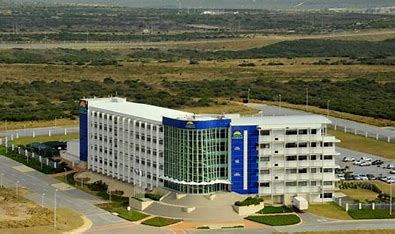
At the centre of the questionable R111-million paid by the Eastern Cape health department to the Coega Development Corporation (CDC) is an arbitrator who scored multimillion-rand contracts from the corporation.
This emerged as the Hawks in the province investigate allegations of fraud and corruption made by former health department infrastructure boss Mlamli Tuswa. He handed over his affidavit to the crime-fighting unit’s anti-corruption task team in East London last month.
The Mail & Guardian has established that Stuart Riddle, one of the people on the arbitration panel who decided last year that the province’s health department should pay the CDC R150-million, had previously got lucrative contracts from the state-owned company.
Documents seen by the M&G show that Riddle’s company, Omega Civils, had been awarded two contracts in 2015 — one for close to R15-million for “the construction of miscellaneous civil engineering works” and another for R50-million to maintain roads and stormwater infrastructure.
But Riddle denies a conflict of interest and that he should not have been part of the panel.
“There were no contracts in place at the time. I was acting in my personal capacity …
There were no contracts pending. Those that may or may not have happened were in the past,” he said. The R111-million is reportedly an irregular portion of the R150-million paid to the CDC in September last year, after a drawn-out battle between the provincial health department and the state-owned company that began in September 2015.
The two parties, led by CDC chief executive Mninawe Silinga and health superintendent general Dr Thobile Mbengashe, agreed on an arbitration process after the state-owned company had taken legal action against the department.
Last week the CDC, which Tuswa alleges was allowed to handpick arbitration panel members, denied that there was any conflict of interest or that any of the panellists had conducted business with the state-owned company.
But the M&G has identified two contracts awarded to Omega Civils, with contract numbers CDC/471/15 and CDC/26/15, on January 12 and July 5 2015, respectively.
Ayanda Vilakazi, of the CDC chief executive’s office, said: “In the agreement, the parties agreed that the tribunal [the arbitration panel] would be constituted of professionals from three disciplines — a professional engineer, a professional quantity surveyor and a chartered accountant. To ensure transparency and credibility of the process, independent professional associations did the appointment of the arbitrators. The CEO had no involvement in this process … There was no communication at all between the CEO and the appointing bodies … It is important to note, none of the arbitrators declared any conflict of interest.”
Vilakazi said the arbitrators were appointed by the Association of Arbitrators and the South African Institute of Chartered Accountants, not the CDC.
“The CDC is absolutely certain that there was no conflict of interest. It is factually incorrect that Mr Riddle scored multimillion-rand contracts with [the] CDC,” said Vilakazi.
He said that “the construction of miscellaneous civil engineering works” contract had been inherited from the Nelson Mandela Bay municipality and the intention was to fast track the project.
He denied that the CDC had awarded another contract to Omega Civils.
Mbengashe, who confirmed that the National Prosecuting Authority has approached the health department’s legal department, said there was no evidence that any arbitrators had a conflict of interest and that the panel had favoured the CDC.
But subsequent to paying the R111-million and a letter from Tuswa advising the department to review the arbitration award, Mbengashe wrote to the arbitration panel, asking how it had arrived at the amount.
He now says the department will validate claims.
“The department, as prescribed, will validate all claims due and payable and will exercise the right of the department to recover monies paid in error, irrespective of [the] arbitration process,” said Mbengashe.
Tuswa, who was fired after being found guilty in an internal disciplinary hearing, claims the department diverted funds intended for 38 urgent projects at hospitals and clinics, scheduled for the 2018-2019 financial year, to pay the CDC bill.
He also claims that the money may have found its way into ANC politicians’ pockets in the province and that Omega Civils may have been used to disperse the funds.
Omega Civils went under voluntary liquidation in January.
The Weekend Post reported last month that Omega Civils had also been instructed by the Nelson Mandela Bay municipality to stop the surfacing of gravel roads, and its contract had been cancelled because of poor performance.
In response to questions about allegations of impropriety involving politicians, the Eastern Cape ANC provincial secretary, Lulama Ngcukayitobi, said: “As the ANC in the province we reject the claims made by Mlamli Tuswa, alleging that some ANC leaders might have pocketed money paid to Coega with the contempt it deserves. There is no single ANC leader that is implicated nor has anything to do with things Tuswa speaks of. The ANC has committed itself to fight corruption decisively — wherever it rears its ugly head … The courageous action taken by [the] health department against Mr Tuswa must be emulated by various organs of government so it can clean itself of its bad image.”
The Eastern Cape health department had not responded to numerous requests for comment by the time of going to print.
Thanduxolo Jika
NEW LAW ON SETTLING INVESTMENT DISPUTES IN THE OFFING
NEW LAW ON SETTLING INVESTMENT DISPUTES IN THE OFFING
Dodoma. The government plans to enact a law that will facilitate the settling of disputes with investors in the country.
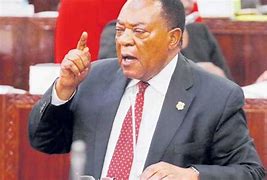
Constitutional and Legal Affairs minister Augustine Mahiga told Parliament yesterday when tabling his docket’s 2019/20 budget proposals that the plan to use local arbitration mechanisms was meant to increase transparency and cut unnecessary costs involved in litigations outside the country.
He said the decision was in line with the Natural Resources and Natural Wealth Management Act, especially Cap 11. “We need business and investment disputes to be settled using our own arbitration mechanisms and or own laws”, said Dr Mahiga, who asked Parliament to approve Sh181.4 billion for the ministry.
The government last September passed the Public Private Partnership Amendment (Amendment) Act. No.9 of 2018, which banned international arbitration in resolving investor state disputes.
The government said it had no trust in international arbitration on the grounds that it lacked neutrality when it comes to settling disputes with investors.
As things stands, PPP agreements will be governed by Tanzanian laws and be subject to local arbitration under the arbitration laws of Tanzania.
In November, former Constitutional and Legal Affairs minister Palamagamba Kabudi, who has since been transferred to the Foreign Affairs docket, said Tanzania was facing 13 cases on investment disputes in various international courts, with $185.58 million (about Sh426.8 billion ) in compensation being demanded.
He said the actual amount to be paid would be known after the verdicts were passed.
Some of the cases have been filed in the Permanent Court of Arbitration (PCA), London Courts of International Arbitration (LCIA) and International Centre for Settlement of Investment (ICSID).
Dr. Mahiga told Parliament that next year’s budget priorities include strengthening of legal bodies’ systems, protection of human rights and continuation of the war against corruption.
He said out of the proposed budget for the next financial year, Sh126.2 billion was meant for the judiciary fund, with the remaining Sh55.2 billion being for salaries, development projects and other expenditure.
Dr. Mahiga explained that of the requested money for judiciary fund, Sh104 billion was meant for recurrent expenditure and Sh22.2 billion for development expenditure.

KENYAN ASBEL KIPROP HANDED FOUR-YEAR DOPING BAN
KENYAN ASBEL KIPROP HANDED FOUR-YEAR DOPING BAN
The International Association of Athletics Federation Disciplinary Tribunal has banned former Olympic and World 1,500m champion Asbel Kiprop for four years.
Kiprop, the 2008 Beijing Olympics 1500m champion, was tentatively suspended by IAAF’s Athletes Integrity Unit (AIU) in May last year after having tested positive to blood boosting Erythropoietin (EPO) in an out-of-competition test in Iten in November 2017.
Kiprop’s ban has been back-dated from February 3, 2018 but the athlete has another opportunity to appeal at the Courts of Arbitration for Sports (CAS).
Kiprop, through his lawyer Katwa Kigen, had put a vigorous appeal at the IAAF Disciplinary Tribunal in London.
“There is no justice in the world. Not every prisoner in jail is guilty,” said Kiprop after receiving the news. “I will consult my lawyer to see if I will appeal at CAS but no matter the outcome I will be back stronger.”
AUS JUNIOR CELAMIN REGAINS ITS SHARE OF TUNISIA PROJECT
AUS JUNIOR CELAMIN REGAINS ITS SHARE OF TUNISIA PROJECT
The share price of junior explorer Celamin Holdings rose on Friday, after the Tunisian Court of Appeal returned the company’s 51% stake in the Chaketma phosphate project.
Celamin has battled its joint venture partner Tunisian Mining Services (TMS) since 2015, after its interest in the project was fraudulently transferred to TMS.
In November 2017 a sole arbitrator, appointed by the International Court of Arbitration of the International Chamber of Commerce, found in favour of Celamin, ordering TMS to return the company’s interest in the Chaketma project and pay more than $4-million in damages and costs.
Celamin was forced to apply to the Tunisian Court of Appeals after TMS failed to comply with the arbitrator’s orders.
The ASX-listed company said that the court order was a “very pleasing development” in what has been a lengthy dispute, and reinforced Tunisia as a viable destination for foreign investment in the mineral resources sector.
The orders are immediately enforceable, and Celamin will now begin the process of recovering its interest and the costs and damages awarded.
The company noted that the Chaketma permit could potentially be a large-scale phosphate development asset, which includes six prospects covering some 56 km2, and hosting a total Joint Ore Reserves Committee-compliant inferred resource of 130-million tonnes, at 20.5% phosphate oxide.
Once the operation is back under Celamin control, the company is hoping to introduce an international partner to facilitate funding discussions and to start a feasibility study to determine the viability of producing either rock phosphate or chemical fertilizer.
Celamin’s share price traded 12.50% higher at A$0.072 a share, from the previous close of A$0.064 a share.
ESMARIE IANNUCCI

PAN AFRICAN MINERALS’ $2.2B CLAIM OVER GIANT MANGANESE DEPOSIT CONTRACT DISMISSED BY COURT
PAN AFRICAN MINERALS’ $2.2B CLAIM OVER GIANT MANGANESE DEPOSIT CONTRACT DISMISSED BY COURT
Pan African Minerals, a unit of Timis Mining Corp., won’t resume production at its Tambao mine in Burkina Faso as a Paris-based arbitration court has dismissed the company’s $2.2 billion claim against the West African nation.
Tambao, one of the world’s largest manganese mines, was forced to halt activities in 2015 following a change in leadership in Burkina Faso. The company then asked the International Chamber of Commerce’s International Court of Arbitration to prevent its permit from being withdrawn.
In the meantime, the country’s new government began looking for a new partner to mine the manganese deposit, with estimated reserves of 100 million tonnes of the steel-making ingredient.
In April last year, the nation announced it was ending its agreement with Pan African Minerals.
The arbitration court’s ruling determined that “the termination of the contract by Burkina was valid and justified in law,” Global Arbitration Review reported.
The West African country has experience increasing mining activity in the past decade, mainly in the gold sector.
Cecilia Jamasmie

LONDON TO ARBITRATE EA OIL PIPELINE PROJECT ROWS
LONDON TO ARBITRATE EA OIL PIPELINE PROJECT ROWS
The UK will host arbitration talks in case of disputes arising out of the East African crude oil pipeline project, ending months of haggling between the governments and oil companies.
Arbitration was one of the issues that were deferred during a technocrats meeting held in Kampala in January.
“Arbitration is now agreed,” said Peter Muliisa, a legal officer at the Uganda National Oil Company — one of the joint venture partners in the project — without naming the venue.
But sources told The EastAfrican that arbitration will be done in London should any dispute arise. Tanzania had initially said it would host the arbitration, but the other partners preferred a neutral country.
Now, expropriation remains the most critical pending issue in the ongoing host government agreement (HGA) talks. Investors want the expropriation clause to ensure that host countries that provide land do not turn around to claim it before expiry of project.
Permanent Secretary in Uganda’s Energy Ministry Robert Kasande said that progress is “being made,” and that only a few issues remain unresolved.
“We should close these negotiations by the end of May,” he said.
The 1,445km export pipeline is expected to transport Uganda’s crude oil from Kabaale, northwest of Kampala to Chongoleani peninsula, to Tanga port in Tanzania. The 24-inch diameter pipeline will have a flow rate of 216,000 barrels of crude per day.
The question of expropriation and overall security for investors emerged earlier this month at a media conference hosted by the Uganda Chamber of Mines and Petroleum.
“In consideration of the final investment decision, the investors are looking at the security of their investments and policies, and asking whether contracts are solid,” said UCMP chairman Elly Karuhanga.
Tanzania, Uganda and the joint venture oil companies — Total E&P, Tullow Oil Uganda and China National Offshore Oil Company — are expected to speed up negotiations that will lead to the signing of agreements on the HGA, transportation and shareholding. The final investment decision is expected in June.
HALIMA ABDALLAH
NEW LAW ON SETTLING INVESTMENT DISPUTES IN THE OFFING
Dodoma. The government plans to enact a law that will facilitate the settling of disputes with investors in the country.
Constitutional and Legal Affairs minister Augustine Mahiga told Parliament yesterday when tabling his docket’s 2019/20 budget proposals that the plan to use local arbitration mechanisms was meant to increase transparency and cut unnecessary costs involved in litigations outside the country.
He said the decision was in line with the Natural Resources and Natural Wealth Management Act, especially Cap 11. “We need business and investment disputes to be settled using our own arbitration mechanisms and or own laws”, said Dr Mahiga, who asked Parliament to approve Sh181.4 billion for the ministry.
The government last September passed the Public Private Partnership Amendment (Amendment) Act. No.9 of 2018, which banned international arbitration in resolving investor state disputes.
The government said it had no trust in international arbitration on the grounds that it lacked neutrality when it comes to settling disputes with investors.
As things stands, PPP agreements will be governed by Tanzanian laws and be subject to local arbitration under the arbitration laws of Tanzania.
In November, former Constitutional and Legal Affairs minister Palamagamba Kabudi, who has since been transferred to the Foreign Affairs docket, said Tanzania was facing 13 cases on investment disputes in various international courts, with $185.58 million (about Sh426.8 billion ) in compensation being demanded.
He said the actual amount to be paid would be known after the verdicts were passed.
Some of the cases have been filed in the Permanent Court of Arbitration (PCA), London Courts of International Arbitration (LCIA) and International Centre for Settlement of Investment (ICSID).
Dr. Mahiga told Parliament that next year’s budget priorities include strengthening of legal bodies’ systems, protection of human rights and continuation of the war against corruption.
He said out of the proposed budget for the next financial year, Sh126.2 billion was meant for the judiciary fund, with the remaining Sh55.2 billion being for salaries, development projects and other expenditure.
Dr. Mahiga explained that of the requested money for judiciary fund, Sh104 billion was meant for recurrent expenditure and Sh22.2 billion for development expenditure.

NUMSA AND COMAIR TO MEET OVER WAGE DISPUTE
NUMSA AND COMAIR TO MEET OVER WAGE DISPUTE
DURBAN – The National Union of Metalworkers of South Africa (Numsa) and Comair will meet on Saturday in mediated talks to try end a wage dispute that could result in a national strike.
Union and airline representatives first met mediator, the Commission for Conciliation, Mediation and Arbitration (CCMA), on Friday.
Numsa declared its intention to strike earlier in the week, but was temporarily interdicted by the Labour Court.
“Our members are aggrieved that some workers at Comair earn higher wages than others, for doing the same work. This is a crisis which was created by the management team of Comair, and it is now a burning issue with workers at the airline,” said the union via a press release.
“The wage discrepancy is the reason our members took the decision to go on strike. They are demanding that all workers who fall into a particular category must be paid the same. It is unfair that some workers are being paid much more than others, for doing the same work.
“We will be continuing with mediation with CCMA talks on Saturday in order to give Comair management an opportunity to get a mandate from its leadership to resolve this problem. As Numsa we remain hopeful that we will find one another so that we will not have to resort to strike action once again,” said the statement.
Cecilia Jamasmie