

MOZAMBIQUE SUES PRIVINVEST CHIEF FOR FRAUD AFTER DEBT SCANDAL
MOZAMBIQUE SUES PRIVINVEST CHIEF FOR FRAUD AFTER DEBT SCANDAL
INTERNATIONAL – The government of Mozambique is suing the boss of a shipbuilding firm at the centre of the country’s $2 billion debt scandal for fraud, according to a court filing at the High Court’s commercial court in London.
The filing, dated July 31, gives no further details other than identifying the government’s legal representative, Peters & Peters Solicitors, and the name of the defendant, Iskandar Safa.
Safa is a Lebanese-French billionaire and chief executive officer of Abu Dhabi-based shipbuilder Privinvest, which proposed, helped arrange financing for and supplied a project in Mozambique that US authorities say was a front for a bribe and kickback scheme.
A spokesman for Privinvest said Safa could not comment on why the government of Mozambique had sought to instigate proceedings against him personally, in an English court, until he had seen the particulars of the claim.
“He does not accept that the English court has jurisdiction over him, and in any event, denies wrongdoing,” the spokesman said in an emailed statement.
The action against Safa follows a series of criminal, civil and commercial cases centring on the scandal, which has ensnared a high-level politician and government officials, the former Mozambican president’s son and three ex-Credit Suisse bankers.
In 2013 and 2014, Mozambique and Privinvest inked deals for a project spanning tuna fishing, shipyard development and maritime security. Credit Suisse and Russian bank VTB arranged $2 billion worth of government-guaranteed loans to three state-owned companies, some of which were not disclosed by the state.
Hundreds of millions of dollars went missing and the ships supplied are largely rusting in Mozambican ports. Meanwhile, Mozambique’s admission of the undisclosed borrowing in 2016 prompted the International Monetary Fund and other donors to cut off support, triggering a currency collapse and a sovereign debt default.
The United States has named Safa as a co-conspirator in its case against the three former Credit Suisse bankers, two of whom have pleaded guilty to charges against them, as well as Mozambique’s former finance minister Manuel Chang and a Privinvest salesman.
Neither Safa nor the company itself have been charged in the United States.
Mozambique has also indicted 18 people in connection with the scandal, is trying to revoke the government guarantees for some of the loans and has filed a case against Credit Suisse in London’s High Court. Privinvest is also named in that case.
Privinvest has begun arbitration proceedings against the government of Mozambique for breach of contract.

Reuters


ONGC, ITS PARTNERS LIKELY TO EXIT OIL BLOCKS IN SUDAN
ONGC, ITS PARTNERS LIKELY TO EXIT OIL BLOCKS IN SUDAN
China’s CNPC, Indian ONGC, and Malaysian Petronas may exit Sudan’s oil industry as the African country’s unpaid dues to the trio swell.
The Economic Times reports these have reached US$500 million to date for ONGC alone, after several years during which troubled Sudan has failed to pay the three companies for oil extracted from their jointly operated blocks, 2A and 4. The Indian company has been seeking arbitrage on the receivables for a year now.
CNPC is the largest partner in the project, with a stake of 40 percent, Petronas has 30 percent, and ONGC has 25 percent. The rest is held by Sudan’s Sudapet.
“The company has reviewed the geopolitical situation in Sudan and has considered the option for exit from the operations in Block 2A, 4 in terms of article 14.1 of the JOA. The intention in this regard has been conveyed to the government of Sudan on 10 May 2019,” ONGC said.
Sudan, a relatively small African oil producer, has been plagued by economic hardships since South Sudan seceded in 2011. South Sudan broke from Sudan in 2011 and took with it around 350,000 bpd in oil production.
After South Sudan’s secession from Sudan, the two countries have been mutually dependent on oil revenues, because the south has 75 percent of the oil reserves, while the north has the only current transport route for the oil to international markets.
In November last year, Sudan’s Petroleum Minister Azhari Abdalla said that the country wanted to attract oil investments and would launch an exploration bid round in 2019, probably in the third quarter.
However, after a military coup toppled long-serving president Omar al-Bashir this April and the army took control of the country, uncertainty about Sudan’s plans for oil bid rounds and for attracting oil investments increases. The news about the three oil majors’ plans to exit the country will only add to the gloomy prospects for Sudan’s oil industry.
Irina Slav
NJIRAINI-LINKED SH1.3BN DECRA TILES FIRM’S OWNERSHIP DISPUTE DEEPENS
NJIRAINI-LINKED SH1.3BN DECRA TILES FIRM’S OWNERSHIP DISPUTE DEEPENS
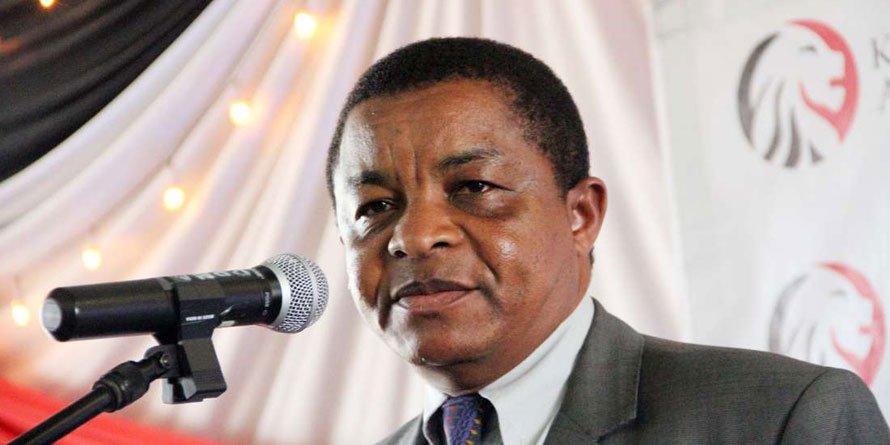
The Court of Appeal has suspended a decision that referred to arbitration an ownership dispute in a company that former Kenya Revenue Authority boss John Njiraini is said to be a shareholder.
Appellate judges Martha Koome, Fatuma Sichale and Sankale ole Kantai have ruled that operations of Space & Style Limited, which was valued at Sh1.3 billion at the time of making the initial court filings, are at risk of being shut down if the dispute over its ownership is not determined.
While the High Court had referred the matter for arbitration, the appellate court judges faulted that decision noting that there was no request in the first place for such an option.
The ownership row pits Mr Njama Wambugu against Ms Winfrida Wanjiku Ngumi, who are the co-founders of the tiles company.
The disgruntled partner, Mr Wambugu, claims that Mr Njiraini holds shares in Space & Style through an offshore company, Decamis Limited, which is registered in Hong Kong.
Space and Style supplies roofing materials including the popular decra tiles.
TAX ISSUES
Mr Wambugu has accused Mr Njiraini of agreeing to help in resolving tax issues that the company was facing at one time on condition that he would be given shares in the firm.
According to Mr Wambugu, the former KRA boss had promised to inject capital into Space and Style, and to procure lucrative contracts for the company.
Thereafter, Mr Wambugu agreed to sell his stake to Ms Ngumi and leave the firm.
Ms Ngumi hired valuers to price the company and its assets but there has been no consensus, which has delayed completion of the deal.
Mr Wambugu executed a power of attorney in favour of Ms Ngumi in respect of the shares, pending completion of the sale.
With the power of attorney, Ms Ngumi appointed three new directors, which did not go down well with Mr Wambugu.
The new directors were Lucy Mumbi Kimani, Edward Mulewa Mwachingwa and David Otieno Opiyo.
BLACKMAIL
Mr Njiraini, however, claims that he is not a shareholder in Space and Style, arguing that Mr Wambugu used the court to blackmail him into helping him stop tax-related investigations into his firms.
Mr Wambugu has filed a separate suit accusing KRA of slapping him with exorbitant tax demands as intimidation and harassment.
KRA is seeking a total of Sh160 million from Mr Wambugu and his four companies, which he attributes to the fallout over his business deals with Mr Njiraini.
The appellate court pointed out that the dispute arose when Ms Ngumi realised that Mr Wambugu had interests in a rival company.
The judges said the issue was arguable in a court on whether an arbiter can help resolve the dispute or not hence asked Ms Ngumi to file an appeal on the same in 60 days.
HIGH COURT THROWS OUT VEDANTA’S APPLICATION TO REFER KCM CASE TO ARBITRATION IN SOUTH AFRICA
HIGH COURT THROWS OUT VEDANTA’S APPLICATION TO REFER KCM CASE TO ARBITRATION IN SOUTH AFRICA
Lusaka High Court Judge Anessie Banda-Bobo has dismissed Vedanta Resources Holdings Limited’s application to stay the winding-up proceedings against Konkola Copper Mines (KCM) and refer parties to arbitration.
Justice Banda-Bobo has ruled that the matter is not a proper case to refer the parties to arbitration.
Vedanta said it is reviewing the ruling and will then make a decision on its next steps.
Justice Banda-Bobo has since given the 27th of August as the hearing date for the winding-up petition brought by ZCCM-IH – preliminary arguments will be heard on the 13th of August.

AFRICOAT – A BRIGHT HOPE FOR AMERICAN INVESTMENT IN NIGERIA UNDER THREAT IN LADOL
AFRICOAT – A BRIGHT HOPE FOR AMERICAN INVESTMENT IN NIGERIA UNDER THREAT IN LADOL
Africoat, a Nigerian-registered pipe-coating company with United States citizen ownership, investment and management, is a bright hope for foreign investment in Nigeria.
But Africoat has alleged that its staff and management have been barred from Africoat’s facility by LADOL and its free zone management company – Global Resources Management Free Zone Company (GRMFZC) by virtue of their refusal to issue the requisite CERPAC visas.
Africoat claimed it paid for these over 18 months ago but after several unanswered letters from Africoat, LADOL/GRMFZC refused to act on these visas issuance.
Africoat is confident that it could be mobilised and become operational within a few weeks if consistently granted access to its facility.
Nevertheless, the inactivity of the pipe coating facility will do nothing to quell the fears of foreign business that they will be locked out of their facilities, or will have their assets seized, if they develop or invest in the free zone.
On July 12, 2019 the arbitral tribunal in Lagos finally had the first hearing in Africoat’s claim against LADOL.
This acrimonious dispute, in which Africoat alleged unlawful and monopolistic conduct, is the latest allegation brought by a foreign business operating in the LADOL free zone against the managers of the zone.
However, the impact of this dispute will be felt outside the arbitration tribunal, and outside Nigeria.
The dispute strikes another blow to the Nigerian Government’s aspiration to attract foreign investment into the country. It is understood that the issues between Africoat and LADOL have been brought to the attention of the United States of America diplomatic mission in Lagos and Abuja.
The outcome of this dispute would seem to have a long lasting effect on the recommendation of US citizens investing in Nigeria’s private sector.
The dispute between Africoat and LADOL relates to service agreements granting Africoat space at the free zone to carry on its highly skilled pipe-coating business.
Africoat alleged that LADOL failed to provide any services under the agreement, in breach of the agreement.
It also alleged that LADOL made wholly unjustified demands for fees of over $7 million. But in its defence, LADOL argued that Africoat breached Nigerian laws by stopping to make statutory payments for services provided.
However, Africoat also claims that LADOL unlawfully refused to renew Africoat’s operating licence and excluded Africoat from its own yard.
According to the US firm, this resulted in the loss of several lucrative business opportunities for Africoat, including contracts with Chevron and ExxonMobil.
Africoat’s Free Zone operating licence was later issued by LADOL after direct instructions from the Nigerian Ministry of Industry, Trade and Investment.
But Africoat alleged that it has remained excluded from its facility. So, renewing Africoat’s operating licence has made no practical difference to its operations, as LADOL has refused to renew Africoat’s lease and services agreement.
This means that Africoat is unable to do business even with an operating licence. Africoat claims that this is the consequence of LADOL’s monopolistic control over the free zone.
Africoat faces battles on numerous fronts. It has sought an injunction preventing LADOL from tampering with Africoat’s equipment or interfering with its use of the yard.
Africoat argued that the injunction was necessary to protect its assets. According to the US firm, LADOL, realising that it does not have the skill or expertise to operate the equipment itself, had threatened to seize and sell the equipment in the yard.
Whatever the merits or demerits of this case may be, an important point is that all the problems lie with the operation of the LADOL free zone because everybody is complaining.
Africoat, and all businesses operating in the LADOL free zone argued that they are at the mercy of LADOL and GRMFZC, which allegedly administer the NEPZ Act in a manner that is allegedly contrary to the Act’s intention.
The two entities were alleged to have implemented regulations that over-ride contract agreements and puts both local and foreign businesses at a disadvantage.
All the businesses in the zone argued that LADOL has abused its monopolistic position in the free zone and has acted with impunity against foreign businesses.
They argue that the federal government needs to intervene and take action now before foreign businesses pack up and leave the zone. It is feared by the operators that it would be a tragedy if Africoat were not able to re-commence operations soon.
Moses Akpan-Etukudo
BENIN CONDEMNED TO PAY USD 95 MILLION TO AN AMERICAN COMPANY
BENIN CONDEMNED TO PAY USD 95 MILLION TO AN AMERICAN COMPANY
ecuriport, an American company, has secured a USD 95.3 million, roughly FCFA 55.5 billion, award against the Benin government. The case concerns the cancelation of a contract to Securiport by the Benin government for the Cardinal Bernardin Gantin International Airport in November 2016 which was later issued to another company: Morpho Dys.
Information was revealed that the arbitration between the Benin government and Securiport was administered by the ICC in Paris with a three member panel. The tribunal decided in favor of the American airport security company. The award was rendered 5 months ago, and it condemns the Benin government to pay a sum of USD95.3 million in damages caused to the company.
THE CONTRACT
The origin of the dispute goes dates back to November 2016. In 2015, during the presidency of Boni Yayi, Securiport signed a contract with the State to provide security services for the Cardinal Bernardin Gantin International Airport in Cotonou.
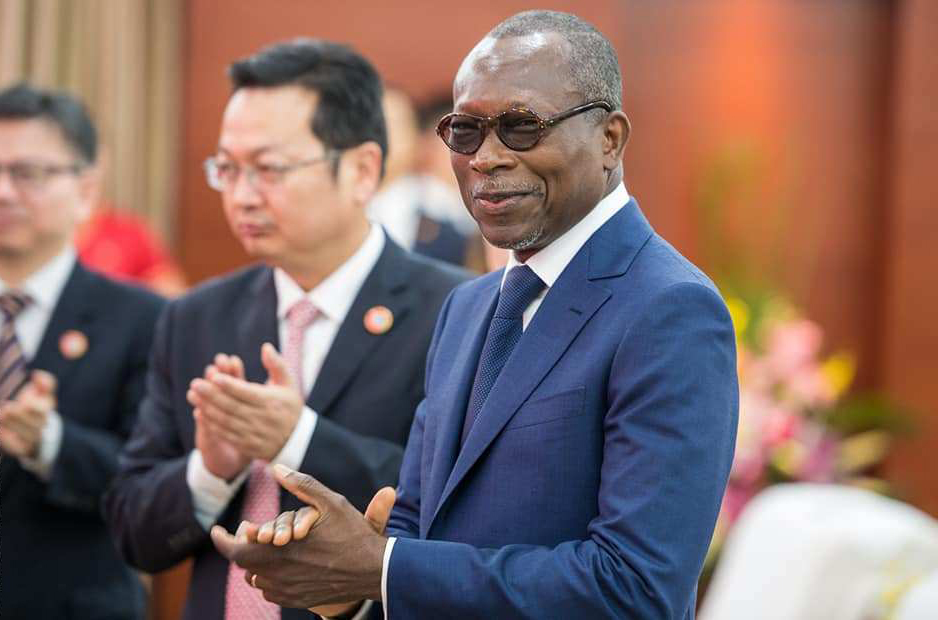
However, a few months after taking over the presidency of Benin in 2016, Patrice Talon suspended the contract with Securiport and awarded it to the Morpho Dys, a company owned by his friend and business partner.
Par Gabin Dédjila
EGYPT- 'EMAAR MISR' SIGNS SETTLEMENT AGREEMENT WITH 'NASR HOUSING' BEFORE SUBMISSION TO CABINET
EGYPT- 'EMAAR MISR' SIGNS SETTLEMENT AGREEMENT WITH 'NASR HOUSING' BEFORE SUBMISSION TO CABINET
(MENAFN – Daily News Egypt) Emaar Misr Development Company has announced signing a contract with Al Nasr Housing and Development Company at the ministry of justice regarding the land of the Uptown Cairo project.
The company said in a statement to Egyptian Exchange (EGX) that the draft settlement contract includes agreeing to terminate the procedural, technical, and financial points, including Al-Nasr for Housing and Reconstruction withdrawing its original arbitration lawsuit, and Emaar Misr withdrawing the counter lawsuit before the Cairo Regional Centre for International Commercial Arbitration.
The contract was presented to the ministerial committee for the settlement of investment contracts disputes yesterday, the statement said.
Al-Nasr has filed an arbitration suit before the Cairo International Arbitration Centre against Emaar for the termination of their contract for the Uptown Cairo project and demanded a compensation of EGP 1bn.
Nasr Housing has demanded the recovery of 3m sqm of Zahraa Al Moqattam land, located within the range of Uptown Cairo project, due to the company’s inability to commit to developing the land and obtaining fees to change the activity of an area of 500,000 sqm of the project.
In May, Emaar Misr Development said that there were positive negotiations with Al Nasr Housing and Reconstruction to resolve the dispute between the two companies on Uptown Cairo land.
It is noteworthy to explain that Emaar Misr achieved a profit of EGP 418.6m during the three months ending in March, compared to a net profit of EGP 503.2m year-over-year (y-o-y), considering minority interests.
The company’s revenues for the first quarter (Q1) of this year fell to EGP 566.6m compared to EGP 830.7m in Q1 of 2018.
At the level of independent business during that period, the company achieved a profit of EGP 418.6m compared to a profit of EGP 503.2m y-o-y.

HOW AN INDIAN START-UP WON AN IPR BATTLE AGAINST THE SOMALIAN GOVT.
HOW AN INDIAN START-UP WON AN IPR BATTLE AGAINST THE SOMALIAN GOVT.
Somali’s Ministry of Finance wanted the domain name ‘Minance’
Somalia often hits global headlines when its terrorists launch deadly attacks or when its pirates take vessels and ships hostage for ransom in the Indian Ocean and the Arabian Sea. Sometimes these outlaws even work together.
But an Indian start-up had a strange experience with the Somalian Ministry of Finance over an IPR issue and while it won the case, it lost nearly ₹10 lakh.
Founded in Bengaluru in 2014 as a SEBI-registered investment advisory and private wealth management enterprise, Minance landed in trouble within a year (August 2015) when the Government of Somalia discovered that an Indian start-up held the domain name, sent the firm a notice that it wanted to use minance.com for its Ministry of Finance, and asked its Founder-CEO, Anurag Bhatia, then just 23 years old, to relinquish it.
The bootstrapped Minance was still trying to find its feet, said Bhatia, a former risk analyst at Amazon. He and his colleagues had just sold their vested Amazon stocks but had little idea of how to invest the money. “I loved the domain name and had no intention of giving it up,” he said, adding he decided to fight in a situation where one would expect most early-stage entrepreneurs to give up.
GOES FOR ARBITRATION
But the Somalian government was as adamant. So, in this virtual battle between a David and a Goliath, the issue had to be taken to the Arbitration and Mediation Center run by the World Intellectual Property Organization in Geneva.
For a minnow like Minance, the cost involved in the entire process was an added financial burden and the decision to fight was a blind bet. But Bhatia managed to contact a high-profile lawyer who specialised in such IP cases.
“There was no way we could afford his fees but he offered us a deal. The lawyer was flying to London and if we could tag along, he would help us build the case on the plane.” So it was arranged for a Minance employee to take the flight to London alongside the lawyer and then promptly fly back.
WINS THE CASE
Based on the defence (Minance had the international trademark to the name and was actively using the domain), the gamble finally paid off and Minance was allowed to keep the domain name. The entire episode lasted over six months with settlement of the case in December 2015, and cost the company nearly ₹10 lakh in legal fees and flight tickets. But, being a small player, Minance kept the case under wraps so far and is coming out in the open only now as it embarks on the next stage of expansion.
Asked if he sought any compensation or costs, Bhatia said it was not a judicial case but an arbitration case. Hence, no costs or compensation could have been paid, he told BusinessLine.
Minance’s victory was remarkable for a start-up with a handful of employees fighting and winning against a country’s might.
EXPANSION PLANS
Minance now has 42 employees and over 3,000 customers who pay it 10 per cent of profits. “We are also going in for funding this year as we plan to expand our customer base by five times in the next couple of years.”
Bhatia said Minance caters to investment management needs of the under-served market of SMBs and individual investors. It has Asset Under Management (AUM) of over ₹300 crore. After providing investment and taxation services, Minance plans to delve into the insurance and credit segments as well.
Virendra Pandit
AUSTRALIAN MINER SUES EGYPTIAN GOVERNMENT OVER COLLAPSE OF BILLION-DOLLAR DEAL
AUSTRALIAN MINER SUES EGYPTIAN GOVERNMENT OVER COLLAPSE OF BILLION-DOLLAR DEAL
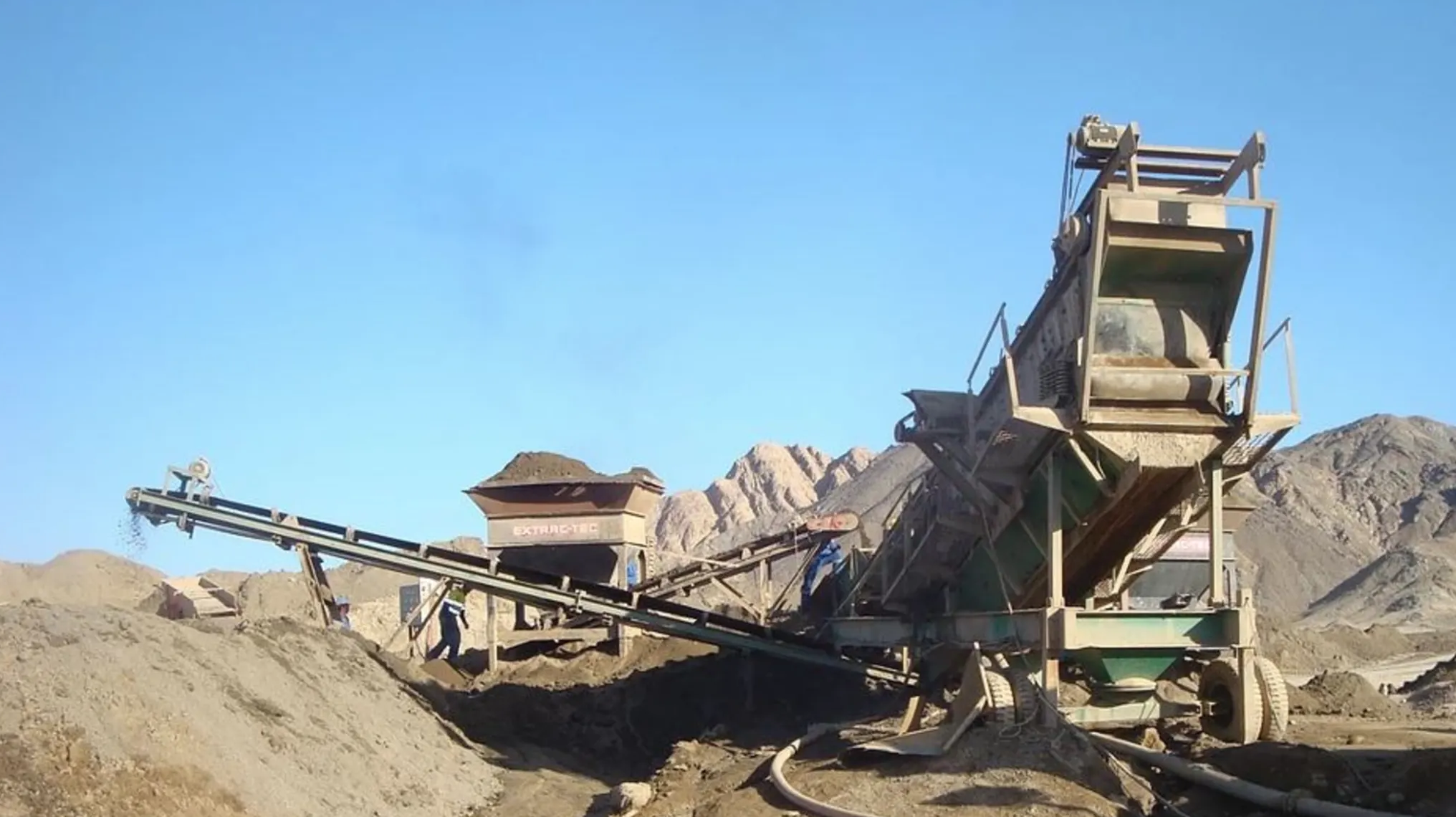
Driving along the coast of the deep-blue Red Sea in Egypt, a group of Australian mining executives had money on their mind.
It was 2002, and the top brass of Perth-based Gippsland Ltd were travelling to resort town Abu Dabbab, about 700 kilometres south-east of Cairo, to inspect a billion-dollar rare earths mine.
The plan was to mine tantulum, a mineral used in electrical circuit capacitors. With an Egyptian government agency as potential joint-venture partner, they had every reason to be optimistic.
Not so now. Seventeen years later, the company is suing the Egyptian government for potentially hundreds of millions of dollars after the military regime blocked plans for what would have been the largest tantalum mine in the world.
The Australians are seeking compensation in an international tribunal after Egypt, which was a joint partner in the venture, abruptly pulled out of the project in 2015 and sought to strip the company of its right to explore the mine.
Gippsland – which has since morphed into an ASX-listed e-sports outfit Emerge Gaming – is using a clause in an investment agreement signed with Egypt by the Howard government in 2001 to argue the country “breached a variety of obligations with respect to how they conducted themselves”, according to the chair of the Australian company.
The case will be heard at the International Centre for Settlement of Investment Disputes (ICSID), a World Bank body based in Washington that hears cases brought by companies against sovereign governments.
Details of the case emerged in the same week ICSID instructed the government of Pakistan to pay more than $8 billion in compensation to a formerly Australian-owned mining company that was denied a licence nine years ago.
Mike Rosenstreich chairs Tantalum International Ltd (TIL), the company established by Gippsland to enter into a 50-50 joint venture with the Egyptian government’s mining authority, Egyptian Company for Mineral Resources (ECMR).
He says the Australian firm has a “strong legal case” to seek “significant” damages due to what he labels “ridiculous” behaviour by the Egyptian government.
TIL planned to extract more than $300 million worth of rare earths including tantalum, feldspar and tin beginning in the mid-2010s.
The company struck a 10-year offtake agreement with German company HC Starck to sell about $70 million of tantalum per year.
The mine would have become the world’s largest tantalum mine, producing up to a quarter of world supply. Tantalum is a scarce corrosion-resistant metal used to create electric capacitors found in phones and laptops, as well as superalloys in airplanes.
Rosenstreich indicates the mine’s “billion-dollar” potential will be used as a guide to determine how much compensation is sought.
The company spent almost $60 million on feasibility studies and other preliminary works between 2004-15. Much of this outlay was contributed by Ian Gandel [who did not respond to requests for comment], son of retail mogul billionaire John Gandel who owns Chadstone Shopping Centre in Melbourne.
“It’s not just about what we spent, but about what we lost – what was the opportunity our shareholders were deprived of, and that’s another valuation … which is many multiples of the figure we spent … it’s hundreds of millions of dollars,” says Rosenstreich.
In 2004, a joint venture was entered into between Gippsland and ECMR to mine reserves in Abu Dabbab.
In the several years after 2004, according to Rosenstreich, “the company made some very significant achievements in terms of defining a very significant mineral resource, [and] completed a series of bankable feasibility studies.”
The company’s financial outlook suffered during the global financial crisis when tantalum prices fell.
The project’s prospects worsened amid political instability when Egypt’s president was overthrown after a violent uprising during the Arab Spring.
Democratic elections installed a hardline Islamist leader, who lasted a year before being ousted by a military coup led by General Abdel Fattah el-Sisi, who remains the Egyptian president.
“All of those things created quite an interesting environment, during which [we] battled on,” says Rosenstreich.
Perhaps there was never actually an intent to allow the company to go ahead with the project.
Gandel became involved in 2010, and funded the project out of his own pocket until his departure in 2015.
“It’s fair to say the company was struggling on a number of fronts … to just nail down the feasibility and nail down the financing,” Rosenstreich says.
In the years leading up to 2015, the Australians began to notice obstructionist behaviour from their Egyptian counterparts, who were responsible for securing permits and other regulatory approvals.
In 2015, as the project dragged on without reaching production phase, TIL struck an approximately $15 million agreement with Taiwanese firm Foxxtel to fund stage one of a scaled-down first year of production, which would then scale up in later years.
The Taiwanese firm required a letter of support from EMCR before it gave the go-ahead.
EMCR refused to provide the letter and set about dissolving the joint company, citing delays and poor financial performance at a smaller tin project operated by TIL to maintain cash flow.
“And there we were, at the closest point the project had ever been to being developed and they do this. Why on earth? We could have been starting site activities literally within months,” says Rosenstreich.
The company believed powerful forces were behind the move to dump them from the project.
“We’d heard directly from our senior employees in Cairo that there was a high government authority putting pressure on ECMR to not provide those support letters and effectively to get us off the project and out, at any cost,” says Rosenstreich.
“The military is a very significant commercial authority in Egypt.”
Rosenstreich questions whether Egypt was “ever serious about allowing overseas investors the opportunity to take rewards or dividends”.
“With hindsight, there’s been a long process of basically frustrating the company’s activities in Egypt. And perhaps there was never actually an intent to allow the company to go ahead with the project.”
In a bid to reverse the Egyptians’ decision in 2015, TIL approached the Australian embassy in Cairo for assistance but received a “disappointing” and unhelpful response, according to Rosenstreich.
The Department of Foreign Affairs and Trade [DFAT] would not comment on the specific case due to ongoing litigation.
DFAT also defended investor-state dispute settlement mechanisms in trade agreements, with a spokesman saying the government ensures “robust safeguards” and noting Australia has never been successfully sued by a corporation.
In a meeting with the Egyptian mines minister, who attended the meeting alone with no advisers, TIL was offered no assistance.
“He said it was a problem for the parties to sort out … we were disappointed there was not more engagement at the highest level,” says Rosenstreich.
Neither the Egyptian foreign ministry nor the Egyptian embassy in Canberra responded to requests to comment on the matter.
Diplomatic channels exhausted, TIL decided to pursue the matter in international investor-state arbitration, securing litigation funding in 2016.
The company now exists solely to extract value from the legal claim that it hopes to return to original Gippsland shareholders.
It has engaged London-based Clifford Chance lawyers, which The American Lawyer magazine ranks as the world’s third-largest.
The Egyptian government has engaged New York’s Shearman and Sterling lawyers, which turned over more than $1 billion last year.
In ICSID’s decision to force Pakistan to pay $8.31 billion earlier this week, it reached a final compensation figure by bundling the mine’s prospective market value [$5.8 billion], more than $2 billion in late payment costs and almost $100 million worth of legal costs.
Using the same legal reasoning, ICSID may view the Abu Dabbab mine’s potential to produce $300 million-plus over 10 years as grounds to force a hefty compensation payment.
TIL is hoping for the Egyptians to come to the table to avoid a protracted dispute as occurred in the Pakistan case, which took eight years.
TIL has filed initial documents to the tribunal, while the Egyptian government is yet to file materials.
“There’s always a way of cleaning these things up quietly and expeditiously for both parties,” says Rosenstreich.
Paul Sakkal

STUDENTS SUE OVER CANCELED SAT SCORES
STUDENTS SUE OVER CANCELED SAT SCORES
Egyptian students challenge cancellation of their SAT scores for test security reasons, saying they were not given evidence or opportunity to appeal. College Board says evidence was “overwhelming.”
A group of about 50 Egyptian students whose May 4 SAT scores were canceled for test security-related reasons has filed suit in federal court seeking to compel College Board to release their scores. On Thursday, U.S. District Judge Lorna G. Schofield denied the students’ motion for a temporary restraining order and preliminary injunction and asked the plaintiffs to file a letter by today indicating whether they will consent to arbitration.
The lawyer for the plaintiffs, Yasser Helal, said he will not consent to arbitration in part because he does not believe the option is available for the students to contest their score cancellations. The SAT’s terms and conditions say that arbitration over the issue of invalid scores is an available option only for tests administered in the U.S. and U.S. territories.
“We’re pleased the judge rejected the plaintiff’s motion,” Zachary Goldberg, a spokesman for the College Board, which owns the SAT, said via email.
Goldberg added that the organization “shared directly with the students’ representative the overwhelming evidence that led us to cancel their May SAT scores.”
According to a copy of the complaint provided by the students’ lawyer, the students who are suing all received an email (pictured above) saying that their May 4 scores were among those canceled “when we determined a violation of our test security policies.”
“Due to the egregiously and intolerably vague email notification by the defendant, of its score cancellation, the plaintiffs were prevented from confronting defendant on its claims against them,” the complaint states.
“Defendant, in bad faith, is implying that plaintiffs are ‘cheating’, and is making a grave decision that would affect their lives and cause them (and their families) significant economic losses, severe emotional distress, without identifying any violations, or tying them to any wrongdoings,” it continues.
The complaint claims that the students — who were among hundreds of Egyptian test takers to receive the email — were given no “factual basis” or evidence for the determination and were not granted an opportunity to appeal it.
Helal, the lawyer for the students, said that while a lawyer for the College Board verbally presented him with its “findings” in regard to five of the students, “I was shown no evidences whatsoever (testing material, answer sheets, booklets, etc.)”
The students’ complaint cites the “invalid scores” section of the SAT terms and conditions — which states that students will have the opportunity before the cancellation of scores to contest the decision — in making the argument that the College Board did not follow its own policies in this case. According to the terms and conditions document, “evidence of invalid scores may include, without limitation, plagiarism, discrepant handwriting, unusual answer patterns, text similar to that in other essays, paraphrasing of text from published sources, and essays that aren’t independent compositions.”
But another provision of the terms and conditions document, a section on “testing irregularities” — defined as including, but not limited to, “evidence of possible preknowledge of secure test content” — appears to give the College Board leeway to cancel scores in certain circumstances without granting students recourse to challenge that decision. That section states, “When testing irregularities occur, we may cancel an administration or individual registrations, decline to score all or part of the test, or cancel the test score. We may do this whether or not the affected students caused the testing irregularities, benefited from them, or engaged in misconduct. We are solely responsible for determining whether testing irregularities have occurred, and our decisions are final. When appropriate, we give affected test takers the opportunity to take the test again within a reasonable timeframe, without charge. This is the sole remedy available to test takers as a result of testing irregularities.”
The terms and conditions document also states that “if at any time before, during, or after a review of questionable scores we find that test misconduct has occurred, we may treat the matter under our misconduct procedures; in that case, the options just described under this Invalid Scores section or in the Testing Irregularities section, as applicable, will not be available, even if those options were previously offered. We have sole discretion in determining whether to treat potential testing violation under this section or the ‘Misconduct’ section above.”
Helal said the College Board did not say in its email canceling the scores what its reasons were, leaving the test takers wondering “what violation he or she committed, if any … I am assuming that there were no ‘irregularities’ because the Board did not mention this specific word in its email, so they cannot come now and raise it. My assumption that this [is] an individual ‘Invalid Score’ case, and the [College Board] has no arbitration offered for international students in this case.”
The College Board has been bedeviled by problems related to test security and fraud in its international test administrations. It has canceled numerous international test administrations for this reason, including the March administration of the SAT in Egypt, Morocco and Saudi Arabia.
Elizabeth Redden