

AMIDU SUES AG FOR €47M JUDGMENT DEBT ILLEGALLY PAID TO WATERVILLE
AMIDU SUES AG FOR €47M JUDGMENT DEBT ILLEGALLY PAID TO WATERVILLE
The Special Prosecutor, Martin Amidu, in his capacity as a private citizen, has dragged the Attorney General and construction firm, Waterville to the Supreme Court over the nonenforcement of an order directed at the Government of Ghana and the company in 2013 in the Amidu vs. Attorney-General, Waterville Holding (BVI) Ltd & Woyome in a judgement debt case.
In his application sighted by Citi News, the construction firm, Waterville Holding (BVI) Ltd was cited in the suit as second respondent/defendant/judgment debtor.
The Supreme Court on June 14, 2013, in a case brought before it by Mr. Amidu, against the Attorney General, Waterville Holding and Woyome in a €47,365,624 judgment debt case directed the Government of Ghana to retrieve the money from the respondents.
Martin Amidu, a former Attorney General, who dragged Waterville to court argued that the company had no contract with the government of Ghana but yet made claims for the payment of the money.
The apex court in the case upheld that Waterville Holding’s supposed contract with the Government of Ghana in relation to the work on a stadia in Ghana ahead of the CAN 2008 tournament was not valid.
The construction company was in 2013 ordered by the Supreme Court to return to the state monies it obtained illegally out of claims it brought against the state in 2009.
Waterville subsequently appealed against the judgment at the International Court of Arbitration , a case which dragged for a while but according to information available to Mr. Amidu, an arbitration award was made in April 2018 in favour of the Government of Ghana.
Amidu in his fresh application at the Supreme Court insisted that, one year down the line, the Government of Ghana is yet to retrieve the money from Waterville.
“I contend that, it is more than one full year since the Arbitration Tribunal brought the arbitration proceedings to an end in a manner favourable to the Republic of Ghana enjoining the 1st Defendant/Respondent, whose office was held responsible for creating the unconstitutional Judgment Debt, to enforce the orders and directions given by this Honourable Court pursuant to Articles 2 and 130 of the 1992 Constitution in my favour as the Plaintiff on 14th June 2013 and for the 2nd Defendant/Respondent/Judgment Debtor herein to obey and carry out the orders and directions made against the 2nd Defendant/Respondent/Judgment Debtor by this Court on even date”, Mr. Amidu’s affidavit stated.
Amidu also argued that, he is before the Supreme Court again because the Ghana Government’s nonenforcement of the apex court’s order following the the development from the Arbitration Tribunal “for more than one full year since 30 April 2018, demonstrates that without any orders and directions from this Court to the 1st Defendant/Respondent to enforce the decision, orders and directions of this Court against the 2nd Defendant/Respondent/Judgment Debtor herein, the labour and expenses exerted by me [Martin Amidu] as the Plaintiff/Applicant who commenced this action to a successful decision by this Court for the people of Ghana would go in vain and be compromised by inaction on the part of the 1st Defendant/Respondent whose office created the unconstitutional Judgment Debt and the 2nd Defendant/Respondent/Judgment Debtor acting wittingly or unwittingly in tandem.”
Amidu is thus appealing to the Supreme Court to make an “an order directed to the 1st Defendant/Respondent, the Attorney General, to enforce the refund of all the total Judgement Debt of €47,365,624.00 (excluding interest thereon) and for the 2nd Defendant/Respondent/Judgment Debtor to obey and carry out the orders and direction of this Court contained in the judgment, orders, and directions of the Court made in favour of the Plaintiff/Applicant herein on behalf of the people of Ghana against the 2nd Defendant/Respondent/Judgment Debtor on 14th June 2013 pursuant to Articles 2 and 129 (4) of the 1992 Constitution after the conclusion of the International Chamber of Commerce Arbitration Case No.20562/TO and the issuance of the Order for Termination of the said arbitration in four of the Republic of Ghana on 30th April 2018 and for such further or other orders as this Honourable Court shall seem meet.” Date for hearing
The Supreme Court has scheduled the heraing of the case on October 16, 2019.
The application has been served on Ernesto Taricone, The Chairman of the Trasacco Group and said to be the Controlling Director and shareholder of Wattervile.
BACKGROUND
Waterville was in 2013 ordered by the Supreme Court to return to the state monies [€47,365,624.40] it obtained illegally out of claims it brought against the state in 2009.
Former Attorney General Martin Amidu who dragged Waterville to court argued that the company had no contract with the government but yet made claims for the payment of the money.
Waterville had filed a stay of proceedings in the High Court in November 2013 but the court dismissed it.
The construction company was in 2013 ordered by the Supreme Court to return to the state monies it obtained illegally out of claims it brought against the state in 2009.
Waterville Holding Limited subsequently dragged Ghana to the International Court of Arbitration seeking to challenge an order of the Supreme Court ordering it to pay back the judgment debt illegally paid it.

Staff Writer
citinewsroom


EMMANUEL AMUNIKE ACCUSES TFF TO FIFA ARBITRATION COMMITTEE OVER NON-PAYMENT
EMMANUEL AMUNIKE ACCUSES TFF TO FIFA ARBITRATION COMMITTEE OVER NON-PAYMENT
Former head coach of Tanzania national soccer team Taifa Stars, Emmanuel Amunike has accused Tanzania Football Federation (TFF) to Fifa Arbitration Committee over the failure to settle his contractual entitlements including non-payment.
Amunike and TFF had mutual consent to terminate the contract following the failure of the coach to take the team into the knockout stage of the 2019 Africa Cup of Nations in Cairo, Egypt won by Algeria.
Completesports.com reported that the former Nigeria and FC Barcelona winger Amunike has decided to take the decision following the continued silence by TFF to pay his dues.
It is believed that the former Nigerian international is owed two months’ salary. “I’ve contacted FIFA on the matter”, Amuneke told Completesports.com tacitly on Wednesday morning from his base in Spain.
“It, not something we should be making noise about, but hopefully FIFA will look into and decide if it is proper for one not to be paid after work,” Amuneke said.
TFF Information officer, Clifford Ndimbo said yesterday that they are working on the matter and are expected to clarify on the matter later today (Thursday).
“I am waiting for clarifications from my boss. They are working on it, soon after getting the information, I will inform the public,” said Ndimbo.
The last time Tanzania participated in Africa’s flagship football tournament, AFCON was in 1980 in Lagos, Nigeria. But 39 years after, it was the former Nigeria and FC Barcelona winger who pulled through, the Taifa Stars’ 2019 AFCON qualification strings after he was hired as the country’s national team manager.
Tanzania’s 3-0 home win against the Cranes of Uganda on the final day of the qualifiers handed them their first AFCON finals ticket in 39 years.
Tanzania was placed in Group C in the 2019 Africa Cup of Nations in Egypt alongside eventual winners, Algeria; finalists, Senegal and Kenya, with match venue at June 30 Stadium, Cairo.
Amuneke’s Taifa Stars crashed out in the group stages after losing 3-2 to Kenya’s Harambee Stars in the opening group match.
That was followed by a 2-0 defeat by the Terranga Lions of Senegal and 3-0 defeat by eventual champions, Desert Foxes of Algeria.
ADRIAN LAVISTA
regionweek.com

AIR NAM TO SETTLE N$400M SUIT
AIR NAM TO SETTLE N$400M SUIT
The Air Namibia board and management have been forced to go cap in hand to local lawyers representing a Belgian company, Challenge Air SA, after the flag carrier recently lost a case in the Windhoek High Court in which it challenged Anicet Baum’s appointment as the sole liquidator and receiver of the busted plane lease company.
Sources close to the matter told the Windhoek Observer this week that Air Namibia lawyers represented by Elia Shilongo wrote a letter this week to Challenge Air SA legal representative Sisa Namandje requesting a meeting to discuss how the airline intends to pay outstanding hundreds of millions that it owes the European company which was liquidated in 1998.
The request for a meeting is a major climb-down for Air Namibia which had previously refused to recognise and negotiate with Baum and his local representatives led by Wilhelm Shali and Sisa Namandje.
In July, the Windhoek High Court ordered that Baum’s appointment in terms of the Laws of Belgium, as the sole liquidator of the bankrupt Challenge Air SA. is granted recognition in Namibia to pursue litigation against Air Namibia and its former parent company, TransNamib Holdings.
The court also confirmed that Baum, as the sole receiver and curator of Challenge Air S.A., shall be entitled to initiate and where appropriate prosecute any court proceedings in Namibia against Air Namibia and TransNamib for the recognition and enforcement of an award made in favour of the liquidator.
Before last month’s ruling on the 21-year-old claim, Challenge Air had initiated attachment proceedings in Germany based on the German enforcement order it had already secured.
The attachment proceedings, which were enforced across Europe, has resulted in Challenge Air netting about €14 million (N$236.1 million) which crippled Air Namibia’s operations, according to sources in the know.
Air Namibia spokesman, Paul Nakawa, was forced to admit in June that the frozen funds in Europe had caused a severe liquidity problem at the airline leaving it with no option but to cancel and scale down on regional and domestic flights.
The Windhoek Observer has seen an internal memo written to the Air Namibia board by interim Chief Executive Officer Xavier Masule in which he put together a negotiating team as suggested by the chairperson of the board of directors Advocate Deidre Sauls-Deckenbrock.
The negotiating team comprises of Sauls-Deckenbrock, chairperson of the Audit and Risk Committee Willy Mertens, Masule, Senior Manager Legal Services Jerhome Tjizo, assisted by Senior Counsel Advocate Raymond Heathcote and Instructing Counsel Elia Shilongo.
The team was assembled to initiate settlement negotiations with the nominated Challenge Air representatives in Namibia. The negotiating team held its first meeting on 6 August to prepare for negotiations.
Air Namibia has been embroiled in a messy financial challenge with Challenge Air which could see its assets in Germany, Namibia and South Africa attached because of a N$421 million legacy award against it in Europe due to a plane lease agreement dating back to 1998 that is in dispute.
Working on instructions from Shali and Baum who have been duly authorised to represent the Belgian company, Challenge Air SA, which is currently in liquidation, Namandje wrote to the Minister of Works and Transport, John Mutorwa last year threatening that failure by Air Namibia and TransNamib to settle the N$421 million legacy award could have far-reaching consequences to the airline and its former parent company TransNamib.
Namandje is demanding on behalf of his clients that Air Namibia and TransNamib to honour their payment obligations following a €25 million (N$421.6 million) award made at the Arbitration in Paris, France on 4 August 2011 which was also confirmed by the Munich Regional Appeal Court on 12 January 2015.
In the letter to Mutorwa, Namandje said he will be forced to apply for civil recognition of his client’s award against the two public entities and or its shareholders should payment not be made within the next 10 days, a deadline that has long since lapsed.
“Kindly revert to us with a reasonable and amicable proposal as to how this matter could be amicably resolved without resorting to execution which will have far-reaching consequences to both Air Namibia and TransNamib,” Namandje wrote in his letter dated 11 October 2018.
Air Namibia said in a statement earlier this year that the recent steps taken by Challenge Air in Europe, despite the outcome of the proceedings in the Namibian High Court still being awaited, has caused financial prejudice to the airline aimed at exerting pressure.
Air Namibia and Challenge Air parted ways after Air Namibia agreed in March 1998 to lease a 351 seater plane from Challenge Air which was subsequently cancelled because the aircraft was believed by Air Namibia to be defective.
Challenge Air disagreed and hauled Air Namibia in front of the German courts in an attempt to recover the €25 million Euros otherwise promised by the completed lease period.
According to Air Namibia, the two parties signed a maintenance and crew support agreement on 26 March 1998, but after that Air Namibia discovered that the aircraft leased was defective and Challenge Air was unable to rectify the defects.
Four months later, on 27 July 1998, the maintenance and crew support agreement was cancelled by Air Namibia, and a day after, Challenge Air SA was placed under liquidation.
NYASHA FRANCIS NYAUNGWA
observer.com.na
CRCICA AND NCIA MOU SIGNING
CRCICA AND NCIA MOU SIGNING
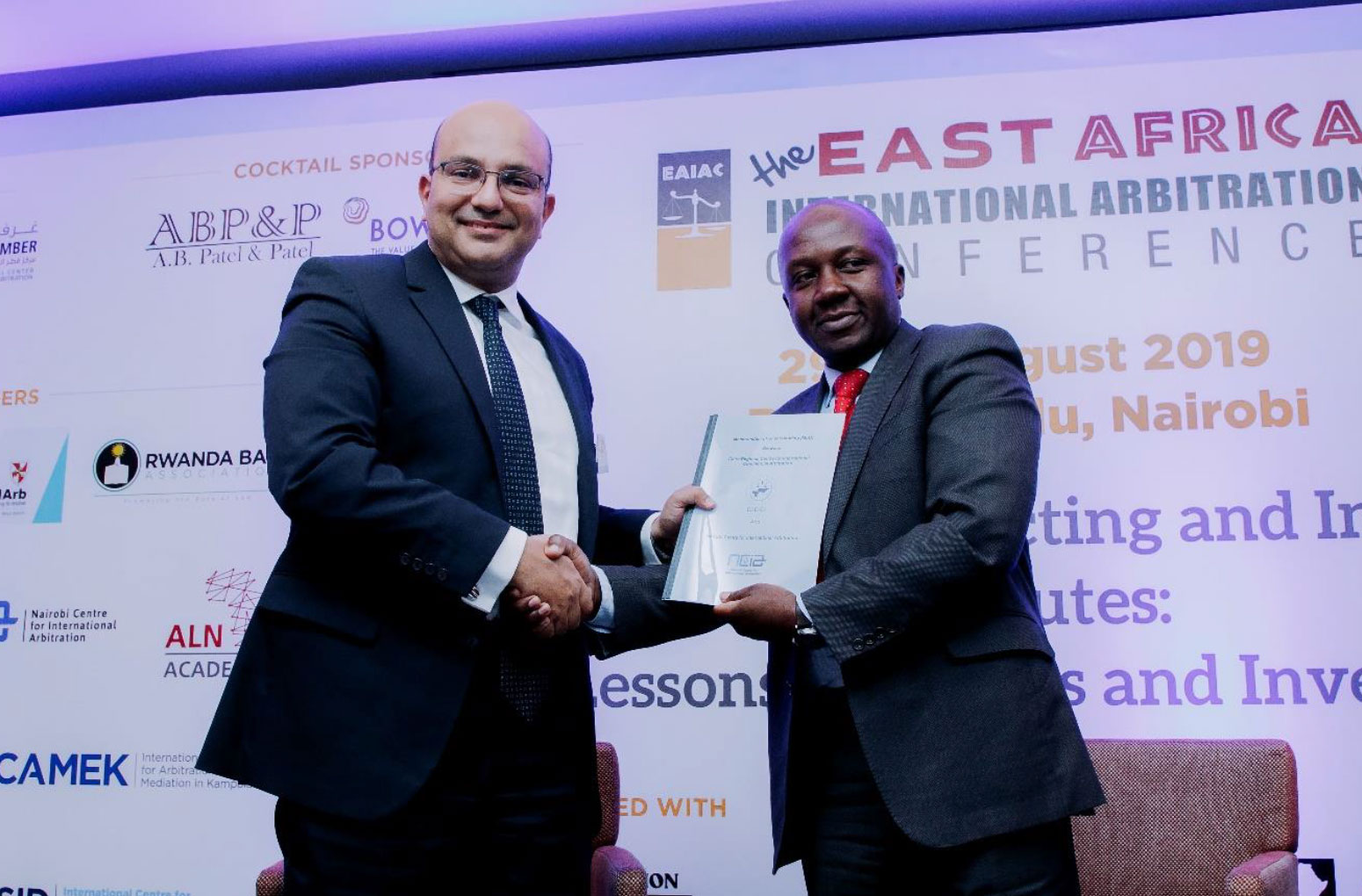
The Cairo Regional Centre for International Commercial Arbitration (CRCICA) and Nairobi Centre for International Arbitration (NCIA) penned off a Memorandum of Understanding (MOU) during the just concluded 7th East Africa International Arbitration Conference 2019 at Radisson Blu Hotel in Nairobi.
Cairo and Nairobi agreed to enter into an agreement of mutual cooperation and capacity building. It is anticipated that this MOU will provide a framework through which mutual knowledge sharing will be deepened. It is envisaged that a positive and mutually beneficial relationship will be established in the areas of seminars, conferences, information exchange, alternative hearing centers, exchange visits among other mutually beneficial activities.
It is hoped that these kind of partnerships will boost arbitration practice on the African continent.
Nairobi Center for International Arbitration
EX-HARARE MAYOR MASUNDA DRAGGED TO COURT OVER MISREPRESENTATION
EX-HARARE MAYOR MASUNDA DRAGGED TO COURT OVER MISREPRESENTATION
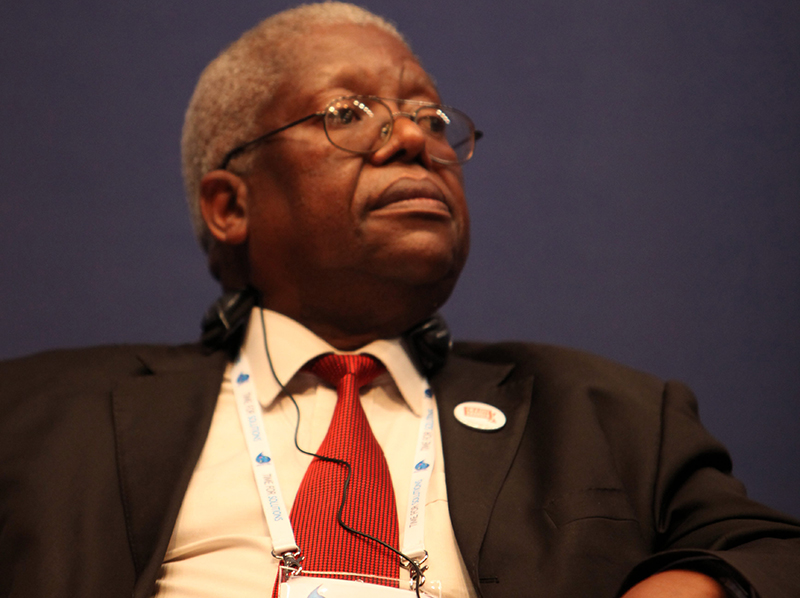
FORMER Harare Mayor, Muchadeyi Masunda has been dragged to court on allegations of handpicking his former business partner to be the arbitrator in a business dispute with another company.
ZEMQOS, which is in vehicle parking business, had a contract with Harare’s City Parking. The contract was aimed at facilitating the installation and running of vehicle parking business in Accra Ghana. Payment was supposed to be in foreign currency.
ZEMQOS was supposed to be paid US$165 000 but Masunda allegedly refused to pay the money after selecting his partner to preside over the arbitration who ruled in his favour.
According to court papers, the very fact that the system was to be installed in a foreign country meant that the project could not be implemented without the approval of Reserve Bank of Zimbabwe (RBZ) as the investment was wholly in foreign currency.
“It is this foreign currency which City Parking now refused to pay which caused the applicant to seek a resolution of the dispute. The contract was clear that any dispute would be resolved through arbitration,” said ZEMQOS.
According to court papers, it was only after the award was issued that the ZEMQOS realised the “fraud.”
“There was bias and direct breach of principles of natural justice by every other party involved in the proceedings. The award issued by the arbitrator is against public policy,” reads its affidavit filed through Zvaravashe Masvingise Legal Practitioners.
ZEMQOS said Masunda is also a former business partner of the arbitrator cited as P.C. Lloyd in the papers.
The company is also applying for review and setting aside of the arbitral award.
It also prayed that “City Parking be ordered to pay US$15 000 per month from October 2018 to August 2019, the total of which is US$165 000.
“City Parking also ordered to pay default interest at the rate of five percent per annum from October 2018 to August 2019, then the same monthly instalment and interest rates.”
Masunda is also accused of failing to disclose that he was board chairman of Harare Sunshine Holdings (Pvt) Ltd, a company ceased with managing the affairs of City Parking which was a part to the contract.
“City Parking did not disclose to the applicant that it is being run by Harare Sunshine Holdings whose board is chaired by Masunda who apparently went on to choose the arbitrator between the parties to the dispute.
“Instead of disclosing it preferred to have the matter referred to him in direct misrepresentation to the first applicant that this was a neater way of avoiding bias, when in reality it was the means by which it was facilitated,” read ZEMQOS application.
The case is pending.
Mary Taruvinga
newzimbabwe.com

NTRA, ORANGE, VODAFONE AND ETISALAT REACH DEAL TO END INTERCONNECTION DISPUTES
NTRA, ORANGE, VODAFONE AND ETISALAT REACH DEAL TO END INTERCONNECTION DISPUTES
(Ecofin Agency) – Egypt’s National Telecommunications Regulatory Authority (NTRA) and mobile operators Orange Egypt, Vodafone Egypt, and Etisalat Misr signed a settlement agreement on 9 September 2019. The agreement was inked by Mustafa Abdel Wahed (pictured), NTRA Executive Chairman, Yasser Shaker, CEO of Orange Egypt, Alexander Froman, CEO of Vodafone Egypt and Hazem Metwally, CEO of Etisalat Misr.
They want to settle the legal battles between telecom operators over interconnection tariffs that have persisted for the past ten years. The latest battle, between Vodafone Egypt and Etisalat Misr, which began in 2016 before the Cairo Regional Arbitration Centre for International Trade, ended last January with Vodafone Egypt being ordered to pay compensation of EGP750 million ($41,751,179) to the subsidiary of the Emirati telecoms group for violating the regulator’s decision, fixing the financial compensation payable by each party to the other for any service unit rendered.
According to Amr Talaat, the Egyptian Minister of Communication and Information Technology, “these disputes have had a negative impact on the stability and clarity of relations between ICT operators, thus constituting an obstacle for foreign investors when they inject new investments that can be used to improve the quality of telecommunications services provided to citizens.”
The agreement has the power to create an enabling environment for the development of the activities of local and international companies investing in the ICT sector in Egypt. Mustafa Abdel Wahed revealed that rules have been established for future works on mobile call tariffs exchanged between different networks, through a tariff agreement between companies, which should then be approved by the telecoms regulator.
ecofinagency.com

JUDGE HALTS KCM WINDING UP MATTER BUT SAYS ARBITRATION APPEAL HAS LITTLE CHANCE OF SUCCESS
JUDGE HALTS KCM WINDING UP MATTER BUT SAYS ARBITRATION APPEAL HAS LITTLE CHANCE OF SUCCESS
In a writ filed on Monday (August 19, 2019), the mother company of UniCredit, Hoda Holdings Limited is seeking “an order of interlocutory injunction restraining the respondents, their agents, assigns, privies hirelings or otherwise howsoever described, from interfering with the operations of uniCredit Ghana Limited and to refer the subject matter of the instant application to arbitration.”
uniCredit is praying the Human Rights Division of the High Court to dismiss the action of the central bank.
BANK OF GHANA REVOKES LICENCES OF SAVINGS AND LOANS
On Friday, August 16, 2019, the BoG revoked the licences of 23 insolvent savings and loans companies and finance houses including uniCredit.
According to the BoG this action was taken pursuant to Section 123 (1) of the Banks and Specialised Deposit-Taking Institutions Act, 2016 (Act 930), which requires the Bank of Ghana to revoke the licence of a Bank or Specialised Deposit-Taking Institution (SDI) where the Bank of Ghana determines that the institution is insolvent.
Meanwhile, the Bank of Ghana has also appointed Eric Nipah as the Receiver for the specified institutions in line with section 123 (2) of Act 930.
Bank of Ghana’s reasons for revoking uniCredit’s licence:
uniCredit Ghana Limited (uniCredit), formerly Kantamanto Savings and Loans Company Limited, was given an operating license in October 1995 and commenced operations on 1st November 1995.
In 2006, Hoda Group of Companies acquired the institution and subsequently, changed its name from Kantamanto Savings and Loans Limited to uniCredit Ghana Limited in March 2007.
UniCredit is currently overexposed to a related party, uniSecurities Limited, a sister company. The institution’s inability to access its funds from uniSecurities, even though overdue, has resulted in severe liquidity challenges and its inability to meet withdrawal requests of customers. uniCredit Savings & Loans Ltd. was found to be insolvent with a negative capital adequacy ratio and negative net worth following the Bank of Ghana’s assessment as of December 2018.
The Board and Management of the institution failed to inject additional capital to address the capital deficiency even though the central bank directed them to do so.
The specific issues that led to the revocation of the licence of the institution included the following:
a. The institution’s adjusted Net worth of negative GH¢221.32 million as at end May 2019 indicates that its paid-up capital is impaired in violation of Section 28(1) Act 930.
b. The institution’s adjusted capital adequacy ratio of negative 97.83% as at end May 2019 is in violation of Section 29(2) of Act 930. This is mainly due to the nonperforming related party exposures of GH¢160.10 million to uniSecurities which is far in excess of its negative net worth.
c. The Institution has been breaching the statutory cash reserve ratio requirement since April 2018.
d. The institution is unable to meet the deposit withdrawals of customers due to its severe liquidity challenges. The Bank of Ghana has been receiving many complaints from the institution’s customers about their inability to access their funds.
e. The institution has a high percentage of non-performing loans.
MAGDALENE TEIKO LARNYOH
pulse.com.gh

MARITIME ROW: KENYA WRITES TO ICJ SEEKING POSTPONEMENT OF HEARING
MARITIME ROW: KENYA WRITES TO ICJ SEEKING POSTPONEMENT OF HEARING
Kenya’s Attorney General Paul Kihara has written to the ICJ, seeking the postponement of the hearing for the maritime dispute with Somalia, citing the need to recruit a new defence team.
The hearing was scheduled to be heard from next Monday to Friday at the International Court of Justice in The Hague, Netherlands.
However, the AG said “due to exceptional circumstances”, representatives from Kenya would not be available.
It added that it was only fair that representatives from both Somalia and Kenya are present during the hearing.
“The Rules of the Court allow for postponement of the hearing of the case to afford the parties an opportunity to be represented,” the AG said.
Two weeks ago, Somalia rejected the Commission of the African Union invitation to a briefing on the row.
It instead expressed confidence in the ICJ’s ability to deliver a fair ruling.
Kenya has been pushing to have the row solved through political negotiations rather than through the court.
Kenya wants the maritime border to run along parallel latitude southeast of Kiunga, while Somalia wants a diagonal line down the Kenyan Coast. This threatens to make Kenya a landlocked country, and risks losing 42 per cent of its territory.
the-star.co.ke
RELEASE OF SEIZED AIR TANZANIA A220 ORDERED BY SOUTH AFRICAN COURT
RELEASE OF SEIZED AIR TANZANIA A220 ORDERED BY SOUTH AFRICAN COURT
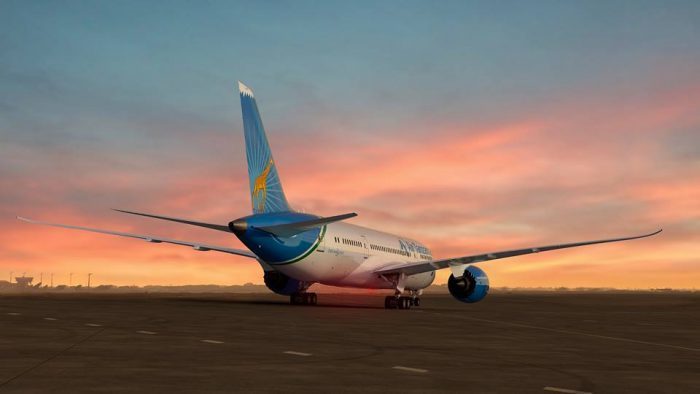
The Air Tanzania Airbus A220-300 that was impounded in South Africa on August 23rd has now been ordered to be released by the Gauteng Lower Division Court in Johannesburg.
The Air Tanzania A220 was seized in Johannesburg on August 23rd and released September 4th. Photo: Air Tanzania The aircraft registration number 5H-TCH was on a scheduled flight to Johannesburg OR Tambo International Airport when it was seized. Before the Air Tanzania, Airbus A220 was able to leave on the return leg to Dar es Salaam, the aircraft was denied permission to take off after a South African court ordered it seized.
WHY DID SOUTH AFRICA SEIZE THE PLANE?
It turns out that the seizure of the plane was to do with a debt owed by the Tanzanian government.
Air Tanzania will hope to get their Airbus A220 back into service as soon as possible following the court ruling.
According to The East African, the seizure of the Air Tanzania jet was carried out after Hermanus Steyn, a Namibian born farmer, claimed he was owed millions by the Tanzanian Government.
During the 1980s Tanzania nationalized a privately owned seed and bean farm owned by Steyn and took everything, including 12 small aircraft and 250 vehicles.
In the 1990s Steyn won a lawsuit against the Tanzanian government and was awarded $33 million in compensation. Despite the court ruling, the government only paid him $20 million, $13 million short of what they were supposed to pay.
After having accrued interest over the decades, this unpaid balance now stands at $33 million, according to Steyn’s lawyer Roger Wakefield of Werksmans Attorneys.
Steyn has been fighting for years to get the money he is owed Wakefield, who specializes in cross border disputes, claims that his client was declared a prohibited immigrant in Tanzania and is now forced to live in another East African country.
STEYN MUST NOW PAY ALL COURT COSTS AFTER LOSING HIS CASE AGAINST THE TANZANIAN GOVERNMENT.
“Literally after decades of broken promises, promises to pay, acknowledging the indebtedness, the plaintiff was left with no option, he came to me,” Wakefield told France 24. “The only way that the aircraft can now be released is if they pay the debt or if they put up security for the claim.”
WHY DID THE COURT THROW OUT STEYN’S CLAIM?
In his ruling on the matter of the seized Air Tanzania A220, Judge Tawala said the following according to The Citizen:
“I am of the considered view that the arbitration award ceased to exist on May 3rd, 2011 after it was made a court order. I hold the view that when the parties concluded the deed of settlement, the compromise it was in relation to the court order of May 3, 2011, and there was no arbitration award in existence at the time.”
Judge Twala also let the court know that he agreed with Judge Phillip J’s ruling of 2018 that said that when a deed of settlement is agreed upon, any claims prior to that are abandoned.
“I am therefore satisfied that this court does not have jurisdiction to attach the property of the client to confirm or found jurisdiction based on a court order of a foreign court.”
He also confirmed that he was in agreement with the Government of Tanzania and that Mr. Steyn would be required to pay the costs associated with his lawsuit.
The Tanzanian defense team had argued that a South African court did not have the jurisdiction to rule on a case that had already been before the courts in Tanzania.
“The order can only be executed on the Tanzania soil as confirmed by Judge B.K.Phillip of the Tanzania Commercial Courts because there is already a court order in Tanzania,” said Mr. Victor Nkhwashu who was representing the Tanzanian government.
Mark Finlay
simpleflying.com
CHAMBER OF COMMERCE, GAMEY CONSULT TO RESOLVE BUSINESS CONFLICTS WITH ADR
CHAMBER OF COMMERCE, GAMEY CONSULT TO RESOLVE BUSINESS CONFLICTS WITH ADR
The Ghana National Chamber of Commerce and Industries (GNCCI) has signed an agreement with Gamey Consult, a local consulting firm, to resolve disputes among business entities with an Alternative Dispute Resolution (ADR) system.
The Alternative Dispute Resolution system was introduced to resolve business disputes in a more cost effective manner, within the shortest possible time and help to maintain the cordial business relationships after settlement of the disputes.
Nana Appiagyei Dankawoso I, President of the GNCCI, who signed the agreement on behalf of the Chamber, explained that ADR was a form of resolving disputes without resorting to the law court.
It included methods such as arbitration, negotiation and mediation, which complemented the traditional justice system.
He said it had always been the desire of the Chamber and the entire business community to get an alternative to the rigorous, acrimonious and resource consuming traditional court system that resolves business and commercial disputes.
Business disputes, he noted, would always be with people as they remained in business, adding that, the opportunities the ADR system was offering, is what every business person should be looking for.
“In our attempt to achieve the above objective, the Chamber is partnering with the leading ADR Centre in Ghana, Gamey & Co. ADR Centre, to kick-start the project; there is no need to reinvent the wheel. ADR Centre is a key component of several Chambers of Commerce around the world,” he said.
Mr Austin Akufo Gamey, the Chairman of Gamey and Co. ADR Centre, said he was delighted that his firm was given the opportunity to offer members of the Chamber an opportunity to resolve disputes, that might rise from their business dealings.
He said since the three main activities undertaken by any Chamber of Commerce is about rule setting, dispute resolution and policy advocacy, the GNCCI had taken a good step to partner Gamey and Co. ADR to help them realize that vision.
“We have a diverse crop of professionals with rich experience on the roster of mediators and arbitrators, who are ready to serve diligently in the execution of tasks ahead,” he said.
Mr Gamey said the collaboration would help the business community to resolve disputes locally without stress and the additional cost involved in taking cases abroad.
He gave the Chamber an assurance that his firm would become the preferred seat of Mediation and Arbitration by the business community to help create jobs in the country.
The Chairman disclosed that his firm would accredit over 40 ADR practitioners for a start, in addition to the numbers they had already enlisted.
“Together with the Chamber, we will embark on an orientation programme for members of the Chamber, on the rules and procedures of the Centre,” he said.
Justice Francis Emile Short, former Commissioner of the Commission on Human Rights and Administrative Justice, said the ADR system was an effective way of settling cases, adding that, law courts even allowed such mediations at certain times.
“It seeks to achieve a ‘win-win’ situation. I would, therefore, encourage all business persons to consider referring their disputes and cases to the ADR centre for them to be resolved amicably,” he added.
GNA