
STEINMETZ FAILS TO OVERTURN $1.25BN ARBITRATION AWARD
STEINMETZ FAILS TO OVERTURN $1.25BN ARBITRATION AWARD
BSG Resources, the mining group owned by the family of Israeli diamond trader Beny Steinmetz, has failed in its attempt to overturn an arbitration award on the grounds of apparent bias.
Earlier this year the company was ordered to pay Brazilian iron producer Vale $1.25bn — or $2bn including interest and costs — by a London arbitration court after it was found to have made fraudulent misrepresentations about a 2010 joint venture in Guinea.
The London Court of International Arbitration (LCIA) found BSGR had made a “litany” of false statements and had bribed Mamadie Touré, the wife of Guinea’s then-dictator Lansana Conté, to win the rights to develop half of a giant iron ore deposit called Simandou.
BSGR went to the High Court this week attempting to overturn the award, arguing that the tribunal panel had been biased.
It claimed the LCIA has failed to reopen proceedings so as to admit fresh evidence from a separate investor-state arbitration (ICSID) between BSGR and the Republic of Guinea.
It told the High Court that the LCIA tribunal failed to admit transcripts and evidence from the parallel ICSID hearings on the same bribery issue. It argued that the new evidence on bribery from the ICSID hearings was “exculpatory” for BSGR.
This included 2,000 pages of transcripts of the ICSID hearings where six Guinean government officials (including the four ministers of mines) had been cross examined on the allegations of bribery of Mamadie Touré and others.
Delivering his verdict on Friday, High Court judge Sir Michael Burton found in favour of Vale. “I’m satisfied there was no apparent bias or procedural irregularity,” he said. “In any event no substantial injustice has been done.”
He said that it was BSGR’s choice not to attend the LCIA hearings to cross examine the three Guinean witnesses.
In a statement Nysco, the sole shareholder of BSGR said: “The High Court decision is particularly disappointing in view that BSG Resources has already been cleared of any wrongdoing by the Government of Guinea. We rigorously maintain that the LCIA procedure was biased against BSG Resources, an issue which was ultimately underlined by the findings of the ICSID process, and we will continue to pursue justice on this matter for as long as it takes.”
Vale said in a statement: “Vale intends to continue with its actions to enforce the award against BSGR.”
Friday’s ruling is the latest twist in a saga that dates back to the 1990s when Rio Tinto, the Anglo-Australian miner, won the rights to develop Simandou during Mr Conté’s dictatorship.
But in 2008 the regime stripped Rio of half those rights, saying it had missed a deadline to start mining. It handed them to BSGR, which subsequently entered into a joint venture with Vale.
Under that deal, the Brazilian miner paid $2.5bn for a 51 per cent stake in BSGR’s Guinea assets.
Mr Conté’s successor, Alpha Condé, later launched an inquiry into how BSGR came to obtain the rights, which concluded in 2014 that they had been won through bribery and cancelled its claim on Simandou. Vale filed its arbitration against BSGR shortly after that decision.
BSGR was placed into administration in Guernsey last year, which protected the company against the arbitration award. In February, the company reached a surprise settlement with Guinea over separate arbitration related to the Simandou investigation.
Mr Steinmetz, meanwhile, was indicted in Switzerland earlier this year over paying alleged bribes in Guinea. He has denied the allegations.

amp-ft-com


MITSUBISHI HEAVY AND HITACHI TO SETTLE DISPUTE OVER SOUTH AFRICA PROJECT
MITSUBISHI HEAVY AND HITACHI TO SETTLE DISPUTE OVER SOUTH AFRICA PROJECT
Mitsubishi Heavy Industries Ltd. and Hitachi Ltd. are expected to settle their dispute over losses related to a thermal power generation project in South Africa, sources have said.
Mitsubishi Heavy initially demanded some ¥770 billion in payments from Hitachi, but the two sides are now in talks over reducing the amount to ¥500 billion, the sources said.
In 2014, the two companies merged their thermal power generation businesses and set up Mitsubishi Hitachi Power Systems Ltd., a joint venture owned 65 percent by Mitsubishi Heavy and the remainder by Hitachi.
In July 2017, Mitsubishi Heavy filed for arbitration with the Japan Commercial Arbitration Association, demanding payment from Hitachi to cover losses from the South African project, for which Hitachi signed a contract before the merger.
The proposed settlement includes a handover of a certain stake in the joint venture from Hitachi to Mitsubishi Heavy, the sources said.
AUSTRALIA'S FAR LTD EXPECTS OUTCOME OVER SENEGAL OIL FIELD DISPUTE EARLY NEXT YEAR
AUSTRALIA'S FAR LTD EXPECTS OUTCOME OVER SENEGAL OIL FIELD DISPUTE EARLY NEXT YEAR
Australia’s oil minnow Far Ltd FAR.AX on Monday said it does not expect to receive the final outcome of a long-running dispute regarding an oil field off Senegal until January or February next year.
The ruling regarding the arbitration was due by Dec. 28.
Far said in a statement that the International Court Of Arbitration had received the draft award over the issue from the tribunal.
JUICE FIRM KEVIAN WINS REPRIEVE IN BRAND LEGAL BATTLE
JUICE FIRM KEVIAN WINS REPRIEVE IN BRAND LEGAL BATTLE
The courts have allowed Juice manufacturer Kevian Kenya Limited (KKL) to proceed with plans to register the Squishy trademark even as it faces opposition from its former partner in the brand targeting children.
Kevian and Squishy Drinks Limited (SDL) are now expected to try to resolve their dispute through arbitration.
In October 2018, the firms entered into a shareholder agreement for the creation of the new entity to be known as Squishy Distribution Limited, which would exclusively distribute the juice.
But they later fell out and Squishy Distribution sought to stop Kevian from proceeding with the registration plans.
After hearing the parties, Justice Mary Kasango said the Squishy Distribution Limited has not shown a case with probability of success.
In her view, having transferred the assets, even if it purported to terminate the agreement, she was unable to find that the firm had the right to claim it still owned those assets, which include the trademark.
Justice Kasango granted the injunction orders as sought by Kevian, which will only be for a limited period, to enable parties begin arbitration process.
“There is also evidence, not contradicted by SDL, that Kevian will suffer loss, in view of the investment it has undertaken, if the injunction it seeks is not granted,” the judge said.
“It is because I make that finding that I hold KKL is entitled to the prayer for injunction.”
SAM KIPLAGAT
KENYA PAYS FINAL SH2.5BN FOR GHOST FERTILISER PLANT
KENYA PAYS FINAL SH2.5BN FOR GHOST FERTILISER PLANT
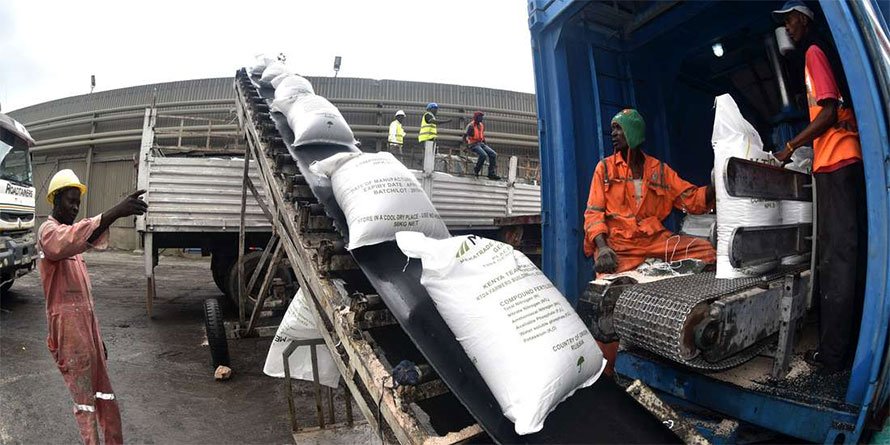
Kenyan taxpayers coughed up Sh2.48 billion to pay a Belgian bank for a botched agreement for a fertiliser plant started in the late 1970s, a State audit report shows. In the end, the plant was never built, meaning that the money went down the drain.
A report from a parliamentary watchdog indicates that the latest payment pushed the total amount of money lost over the botched Ken-Ren Chemical and Fertiliser plant to Sh6.33 billion. Kenya had earlier paid Sh3.9 billion to the governments of Australia and Belgium because it had guaranteed the construction of the failed fertilizer plant at Changamwe, Mombasa.
“The Government of Kenya has paid a payment of Euro 21.2 million (Sh2.48 billion) towards settlement of government guaranteed debts incurred in 1970 on account of Ken-Ren Chemical and Fertiliser Company,” the Public Accounts Committee (PAC) says in its latest report on government finances.
Julius Muia, the Principal Secretary at the National Treasury, told PAC that the obligation arose from a case filed at the Court of Arbitration of the International Chamber of Commerce by the Belgian bank known as Ducroire. The court found the government of Kenya liable as a guarantor and ordered it to pay Euro 21.2 million to Ducroire.
The government had entered into an agreement with a now collapsed American firm, N-Ren, to guarantee the construction of a fertiliser plant back in 1970 at a cost of Sh350 million at an interest of 8.5 percent. The debt has since risen to breach the Sh6 billion mark.
Ken-Ren was a joint ownership between Kenya and N-Ren Corporation in which the two entered into several financing and equipment procurement contracts with various Australian and Belgian banks and suppliers. The government was the guarantor.
Dr. Muia told PAC that Kenya had cleared the debts and compensation associated with failed fertilizer plant.
The Treasury argues that Kenya paid the billions of shillings to avoid a negative credit rating that could injure its reputation and lock it out of international debt markets.
“Even though the full amount of the debt is now settled, the committee is deeply concerned that government spent such colossal sums of money on a project which did not take off and against which no value for money was achieved,” Opiyo Wandayi, who chairs PAC, said in the audit report.
The debt obligation arose from the agreement that Kenya signed with the collapsed N-Ren to guarantee the construction of a fertiliser plant at a cost of $42.8 million (Sh4.28 billion). Under the deal, the government and N-Ren Ltd entered a joint venture to form a company registered as Ken-Ren Chemical and Fertilisers Company Limited, which was to manufacture fertiliser for domestic consumption and export markets.
On the advice of N-Ren, Ken-Ren then entered into several financing and equipment procurement contracts with two Australian and Belgium banks and suppliers, with Kenya as the guarantor. The suppliers of equipment and machinery were Coppee-Lavalin of Belgium and Voest Alpine of Australia. However, the fertiliser factory project failed to take off and Ken-Ren was subsequently placed under receivership in September 1978, with the Registrar-General appointed as the official receiver and provisional liquidator.
Kenya still harbours ambitions of building a fertiliser plant to help cut import costs and reduce subsidies needed to make manure affordable for poor farmers. Farming accounts for a third of Kenya’s annual economic output, but the high cost of fertilizer means farmers rely on subsidies or avoid using them, which hurts output. The government spent about Sh5 billion annually to subsidise fertiliser.
Kenya is seeking to develop oil reserves found in recent years, and produce hydrocarbons. Ammonia for fertilisers can be produced from hydrocarbon feedstocks such as natural gas and oil.
Payment of the billions of shillings for the non-existent fertilizer plant comes in a period when the government in struggling to balance its budget, prompting austerity measures. The review of the budget comes at a period when the Kenya Revenue Authority (KRA) has missed tax targets in a business environment plagued by job cuts and reduced corporate profits.
Kenya experienced tax shortfalls of Sh60.2 billion in the three months to September and internal revenues from fines, payments for passports and marriage fees were below target by Sh24.4 billion.
EDWIN MUTAI
STANCHART EX-WORKERS’ SH14.9 BILLION CLAIM IN LIMBO
STANCHART EX-WORKERS’ SH14.9 BILLION CLAIM IN LIMBO
Pensioners claiming a total of Sh14.9 billion from Standard Chartered Bank of Kenya have hit a brick wall after an arbitration process stalled.
The Employment and Labour Relations Court had referred the matter to the Retirement Benefits Authority (RBA) for arbitration in October 2018 but nothing has been filed to date.
Judge Onesmus Makau had ordered that the matter be heard expeditiously by the authority to exhaust all avenues for recourse before being taken to court.
The RBA said the file never hit their desks as the parties involved drag their feet.
“The matter was never brought to the attention of RBA,” said the regulator’s communications team.
Some 629 retired employees of the bank moved to court last year demanding Sh14.9 billion arising from the conversion of their pension funds. The workers alleged the bank used the wrong procedure in calculating their terminal dues, which resulted in reduced pensions.
They said an actuarial calculation was done on the lump sum equivalent of their net accrued annual pension in their respective dates of leaving employment and found out that the bank had reduced the amount as a result of fraudulent misrepresentation, concealment and non-disclosure of material facts.
StanChart had been sued jointly with 11 others named as trustees of the Standard Chartered Kenya pension fund (first scheme) and Standard Chartered Kenya Staff Benefits Scheme 2006 (second Scheme).
StanChart said it created a new defined scheme in 1999 as a section of the Trust Fund established in 1975, which absorbed all existing employees leaving those who had already retired with the old terms and conditions. In 2006, the lender separated the schemes with the agreement of all the eligible employees.
OTIATO GUGUYU

ETHIOPIA TO SIGN ON TO THE NEW YORK CONVENTION?
ETHIOPIA TO SIGN ON TO THE NEW YORK CONVENTION?
The United Nations on the Enforcement of Foreign Arbitral awards of 1958, more commonly referred to as the New York Convention has over 160 signatories. The instrument is one that has garnered a large support from countries as it sets a basis for the enforcement of foreign arbitral awards in member countries, creating a predictable environment in the international arbitration domain.
Ethiopia is not among the signatory countries. However it looks like things are changing. According to the Office of the Prime Minister of Ethiopia, in its 77th regular cabinet members meeting, the cabinet has made the decision to sign the New York Convention. According to the Cabinet, the reasoning behind this decision is that signing this convention will increase investor confidence in Ethiopia as well as bettering the contract enforcement regime of the country. The Cabinet has agreed on the signing of the convention and forwarding it to the House of People’s representative for its ratification.
It is therefore expected that Ethiopia will soon become a New York Convention signatory. The country is also gearing to modernize its Arbitration Act.
I-Arb Africa

WPCA WIN ARBITRATION BATTLE WITH CSA, RAISING QUESTIONS ABOUT CONTROLLING BODY’S COMPETENCE
WPCA WIN ARBITRATION BATTLE WITH CSA, RAISING QUESTIONS ABOUT CONTROLLING BODY’S COMPETENCE
The Western Province Cricket Association (WPCA) were placed under administration by the bumbling Cricket South Africa (CSA) because of what it deemed to be questionable administrative, governance and financial affairs surrounding a R750-million redevelopment of Newlands Cricket Stadium.
The WPCA formed a new company called WP Property Holdings (Prop Co) to manage the redevelopment of the stadium. The WPCA hold a 76% stake in Prop Co with CSA holding the other 24%.
In its documentation, CSA’s reasoning for invoking its “step-in” rights, under clauses 12.3 and 12.4 of the Memorandum of Incorporation (MOI), which all affiliate unions are bound, was that the WPCA was operating under: “distressed conditions, which was contrary to the membership requirements placed on all members of CSA.”
CSA based this position on:
“Several requests by WPCA (directly or indirectly by its subsidiary) for loans to fund the development that was and remains the genesis of CSA’s concerns about governance and financial affairs of WPCA”.
Standard Bank and Sanlam had committed to funding the redevelopment subject to a lease agreement between the WPCA and Cape Peninsula University of Technology (“CPUT”) who would become tenants. This information was readily available to CSA.
There were some delays in the signing of the lease between the WPCA and CPUT, which is why CSA was asked to provide the bridging finance. These facts were known to CSA.
The lease with CPUT was signed on September 16 this year, but CSA invoked its “step-in” clause on September 21, which was curious.
The Newlands development is intended to unlock significant financial value for WPCA. It consists of various phases with educational and commercial rights to be developed within a sporting precinct.
The precinct will include office space, educational space, conferencing facilities, a cricket museum and retail space, all of which are intended to generate significant income. There will also be upgrades of current cricket infrastructure including nets (outdoor and indoor) and new change room facilities.
If CSA had undertaken due diligence it would have come to the same conclusion that Advocate Phillip Ginsburg reached in his arbitration findings. CSA did not meet the requirements laid out in clauses 12.3 and 12.4 of its own MOI allowing it to put the WPCA under administration.
“CSA cannot invoke its step-in rights in terms of clause 12.3 by attributing the financial and administrative distress of Prop Co to WPCA,” Ginsburg wrote in his judgement.
“For CSA to invoke the provision of clause 12.3 of the MOI, it would have to inquire into the administration and/or financial affairs of WPCA.
“After doing so, CSA would have to recommend corrective measures regarding the administration and/or financial affairs of WPCA and if the corrective measures recommended by CSA are not implemented, then CSA (through a resolution of its board) would be entitled, on written notice to WPCA, to take over the administration and/or financial affairs of WPCA until these are placed on a satisfactory footing.”
CSA only met the first requirement of the clause – inquiring about the financial and administrative affairs of the WPCA. It didn’t recommend corrective measures and therefore those couldn’t be implemented by the WPCA.
The WPCA naturally disputed CSAs decision and the damning outcome of the arbitration has instead put the spotlight on CSA’s own incompetent governance and raised serious questions about CEO Thabang Moroe’s judgment and the quality of CSA’s board.
The WPCA did not hold back in a statement following their arbitration victory.
“The award confirms that the decision taken by Cricket South Africa to suspend the Board of WPCA in September this year was invalid, unlawful and therefore set aside,” the statement read.
“The WPCA Board has noted Cricket South Africa’s decision not to contest the Arbitration Award in their statement issued this morning.
“The WPCA has been vindicated and affirmed by the arbitration ruling.
The unlawful suspension of the WPCA Board has come at a great cost to the individual board members, all of whom have extensive corporate governance experience and a proven track record in contributing to Western Province cricket.
“The Board remains committed to protecting the interests of its members, clubs and the faithful supporters of Western Province cricket.
“The Board is of the view that the unlawful suspension by Cricket South Africa, which included the physical banning of Board members from Newlands Cricket Grounds, has been an example of serious over-reach by the national body into the affairs of the association and if allowed to go uncontested, would have set a bad precedent for governance in sports.”
In a statement, CSA noted the outcome and wished the WPCA well. It was a bizarre response to a chastening day.
PRESS RELEASE: ARBITRATION SETTLEMENT BY GLOBACOM GHANA
PRESS RELEASE: ARBITRATION SETTLEMENT BY GLOBACOM GHANA
The Ghana Football Association (GFA) wishes to announce for the information of its members and all stakeholders that, an amount of $900,000 US Dollars, being arbitration settlement by Globacom Ghana has been bequeathed to it by the former Normalisation Committee of the GFA.
The $900,000 US Dollars was paid into the GFA’s account on Wednesday November 27, 2019.
As explained by the Normalisation Committee to the new administration of the GFA, Globacom Ghana paid an amount of $1,000,000 (one million) US Dollars to the Normalisation Committee as arbitration settlement for the unilateral abrogation of a sponsorship contract between the GFA and Globacom Ghana.
The Normalisation Committee explained further that 10% of the total payment of $1m US Dollars, being $100,000 US Dollars, was paid as legal charges to the Lawyer the Normalisation Committee contracted to pursue payment from Globacom Ghana.
GFA Structure

UCC RUNS AMOK, IGNORES ARBITRATION PROCESS AND BREAKS INTO ‘CONTROVERSIAL’ SCHOOL OF BUSINESS BLOCK
UCC RUNS AMOK, IGNORES ARBITRATION PROCESS AND BREAKS INTO ‘CONTROVERSIAL’ SCHOOL OF BUSINESS BLOCK
The Group Managing Director of two construction firms – TACOA Construction Limited and Barony Company Limited – Mr Henry Tackie, has told The Chronicle that the lawyer (Charles William Zwennes) of the firms is going to take on the University of Cape Coast (UCC) for disregarding an arbitration process.
According to the Group Managing Director, the management of the UCC had allegedly broken into a new School of Business block, which is a subject of litigation that had been referred to the Chief Justice for direction.
According to information available to The Chronicle, the contractors refused to hand over the keys of the School of Business and a three-storey multi-purpose building for the College of Distance Education (CODE) block to the university authorities for non-payment.
As a result, the university dragged the construction firms – TACOA Construction Limited and Barony Company Limited – to a Cape Coast High Court to compel them (contractors) to release the keys to the building executed by the firms to the university.
However, the High Court, on Wednesday, October 30, 2019, presided over by Her Ladyship Patience Mills-Tetteh, dismissed a motion to put a mandatory injunction on the firms.
In addition, it ruled that the case be referred to Her Ladyship the Chief Justice for transfer to Accra.
“The order granted on June 19, 2019, hereby vacated. Motion to notice to transfer this suit to Accra hereby granted. Registrar to refer the suit to Her Ladyship the Chief Justice for transfer to Accra,” the court, in its ruling on Suit No RPC/01/2019, stated.
Barely few days after the decision of the High Court, the management of the university allegedly broke into the building and started preparations to use it, pending the transfer of the case by the Chief Justice for determination.
The alleged action of the management of the university has left many tongues wagging at the school, wondering what could possibly be the reason the building should be broken into without waiting for the final determination of the case.
According to information The Chronicle gathered, the construction firms locked horns with the university when a powerful body at the UCC recently terminated two contracts awarded them.
Consequently, the construction firms petitioned the Education Minister, Dr Matthew Opoku Prempeh, to investigate what they described as gross illegality.
Following the petition, The Chronicle learnt that Dr Matthew Opoku Prempeh directed the National Council of Tertiary Education (NCTE) to investigate the alleged illegal termination of the contracts awarded to the two construction firms by the UCC.
A letter, signed by Ms Wilhelmina Asamoah, Director of General Administration to the NCTE, said such serious allegations should be immediately investigated.
The Ministry, in its letter, indicated that the Vice-Chancellor of the UCC, Professor Joseph Ghartey Ampiah, had issued a note to TACOA Construction Limited to terminate all projects, on the basis of alleged submission of a fake contract for signature.
Based on this, the Ministry asked the NCTE to set up a panel to investigate the allegation and report on the petition within a month.
The Chronicle learnt that between 2014 and 2015, the UCC awarded four contracts to TACOA Construction Limited and Barony Company Limited, which included the construction of a three-story multi-purpose building for the College of Distance Education (CODE), University of Cape Coast, construction of Regional Study Centre for the College of Continuing Education at Zuarungu in the Upper East Region, construction of office block for the School of Business of the University at Cape Coast, and construction of a three-storey Regional Study Centre at Jumapo in the Eastern Region.
Though some of the buildings had been completed and already put to use, the management of the UCC allegedly had issues with the construction firms for alleged inflated contracts sums.
But, the argument by the UCC, the Group Managing Director of the two construction firms said, was false.
He explained to The Chronicle that the scope of the contracts continuously changed due to variation, additions and alterations made by the project supervisors, in effect, making it difficult for the smooth progress of the contracts.
“The instructions and variation orders issued for these changes were made after a considerable project period had been expended. This significantly affected the scheduled completion, cost, and cash flow to the project.
More grievously was when an import order had been made for some offshore materials for the project,” the Group Managing Director, Mr Tackie said.
He further told The Chronicle that the construction firms, seeking a peaceful resolution to the numerous issues confronting the projects, petitioned the President of the Ghana Institution of Surveyors, who is the agreed arbiter, for the amicable solution of these numerous challenges, however, the UCC brazenly ignored the arbitration process, including the determination of the case which the Cape Coast High Court had said should be referred to the Chief Justice in Accra.
When The Chronicle reached Felix Adu-Poku, Director of Communication for the UCC, on the telephone on the issue, he said: “I am not on top of this matter and so I am unable to say anything.”