Algeria - Profile
Arbitration in Algeria is codified in Articles 1006 to 1061 of the Algerian Code of Civil and Administrative Procedure (the “CCAP”). The latest amendment took place on 25 February 2008, through Act No 08-09, and entered in force one year later, on 25 February 2009. https://www.hg.org/legal-articles/the-new-algerian-legislation-on-international-arbitration-6946
Apr 17, 1995 (s) Feb 21, 1996(r) Mar 22, 1996(ef)
AMU, AfCFTA (Signed)
(1) Algerian Chamber of Commerce & Industry, Algiers
Web: http://www.ccis-agadir.com/pages/c_arbitrage.php
(2) Annaba Mediation & Arbitration Centre, Annaba
In Force:
Argentina, Austria, Bahrain, BLEU, Bulgaria, China, Denmark, Egypt, Ethiopia, Finland, France, Germany, Greece, Iran, Italy, Jordan, Republic of Korea, Kuwait, Malaysia, Mali, Mozambique, Netherlands, Oman, Portugal, Romania, Serbia, Spain, Sweden, Switzerland, United Arab Emirates.
Not In Force:
Cuba, Czech Republic, Cuba, Indonesia, Libya, Mauritania, Niger, Nigeria, Qatar, Russian Federation, South Africa, Sudan, Syrian Arab Republic, Tajikistan, Tunisia, Turkey, Ukraine, Vietnam, Yemen.

Ethiopia, Turkish contractor in UK arbitration over half a billion USD claim
Ethiopia, Turkish contractor in UK arbitration over half a billion USD claim
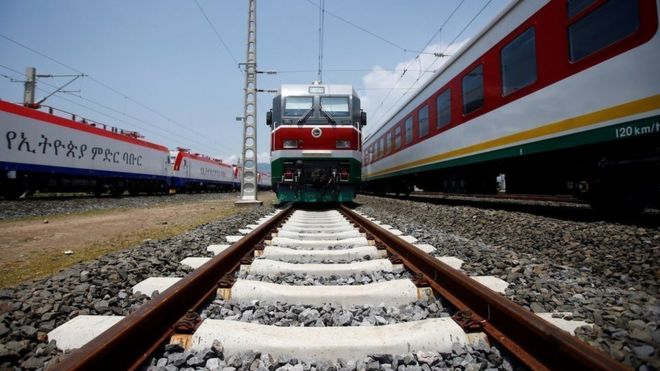
The Ethiopian Railway Corporation (ERC) and Yapi Merkezi are in arbitration in the UK over compensation claims. The Turkish contractor, Yapi Merkezi, is seeking over half a billion dollars for damages incurred during the conflict in northern Ethiopia, sources say.
Yapi Merkezi won the contract to build the Awash-Woldia/Hara Gebeya Railway in 2015 for $1.7 billion. The railway was meant to link northern Ethiopia’s import-export corridors with the central and eastern parts of the country by connecting to the Ethio-Djibouti trade route. It was one of Ethiopia’s five national railway projects at the time.
However, the project ground to a halt following the two-year conflict that ravaged Tigray, Amhara and Afar regions through which the railway passes. Construction of infrastructure was complete and installation of electric lines was underway when the war broke out in November 2020.
After the war ended in November 2022, the project has yet to resume.
Yapi Merkezi has requested compensation for damages and costs incurred due to project delays, stating that properties were looted and damaged during the conflict, sources familiar with the matter say.
– Advertisement –
Abebech Diriba, communications head of ERC, says Ethiopia is well represented by capable lawyers. “We started negotiations. A technical team from both ERC and Yapi was established. After deciding it would cost Ethiopia hugely, we shifted to negotiations.”
High-profile lawyers are representing Ethiopia in the case, according to her. “We decided to resolve the issue smoothly. If the case goes to international court, it will affect Ethiopia. We are trying to resolve the case through negotiation, not court. Our legal department is working with the contractor,” she said.
Another ERC official said “We are arguing with the contractor. We are also trying to solve the issue through negotiations instead of court. So we are pursuing both court and negotiations. Both have their own processes.”
After the contractor decided to take the case to court, ERC convinced them to resolve it through arbitration instead. The arbitration process started six months ago in the UK but has been delayed as Ethiopian officials have repeatedly requested rescheduling, sources said.
“There has been negotiation several times but Ethiopia lacks an authoritative person to make the final decision,” an official told The Reporter anonymously.
“The Ministry of Finance was also involved in the negotiations. So finally Yapi took the case to arbitration court, claiming over half a billion dollars in compensation for damage during the war,” the source added.
The case shifted from court to arbitration, involving around USD 150 million, according to the source.
However, Abebech denied the compensation figures. “The contractor presented claims on certain items. But your information regarding a half billion dollar claim is incorrect,” she told The Reporter. “The compensation Yapi asked for is not half a billion dollars. We cannot disclose details now. Both we and the contractor agreed to keep the case confidential until it’s finalized.”
The Reporter’s efforts to include comments from Yapi Merkezi were unsuccessful.

Zimbabwe Fights Land Reform Ruling
Zimbabwe Fights Land Reform Ruling
Zimbabwe has urged a Washington, D.C., federal judge to deny a German and Swiss family’s bid to enforce a multimillion-dollar arbitration award that stems from the country’s controversial land reform program, reports Law360.
After gaining independence in 1980, Zimbabwean officials looked to give land owned by white farmers back to the country’s indigenous communities.
When the white farmers refused to sell their land, Zimbabwe enacted legislation in 1992 that enabled it to seize control of properties in exchange for “fair compensation.” Frustrated with the slow progress of the land reform program, officials in 2000 unsuccessfully attempted to pass legislation that would allow them to seize land without compensation.
Ultimately, Zimbabwe enacted a “fast track” version of the program that required the government only to compensate landowners for “improvements” made to agricultural properties rather than for the land itself.
Before the reform program was enacted, the von Pezold family owned three estates in Zimbabwe comprising tens of thousands of acres, including the country’s largest tobacco growing and curing operation.
The family initiated arbitration in 2010 under the Convention on the Settlement of Investment Disputes Between States and Nationals of Other States, also known as the ICSID Convention, claiming Zimbabwe’s reform program violated two treaties the country had signed with Germany and Switzerland.
In 2015, a ICSID tribunal issued the $277 million award in the family’s favor, finding that Zimbabwe had expropriated the von Pezolds’ property and breached international law through its land reform program.
After Zimbabwe’s failed to pay the reward, the family filed the current D.C. federal court enforcement action in July 2021.
Zimbabwe accuses the family of trying to increase its litigation burden and costs by filing a premature judgment motion.

tobaccoreporter.com
Faculty of Law experts appointed to represent Kenya at the Permanent Court of Arbitration
Faculty of Law experts appointed to represent Kenya at the Permanent Court of Arbitration
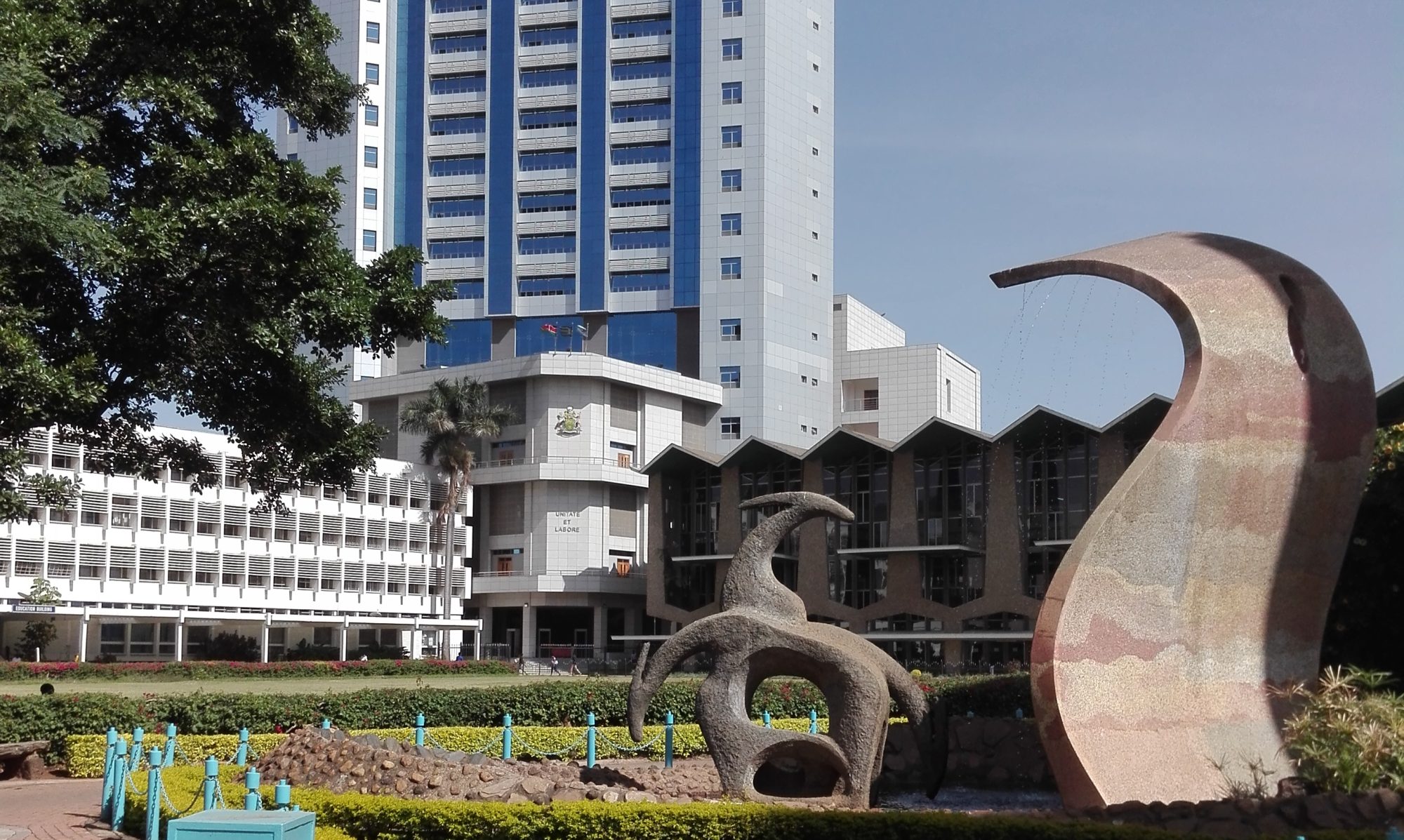
Faculty Members, Prof Githu Muigai, Dr. Kariuki Muigua and Dr. Wayne Mutuma have been appointed as Members of the Permanent Court of Arbitration representing Kenya.
The Permanent Court of Arbitration (PCA), a non-United Nations intergovernmental body with headquarters in the Hague, was founded in 1899. In order to settle disputes resulting from international agreements between member states, international organizations, or private parties, it facilitates arbitration and other types of conflict settlement between nations and offers the services of an arbitral tribunal. The legal problems covered by the cases include territorial and maritime boundaries, sovereignty, human rights, foreign investment, and global and regional trade. 122 states are represented in the two multilateral conventions that make up the PCA. It is an observer for the United Nations.
Prof. Githu Muigai has over 35 years of experience in the practice of law in Kenya and East Africa. He holds LLB and Ph.D. degrees from the University of Nairobi and Columbia University School of Law, and has published extensively in the area of Public Law. He has a wide range of areas of practice, including Commercial Litigation and Arbitration, Constitutional and Administrative Law, Information and Communications Technology Law, Insurance and Banking Law, Investments Law, Mergers & Acquisitions Law, Public and Private International Law, Public Procurement Law. Prof. Githu Muigai is a Fellow of the Chartered Institute of Arbitrators (UK) and Institute of Public Secretaries, Law Society of Kenya, East African Law Society, Council of Legal Education, International Commission of Jurists, International Bar Association and the Commonwealth Lawyers Association. He has appeared as a Counsel and Agent before the International Criminal Court and International Court of Justice, and has expertise in justice sector reform and Constitutional reform. He was sworn as Attorney General of the Republic of Kenya on 23rd August 2011.
Dr. Kariuki Muigua is a distinguished law scholar, Environmental Consultant, mediator and Chartered Arbitrator. He served as the Chartered Institute of Arbitrators (CIArb) Regional Trustee for Africa from 2019 to 2022 and is an Advocate of the High Court of Kenya of over 33 years standing. He was the first winner of the Inaugural CIArb (Kenya Branch) ADR Lifetime Achievement Award 2021, the ADR Practitioner of the Year Award 2021 and the ADR Publisher of the Year 2021. He was the winner of the African Arbitrator of the Year 2022 award at the third African Arbitration Awards held at Kigali Rwanda. He is the author of Alternative Dispute Resolution and Access to Justice in Kenya and Resolving Conflicts through Mediation in Kenya. In 2023 Chambers and Partners, the world’s leading legal ranking and Intelligence Company ranked Dr. Kariuki Muigua Ph.D. in Band 1 of Dispute Resolution (Arbitration)
Dr. Kenneth Wayne Mutuma, PhD, CIArb is an advocate of the High Court of Kenya and a Partner at Kihara & Wyne Advocates. He holds several academic qualifications and is a qualified Architect. His practice spans a wide range of areas, including commercial law, commercial arbitration, construction adjudication, mediation, litigation, conveyancing, corporate governance, refugee law, human rights law and employment law. He is also a Chartered Arbitrator of the Chartered Institute of Arbitrators (London), a Certified Professional Mediator, a Certified Secretary and a Certified Governance Auditor. Dr. Wyne is a Senior Lecturer of Law at the University of Nairobi, where he teaches public international law, international relations, human rights law, international humanitarian law, and ADR. He has published extensively in these subjects and is the editor-in-chief of the Eastern Africa Journal on International Humanitarian Law. He has also served as legal advisor to a range of international governments and corporate entities, and is a member of the National Committee on Implementation of IHL in Kenya. He has previously served as Chair of the Independent Elections Panel of Cricket Kenya, as an ad hoc member of the Political Parties Disputes Tribunal and the Football Kenya Federation (FKF) Appeals Committee.
Congratulations to our scholars for flying the University of Nairobi flag and brand of excellence across the globe!!!
www.uonbi.ac.ke

Judge orders arbitrator to refund Grain Bulk Sh2.9m fees
NVESTOR GRANTED INTERIM MEASURES AGAINST ALGERIA
Arbitrator Philip Aliker has been ordered to refund Sh2.9 million to Grain Bulk Handlers Limited (GBH) arising from fees he was paid by the firm for a case he handled more than seven years ago.
High Court judge David Majanja said the arbitrator should refund half of the Sh5.9 million, which GBH paid as arbitration fees in a case pitting the cargo firm against Mistry Jadva Parbat & Co. Ltd, a matter he handled between 2008 and 2015.
The cargo handling firm moved to court, saying it ought to refund half of the fees it paid after successfully challenging him over his handling of the arbitration proceedings.
“Since it is not in dispute that the Applicant paid the respondent Sh5,928,827 then it means that the applicant is entitled to a refund of half or 50 percent of that amount, which is Sh2,964,413.50,” said the judge.
Mr Aliker was appointed to arbitrate a dispute that had arisen between Grain Bulk Handlers Limited and Mistry Jadva Parbat & Co. Ltd.
GBH later challenged Mr Aliker’s appointment and in a ruling in 2016, Justice Eric Ogola ordered him to refund one-half of the total fees and expenses paid to him by GBH in the arbitration.
The company later moved back to court claiming that the arbitrator had refused to settle the amount.
Mr Aliker challenged the court’s jurisdiction saying it amounted to rewriting the ruling made by judge Ogola.
Justice Majanja said he does not agree with the arbitrator who claimed it was not clear who was to be refunded the money.
“The refund was to be made to the applicant and, which is one-half of what it paid to the respondent,” the judge said noting that the matter has been pending in court since 2016.
“The duty of the court is to resolve disputes conclusively and with finality in line with the overriding objective and duty of the court to determine matters without undue regard to technicalities,” said the judge.
cgichuki@ke.nationmedia.com

Nava soars after Arbitral Tribunal issues "Consent Award" to subsidiary
Nava soars after Arbitral Tribunal issues "Consent Award" to subsidiary
Nava jumped 12.96% to Rs 227.55 after the Arbitral Tribunal issued a “Consent Award” to the company’s subsidiary, Maamba Collieries Limited (MCL), settling all the claims against Zambia Electricity Supply Corporation (ZESCO).
Nava’s step-down down subsidiary, MCL, has been pursuing International Arbitration against ZESCO for outstanding receivables.
The Arbitral Tribunal issued a “Consent Award” settling all the claims and confirming the payment plan to liquidate the outstanding arrears following an agreement reached between MCL and ZESCO.
As per the Consent Award, ZESCO shall, by August 2023, discharge the outstanding and overdue arrears aggregating to about $518 million as at 31st October 2022 after adjusting for a cash discount of $60 million, extended by MCL. As part of the award, ZESCO is mandated to discharge the VAT liability of about $70 million forming part of the total arrears as above, directly to the government.
The Consent Award is an international award for all purposes and validates the long-standing arrears from ZESCO. The settlement has been reached in an amicable manner to address the overdue power purchase bills while the monthly payments for power sales from May 2022 are being realized in full.
Nava is a diversified group, with businesses in metals manufacturing, power, mining, agribusiness and healthcare. It produces and supplies over 200,000 tons of ferro alloys each year; operate several power plants of 743 MW; work with hundreds of sugarcane farmers to produce and process sugar as well as ethanol; and in 2017, its investments grew to include healthcare services.
In 2010, Nava’s international assets grew to include Maamba Collieries, Zambia’s largest coal mine concessionaire, which has also led to the development of a 300 MW power plant in Zambia, in 2016.
On a consolidated basis, net profit of Nava rose 341.67% to Rs 137.36 crore on 9.92% decline in net sales to Rs 741.68 crore in Q2 September 2022 over Q2 September 2021.
www.business-standard.com
Kenya: Standard Gauge Railway Disputes to Be Resolved in China If Friendly Consultations Fails
Kenya: Standard Gauge Railway Disputes to Be Resolved in China If Friendly Consultations Fails
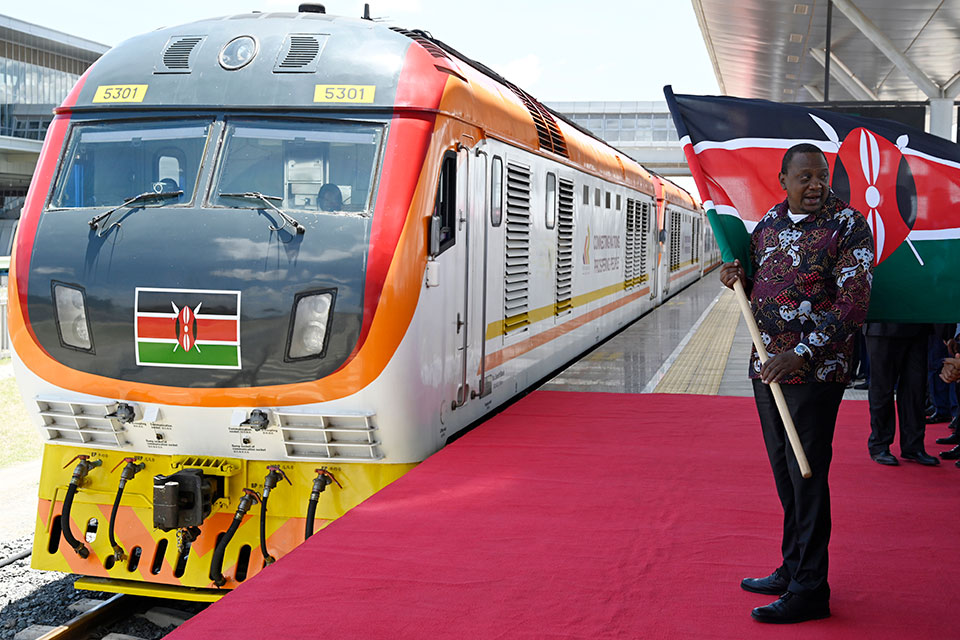
Nairobi — Disputes arising from the Standard Gauge Railway (SGR) will be resolved in Beijing, China, if friendly consultations fails.
This was revealed in the SGR contract that was signed by Kenya’s National Treasury (representing the Government) and the Export-Import Bank of China.
“Any dispute arising out of or in connection with this Agreement shall be resolved through friendly consultation,” the contract reads.
“If no settlement can be reached through such consultation, each party shall have the right to submit such dispute to the China International Economic and Trade Arbitration Commission (CIETAC) for arbitration,” the document shows.
CIETAC, which is one of the oldest and busiest arbitration institutions in the world, is the leading mediation institution in Mainland China.
Established in April 1956, CIETAC was initially called Foreign Trade Arbitration Commission.
“The arbitration shall be conducted in accordance with the CIETAC’s arbitration rules in effect at the time of applying for arbitration,” it stated.
Yesterday, Roads, Transport and Public Works Cabinet Secretary Kipchumba Murkomen made public SGR contract details that cost Sh670 billion.
Murkomen shared the documents on his social media account as well as with the majority leaders of both the Senate and the National Assembly.
The loan terms place the interest rate of the loan at 2.0 percent per year. The Management fee and Commitment fee of the loan are both pegged at 0.25 percent.
The loan has a 20-year tenure and seven-year grace period
The contract also provides that any goods purchased using proceeds from the SGR will be sourced from China preferentially.
Kevin Rotich
Nigeria to pay $496 million to settle claims over steel plants
Nigeria to pay $496 million to settle claims over steel plants
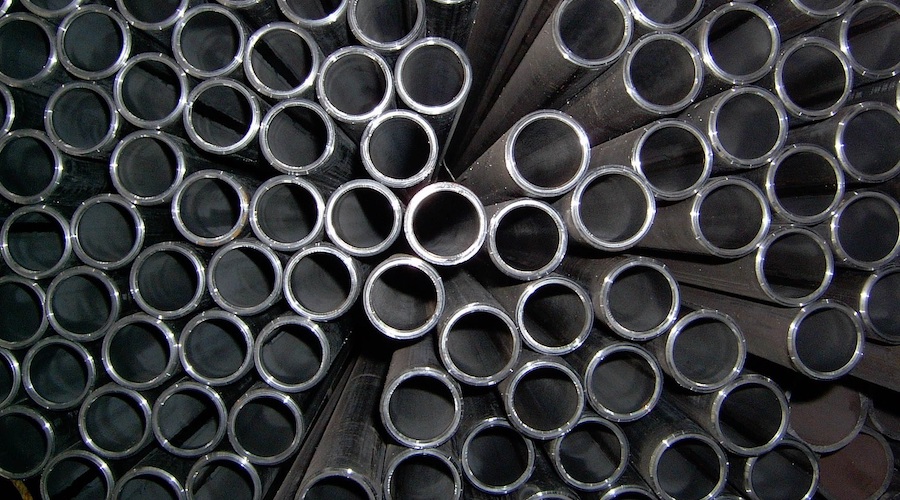
Nigeria has agreed to pay $496 million to settle a multi-billion dollar claim from Global Steel Holdings Ltd following the termination of a contract to upgrade the country’s steel plants, the presidency said on Saturday.
Global Steel, which is linked to India’s Mittal family, had between 2004-7 acquired rights to Nigeria’s entire state steel industry via five major concessions and share purchase contracts. The deal also included access to Nigeria’s iron ore reserves and the central railway network.
But in 2008, the government of the late Umaru Yar’Adua terminated the contracts. Global Steel sought arbitration at the International Chamber of Commerce, Court of Arbitration in Paris the same year.
Between 2011 and 2020, Global Steel and the Nigerian government made several attempts to settle but failed.
Nigeria’s Attorney General and Minister of Justice Abubakar Malami, who led the negotiations, said the government had managed to get a 91% haircut on the original claims of $5.258 billion.
“I pay tribute to President (Muhammadu) Buhari for his dedication to resolving this problem and wrestling back a crown jewel of our national industrialization plans rather than leaving the endeavour to the future administration to deal with,” he said.
Felix Onuah; Editing by Ros Russell

INVESTOR GRANTED INTERIM MEASURES AGAINST ALGERIA
NVESTOR GRANTED INTERIM MEASURES AGAINST ALGERIA
The claimants, General Electric and Mytilineos SA (Société Anonyme) limited have been granted interim measures by an ICC tribunal in a dispute against an Algerian state owned entity. The ICC three member tribunal administered its powers to grant interim measures under Article 28(1) of the ICC Rules of Arbitration. In this way, the court deemed it appropriate to rule on the Claimant’s request for interim arbitration by virtue of signing the Terms of Reference which sets out a clause allowing “ order of any provisional or conservatory measures”.
As it may, in April 2022 the Algerian government was given an opportunity to respond to the request for Interim measures prior to a final decision. Furthermore, the tribunal set forth directions for the Algerian government to suspend any action to collect bank guarantees and in response sought implementation of the guarantees instead.
In a final decision by the ICC tribunal affirmed that difficulties between the Parties pertaining to interpretation or execution of the order for interim measures shall be settled by the Court of Arbitration. Overall, General electric persuaded a New York state court to enforce the aforesaid measures relating to the US$234 million power plant project.
Wambui Mutugi

NIGERIA GIVES UK COURT $200 MLN GUARANTEE FOR STAY ON ASSET SEIZURES IN P&ID CASE
NIGERIA GIVES UK COURT $200 MLN GUARANTEE FOR STAY ON ASSET SEIZURES IN P&ID CASE
The Nigerian government on Thursday placed a bank guarantee of $200 million with a high court in London to secure a stay on asset seizures of up to $9 billion related to a failed gas project, a spokesman for its attorney general said.
Process & Industrial Developments, a firm based in the British Virgin Islands set up solely to build a gas processing plant in Nigeria, won a $6.6 billion arbitration award after the 2010 deal collapsed. The award has been accruing interest since 2013 and is now worth more than $9 billion.
Nigeria in September successfully sought the right to appeal an August ruling that would have converted the arbitration award to a judgment, which would make it easier for P&ID to seize its assets.
Nigeria has said it would fight making any kind of payment to P&ID. The country’s anti-graft unit has also charged two foreign nationals and a former petroleum ministry official with wrongdoing related to the case. P&ID has criticised the investigations as a “sham” that would “never pass muster” in other jurisdictions.
Nigerian Attorney General Abubakar Malami last week said the nation was appealing a requirement that it deposit $200 million with the court in order to secure a stay on asset seizures while it challenged the August ruling.
“This variation in security, which was proposed by Nigeria as an alternative solution during a procedural hearing on 22nd November, has been accepted by the court and P&ID,” the spokesman for the attorney general said in an emailed statement.
A spokesman for P&ID said the company hoped the administration would “accept the reality of the arbitration tribunal award and the decisions of the English Court.”
The government has also expanded its legal team to include London-based law firm Mishcon de Reya. Shaistah Akhtar, a partner with the firm, will lead the legal team alongside Mark Howard QC of Brick Court Chambers, the spokesman said.
Libby George