KENYA TO APPEAL TO CAS IN SAGA OVER EQUATORIAL GUINEA PLAYER
KENYA TO APPEAL TO CAS IN SAGA OVER EQUATORIAL GUINEA PLAYER
NAIROBI – The Kenyan soccer federation says it will appeal a decision to allow Equatorial Guinea back into the women’s African Cup of Nations in a long-running saga over a player’s eligibility.
Equatorial Guinea was thrown out of the tournament in Ghana, which starts next weekend, because the Confederation of African Football ruled Cameroon-born midfielder Annette Jacky Messomo wasn’t eligible to play for the country. Kenya, which lost to Equatorial Guinea in qualifying, took its place.
But CAF reversed its decision on Tuesday after an appeal by Equatorial Guinea.
The Kenyan federation says it is “profoundly astonished” by CAF’s move to reinstate Equatorial Guinea 10 days before the African championship and has initiated an appeal at the Court of Arbitration for Sport.
Equatorial Guinea has a long history of ineligible players and was banned from next year’s women’s World Cup by FIFA after 10 members of its squad who played in qualifying for the 2016 Olympics were not eligible.
The Equatorial Guinea men’s team has also come under scrutiny for containing a large amount of Spanish-born players.
Equatorial Guinea is a small but oil-rich nation of 1.2 million people on the west coast of Africa.

KENYA LOSES APPEAL TO BE REINSTATED IN WOMEN'S AFRICAN CUP
KENYA LOSES APPEAL TO BE REINSTATED IN WOMEN'S AFRICAN CUP
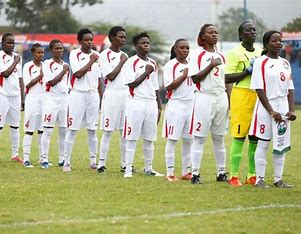
LAUSANNE, Switzerland (AP) — The Kenyan soccer federation has lost its appeal to be reinstated into the African Women’s Cup of Nations ahead of Equatorial Guinea, which had been excluded because of an ineligible player.
The Court of Arbitration for Sport says it has dismissed Kenya’s request for an urgent interim ruling to join the eight-team tournament, which starts Saturday in Ghana.
It also ends Kenya’s chance of qualifying for the 2019 Women’s World Cup.
The Kenyan federation says ”Ghana will continue to host a wonderful event without us.”
The Confederation of African Football at first excluded Equatorial Guinea for fielding a Cameroon-born player in qualifying, but then allowed the country back in on appeal last week.
The top three teams in Ghana advance to the World Cup, though Equatorial Guinea is banned by a previous FIFA ruling involving ineligible players.
CONGO MINERS SEEK CONCESSIONS IN NEW CODE AS ARBITRATION ON HOLD
CONGO MINERS SEEK CONCESSIONS IN NEW CODE AS ARBITRATION ON HOLD
JOHANNESBURG – Miners in the Democratic Republic of Congo are seeking concessions under the nation’s new industry code and holding off challenging it through arbitration, in the hope they can still wring out a compromise in the world’s main source of cobalt and Africa’s biggest copper producer.
Producers including Glencore and Randgold Resources have opposed the new code that raised royalties, introduced taxes and canceled a clause that would have protected them against fiscal changes for ten years. While arbitration is still an option, they’re trying to get the government back to the negotiating table – so far with no success: the miners submitted their counter-proposals in March but have yet to receive a response.
In the meantime, Randgold is talking to the government about offsetting some of the increased costs it’s facing under Article 220 of the code, which allows the government to offer various forms of relief to companies operating in remote areas that lack infrastructure like roads and electricity. Similar incentives may be available to Alphamin Resources, which is building a tin mine in North Kivu.
“We have been very clear we don’t believe that the code is in the best interests of the country and the mining sector as a whole,” Randgold CFO Graham Shuttleworth said in an interview. “We need to consider all of our options – arbitration and negotiating a package under Article 220 – all of those options are open to us.”
REMOTE AREAS
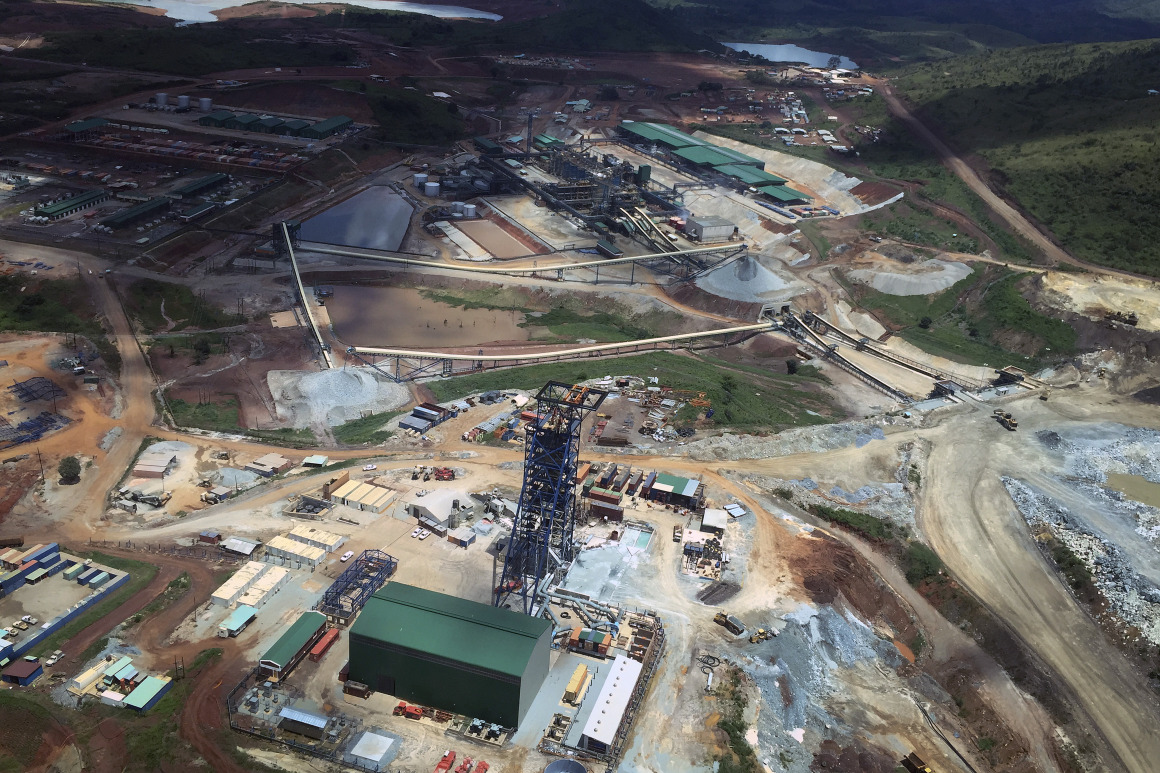
Randgold’s Kibali project, Africa’s biggest gold mine that’s expected to produce more than 700 000 oz of gold this year, is located in a remote area in northeast Congo’s Haut-Uele province. Alphamin is building a tin mine in North Kivu, a province blighted by poor infrastructure and where dozens of armed militia groups carry out sporadic attacks on civilians.
North Kivu’s governor has submitted an Article 220 request to Prime Minister Bruno Tshibala on behalf of all miners in the province, Alphamin CEO Boris Kamstra said.
“We have not been informed of any decisions under consideration or negotiations which may occur,” he said in an emailed response to questions.
MINING LOBBY
Despite the respite potentially on offer to Randgold and Alphamin, they haven’t reversed their objection to the new code – a hostility shared by other international miners in Congo. The companies were among eight firms that formed the Mining Promotion Initiative in August to lobby the government to listen to their concerns about the law and make modifications.
Their primary objective is to salvage in some form the decade-long investor guarantee that was present in previous legislation.
China Molybdenum and MMG, controlled by Chinese shareholders, have invoked an investment treaty between China and Congo in an effort to initiate talks, according to two people familiar with the matter. The companies wrote to Tshibala in June and August respectively, stating that a 2011 accord between the two countries obliges the government to settle disputes with Chinese investors “amicably by negotiation between the parties.”
If the disagreements can’t be resolved, investors are able to launch arbitration at various tribunals, including the Washington DC-based International Centre for Settlement of Investment Disputes, according to the treaty. Neither China Moly nor MMG has received a response from the government, the people said.
CIVIL SOCIETY
While arbitration is still an option, the companies would prefer to persuade the government to come to the table, Shuttleworth said. Civil society groups have backed them.
Twenty-five organisations, including Southern Africa Resource Watch, said last month arbitration must be avoided and urged the government to re-engage with investors to discuss their concerns. They also proposed giving producers a three-year moratorium from “certain measures” in the code.
Miners say the government breached their rights by excising the stability clause. They wrote to Mines Minister Martin Kabwelulu in April saying “there can be no ambiguity, from a governmental point of view, as to the intention of the mining companies to protect their rights.”
The companies’ odds of amending the law, and in particular recovering the stability clause, either partially or wholly, appear limited in the short-term. Kabwelulu said last month he no longer wants to discuss their complaints and ruled out delaying the application of the code to the companies.
Mineral producers in Congo should “execute the measures of the mining code without procrastinating,” Kabwelulu’s chief of staff, Valery Mukasa, said by email.
Any decision to challenge the Congolese government through international arbitration would be weighed against maintaining long-term operations in the country and “wouldn’t be taken lightly,” said Martin Haylett, a research analyst at Wood Mackenzie.
“Our first choice is a process of dialogue to arrive at a position which is a win-win for both of us,” Shuttleworth said. “We have made it clear we would like to find solutions, but all options are open to us.”

Bloomberg
GAMBIA: IMPORTANT QUESTIONS ASKED BY NAMS ON OIL EXPLORATION IN THE GAMBIA
GAMBIA: IMPORTANT QUESTIONS ASKED BY NAMS ON OIL EXPLORATION IN THE GAMBIA
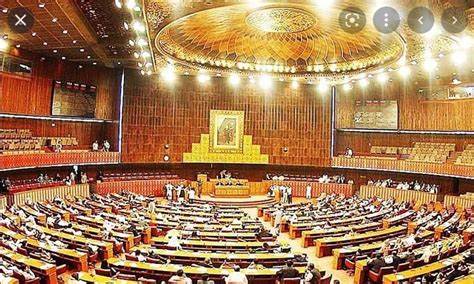
Important questions were asked by National Assembly members relating to oil exploration in The Gambia, which the people need to know. During the question and answer session on 20th December, 2018 during the Fourth Ordinary Session of the Gambia National Assembly, members of the National Assembly raised the questions stated below.
The Member for Wuli East Constituency Honourable Suwaibou Touray asked the Energy and Petroleum Minister Hon. Fafa Sanyang to inform the Assembly whether indeed oil has been found in Gambian waters, and the estimated barrels of oil involved in the two blocks mentioned by the president during his 2018 State of the Nation address to the National assembly.
The Minister in response asserted that, no oil has been found anywhere in the Gambia yet, hence not in Gambian waters. He said pre-drilling geological and geophysical investigations had identified prospects in the two blocks and that the operator (FAR Limited) has estimated up to a billion barrels of oil resources, and made public announcements. He said the existence of oil and gas can only be confirmed by drilling and one of the prospects (SAMO-1) was drilled in October/November 2018 and it is this drilling programme that the President was referring to in his State of the Nation Address to the National Assembly.
The Wuli East member also asked whether the Minister can clarify whether any registered oil exploration company has sought international arbitration against the Gambia and whether the outcome of the said arbitration in question affects The Gambia in any way?
The Energy and Petroleum Minister informed that a company called African Petroleum was a holder of offshore Blocks A1 and A4 licences, which were signed in 2006. He said the Initial Exploration Period which was extended upon request from the Company on 3 occasions, had since expired without the Company fulfilling its drilling obligations; that the Company’s application for further extension was not approved by Government in 2016.
However, he confirmed that the company, African Petroleum, then decided to initiate international arbitration against the Republic of The Gambia and the Proceedings are still ongoing. He however told law makers that the Government is confident that the Gambia acted properly and lawfully and that hopefully it would prevail in the arbitration, but added that any adverse outcome would certainly have a significant financial impact on the Gambia.
A supplementary question raised by Hon. Suwaibou Touray was whether African Petroleum complained only about the lack of approval of extension or were there other issues connected to their complaint at the International arbitration and if yes what are the core issues.
The Hon. Minister Fafa Sanyang in response said what he knows was that African Petroleum had requested for extensions which were done for 3 occasions but were expired and the Company’s further application for extension was not approved which compelled them to lodge complaint at the International arbitration. He however said since the matter is in Court he is not allowed to dwell into the case.
The Wuli East member further asked whether the Hon. Minister could inform the Assembly whether there is any dispute involving our neighbour Senegal regarding the location of the oil find due to odds over maritime border and if yes, are there any issues involved regarding the said dispute which has slowed down the process of oil production in the Gambia?
Hon. Minister Sanyang in his response said: “allow me to reiterate that, as of now, there is no oil discovery in the Gambia and hence no dispute in relation to oil. Furthermore, as far as I know there is no maritime boundary dispute between the Gambia and Senegal.”
In a supplementary question, the Wuli East Law maker further seeks clarification as to whether there is any dispute over maritime border with any of our neighbours and if yes, which of the neighbours?
Hon. Minister Sanyang said as far as he knows, there is no dispute between the Gambia and any of our neighbours regarding maritime border and there is no oil found within our maritime borders as well.
On the same issue, Hon. Momodou Camara, Member for Foni Bintang asked the Minister to inform the Assembly as to who is now exploring and how was the contract was awarded;
Hon. Minister Fafa Sanyang in response informed that currently two oil companies, FAR and PETRONAS are exploring for Oil and Gas in The Gambia onshore blocks A2 and A5. He added that the licences were originally granted to CAMAC Energy Limited on the 24th of May 2012 through direct negotiations. He said CAMAC later became Erin Energy, and farmed-out 80% of its shares in the license to FAR in 2017. He said FAR in-turn farmed-out 40% of its shares to PETRONAS.
Kebba Touray
KWESI NYANTAKYI TO DRAG FIFA TO THE COURT OF ARBITRATION FOR SPORT FOR LIFETIME BAN & GHS 2.4 MILLION FINE
KWESI NYANTAKYI TO DRAG FIFA TO THE COURT OF ARBITRATION FOR SPORT FOR LIFETIME BAN & GHS 2.4 MILLION FINE
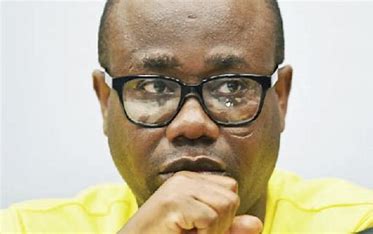
The disgraced former President of the Ghana Football Association, Kwesi Nyantakyi is reportedly preparing to appeal FIFA’s lifetime ban and the CHF 500,000 fine at the Court of Arbitration for Sport (CAS).
Yesterday, the FIFA Ethics Adjudicatory Committee announced that it has placed a lifetime ban and a fine on Kwesi Nyantakyi for breaching ethical and administrative procedure based on an investigation conducted by Anas Aremeyaw Anas.
Anas’ Number 12 investigation looked into corrupt practices among football officials in Ghana and Africa at large.
Kwesi Nyantakyi, is perhaps, the most high profile casualty in the investigation who had to resign from his positions at FIFA, CAF, WAFU and the GFA.
However, in a statement from the Kwesi Nyantakyi, he said: “my legal advisors are under my instructions to urgently appeal the decision as I think it was unfair, harsh and unwarranted.”
“I wish to express my shock and deep sadness after receiving the decision from the FIFA Ethics Adjudicatory Committee on Tuesday,” said.
See below for his full statement…
I wish to express my shock and deep sadness after receiving the decision from the FIFA Ethics Adjudicatory Committee on Tuesday
My legal advisors are under my instructions to urgently appeal the decision as I think it was unfair, harsh and unwarranted.
I will use all the legal channels available to seek redress and establish the facts I presented to the committee.
Even though I have already resigned from all my football positions, it is important I establish the facts with the sole aim of clearing my name.
At this moment I am unable to provide any further details as my lawyers are reviewing the facts for appeal at the Court of Arbitration for Sport (CAS).
I wish to express my sincere gratitude to the people of Ghana, Africa and indeed across the globe for the overwhelming support and outpouring of sympathy.
All the best to Kwesi Nyantakyi.
Nii Okai Tetteh
GERMAN COMPANY REQUESTS ARBITRATION WITH MOROCCO AT WORLD BANK AGENCY
GERMAN COMPANY REQUESTS ARBITRATION WITH MOROCCO AT WORLD BANK AGENCY
Rabat – Scholz Holding of Germany filed a request for arbitration against Morocco with the International Center for Settlement of Investment Disputes (ICSID), an agency of the World Bank Group, on January 3.
The dispute concerns a metal industry project, according to the ICSID website, without giving further details. Scholz says that the 2001 bilateral investment treaty between Morocco and Germany is applicable to the case.
Scholz has not disclosed the amount it is demanding.
Morocco is also involved in two other pending cases under World Bank dispute resolution. One case is with Corral Morocco Holding AB, a Moroccan subsidiary of the Swedish Corral Petroleum company. Morocco has another case, with a group of US businesses, including the Carlyle Group, a financial services company based in Washington, D.C.

KENYA WINS BIG IN KSH.200B CORTEC MINING CASE
KENYA WINS BIG IN KSH.200B CORTEC MINING CASE
A case by Cortec Mining (K) Ltd and two others against the Republic of Kenya amounting to Ksh.200billion has been dismissed.
In the case filed in June 2015, the mining firm sought compensation after the government cancelled its mining licences for the exploration and development of minerals in Mrima Hills, Kwale County terming it as ‘unlawful’.
The firm further claimed that the government’s move also expropriated its investments and breached the UK-Kenya Bilateral Investment Treaty’s obligation to treat them fairly and equitably.
In an award already received by the Office of the Attorney General, the tribunal dismissed the claimants’ claims with costs to the respondent (Kenya) in the sum of Ksh.360 million.
‘… the Tribunal declines to grant the Respondent’s claim for costs of Ksh.650 million but reduces the award by 50%. In the result, the Government will be entitled to recover costs in the sum of Ksh. 320 million.,’ read the Arbiter.
According to the Arbitral Tribunal ICSID, the costs of the arbitration are inclusive of the fees and expenses of the Tribunal, ICSID’s administrative fees and direct expenses.
“The Claimants’ claims are dismissed with costs to the Respondent in the sum of US $3,226,429.21 plus US $322,561.14 in ICSID costs,” the tribunal said.
In April 10, 2015, the then Mining Cabinet Secretary Najib Balala cancelled 65 mining licenses.
In a gazette notice, Balala said some licences had expired, while others had been surrendered by the holders.
The other licences belonged to companies that were non-performing or non-compliant with the Mining Act provisions and licensing regulations.
Some of the companies whose licences were cancelled include Saharco Group International Company Ltd, Yongtai Mining Company Ltd, Pan African Chemicals Ltd, Laholmes Machinery, African Uranium Kenya Ltd and Bisil Mining Company Ltd.
Others were Bootcut Mining Company Ltd, Garsesala Mining Company Ltd, Cortec Mining Kenya Ltd, Ablun Mining Company Ltd, Anods Enterprises Company and Bosmans Investments Ltd.
Individuals whose licences were revoked include Collins Kiprono Bett, Harie Kinosthe Ndungu, Depark R. Ravji Patel, Mohamoud Kassim, Miyanji, Ravji Karsan Sanghani and Joseph Ndimau Mutwanthei.
In a follow-up statement, Mr Balala said the revocation would bring to a close matters before a task-force inquiring into of mining licences fraudulently acquired during the transition from Presidents Mwai Kibaki to Uhuru Kenyatta’s administration in 2013.
Eight licences were classified as non-compliant having been granted without complying with requirements of the Mining Act and regulations.
Another 46 licences were listed as non-performing and expired for being in breach of the conditions of issuance.
NOW TULLOW, UGANDA TAX DISPUTE ROCKS OIL REVENUES SHARING PLAN
NOW TULLOW, UGANDA TAX DISPUTE ROCKS OIL REVENUES SHARING PLAN
A fresh dispute involving $900 million has arisen between Tullow Oil and the Uganda government.
At the heart of the dispute is the law governing taxation of the sale of shares.
This latest development is expected to further delay Tullow’s sale of its equity in upstream and midstream oil and gas operations.
The delay to conclude this deal implies Tullow will not act on its planned partial exit, which was due early 2017.
The disputed tax emerged from Tullow’s application for a private ruling to understand whether the proposed transaction was taxable or not.
It turned out, from URA’s perspective that the transaction was taxable but Tullow does not agree it is taxable.
“We are still in negotiations, but there is a dispute. We want our money paid before the deal is concluded,” said Robert Kasande, Permanent Secretary in the Energy ministry.
“Discussions with the joint venture partners regarding the farm-down are still ongoing,” said Patience Rubagumya, commissioner for legal services and board affairs.
“These discussions take a bit of time before an agreement is reached.”
TRANSACTION
Although technocrats involved in the negotiations remain cagey regarding the disputed figures, sources told The EastAfrican that Uganda Revenue Authority (URA) is pushing to get one-third of the $900 million Tullow expects from the transaction.
“URA wants $300 million from the $900 million, but Tullow does not agree that the transaction is taxable because it is re-investing the money within the country,” a source told The EastAfrican.
Tullow announced that it had signed a sale purchase agreement (SPA) on January 1, 2017 with Total E&P to transfer 21.57 per cent of its 33.33 per cent stake in the joint venture partnership, which includes China National Offshore Oil Company (CNOOC).
Uganda has 6.5 billion barrels of oil, with between 1.4 and 1.7 billion recoverable in the 40 per cent explored areas in the Albertine Graben.
Estimates show that up to $15 billion will be required to commercialise the resources.
Last week, Energy Minister Irene Muloni said all activities in the sector will go on concurrently.
The projects are a refinery, a crude oil pipeline, a product pipeline and two central processing facilities.
When the deal appeared close to conclusion, a disagreement arose between Total and CNOOC over operatorship of Tullow’s areas. Tullow was the official operator of Exploration Areas 1, 1 A, 2 and 3.
Each of the joint venture partners holds equal shares of 33.33 per cent in all of Uganda’s discoveries.
TAXATION
A government intervention resolved the dispute: Total took over operatorship. That disagreement caused a significant farm-down closure.
Now, a further delay seems inevitable as the government and Tullow spar over the taxation.
Both parties are basing their arguments on the same tax regime — the Capital Gains Tax Act.
While URA argues that the law allows it to tap the taxes, Tullow says the law protects that move in as far as the gained money is reinvested within the country.
It was an agreement among the partners that Tullow would receive $200 million and reinvest $700 million in upstream operations and the East African crude oil pipeline as its share contributions, implying a reinvestment.
Tullow had hoped that selling its stake in Uganda would free financial resources that would enable it continue with operatorship in Kenya.
In March 2017, Tullow experienced the first hurdle in the bid to sell its shares to Total when CNOOC exercised its pre-emption rights and demanded half of the shares that were traded to Total after the parties had concluded agreements.
The whole process was restarted to accommodate CNOOC’s demands.
This is not the first time Tullow and the government are embroiled in a tussle over tax.
Kampala demanded over $400 million when the British multinational sold its shares to Total and CNOOC in 2012.
The Tax Appeal Tribunal resolved the matter in favour of government and Tullow paid a $250 million capital gains tax bill.
Tullow had disputed the URA’s assessment of $473 million of tax payable following the farm-downs and appealed against the assessment before the Uganda Tax Appeals Tribunal and commenced an international arbitration process in September 2013.
HALIMA ABDALLAH
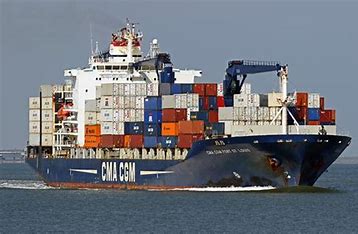
SHIPPING FIRM SUED IN SACKING ROW
SHIPPING FIRM SUED IN SACKING ROW
CMA CGM Kenya Ltd, whose parent company is based in France, allegedly arranged a trip for its former deputy chief financial officer, Paul Mbugua, and forced him to resign while in France.
Mr Mbugua, in documents filed at the Employment and Labour Relations Court, claimed the firm forced him to draft a handwritten note tendering his resignation.
“The respondent created a deliberate cover-up to pave way for unlawful termination of my employment. The respondent caused me to travel all the way to France knowing clearly that the intention was to unprocedurally terminate my employment in the guise of involuntary resignation.”
He claimed in his affidavit that he was coerced into going on the trip even though his visa had only three days to expire.
Mbugua further claimed that after he was forced out of the company’s France office, he had no opportunity to seek redress. He joined the firm in 2013.
Supporting documents submitted to the court show that prior to his sacking, Mbugua had just been promoted to the position of chief financial officer and was to take up his new posting in Sierra Leone.
“The promotion and the new role was confirmed in writing through a hiring confirmation dated July 19, 2018, which the hiring contract stipulated the type of contract was an unlimited employment contract,” he claimed in the papers filed by Okatch and Partners advocates.
Before going to Sierra Leone, he was required to travel to the head office in France for pre-deployment briefing. However, things took a surprising turn upon his arrival as he was allegedly forced to tender his resignation.
“The respondent terminated my employment in France knowing well my visa was to expire in three days and I, therefore, could not have any recourse or engagement with the management so as to express my dissatisfaction,” said Mbugua>
The labour court has directed that the case is resolved through arbitration as per the employment contract and that the arbitrator be appointed by the Kenya Federation of Employers.
Paul Mbugua

COMOROS PETITIONS CAS OVER CAMEROON EXPULSION FROM 2019 AFRICA CUP OF NATIONS
COMOROS PETITIONS CAS OVER CAMEROON EXPULSION FROM 2019 AFRICA CUP OF NATIONS
The Comoros Football Federation has petitioned the Court of Arbitration for Sport to exclude or ban Cameroon from participating in the 2019 Africa Cup of Nations.
In November, 2018, CAF stripped of the hosting rights of the 2019 Africa Cup of Nations from Cameroon following an Executive Council decision in Ghana.
Per the regulations, any country stripped of from hosting a tournament serve a suspension from participating in the same tournament.
But CAF has had no word on that which the Comoros Football Federation think it is unfair and against the regulations.
This is because Comoros have an opportunity to make their first ever appearance in Africa’s flagship football tournament if Cameroon are excluded in the final.
Cameroon host Comoros in their last group game in March, 2019 and a win will see the defending champions qualify for the tournament in Egypt.